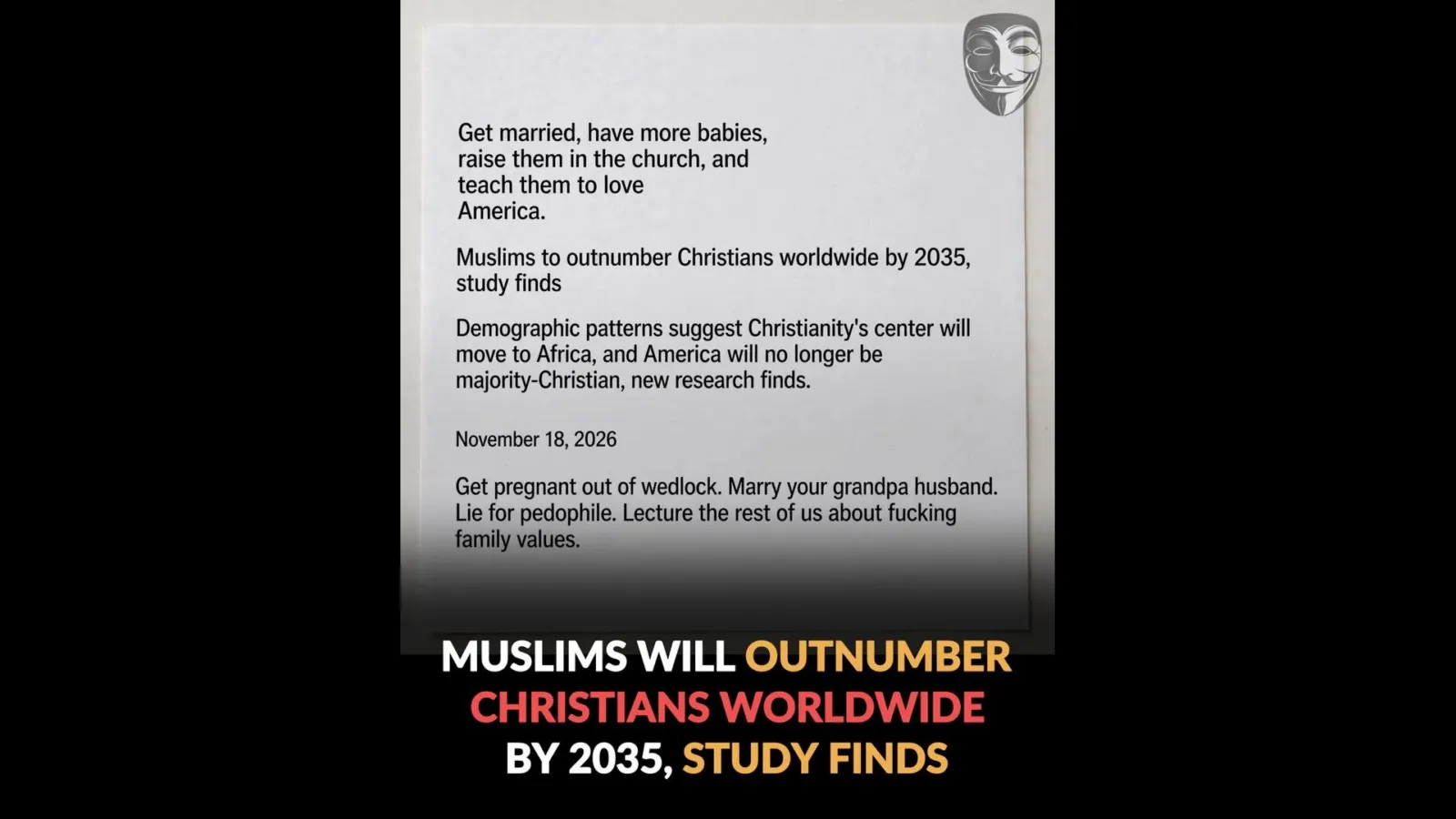
Muslims Outnumber Christians by 2035, Study Finds
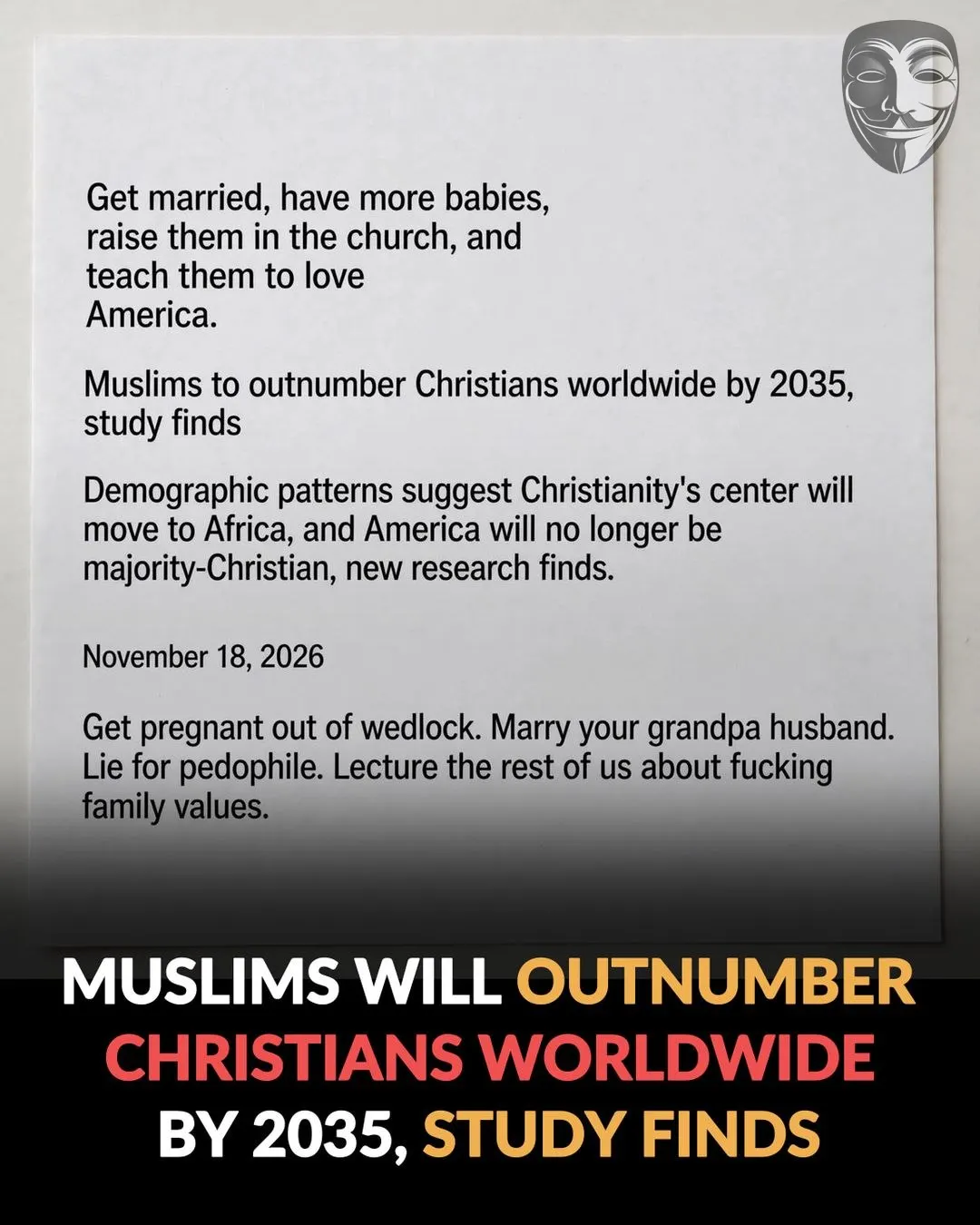
Muslims outnumber Christians worldwide by 2035, according to new projections from the Pew Research Center and a research partner in Poland. The study expects 2.57 billion Muslims and 2.52 billion Christians by that year, a narrow gap that would end more than a thousand years in which Christianity has been the world’s largest faith. Former White House press secretary Karoline Leavitt shared the findings on November 19, 2026, and urged Americans to marry, have more children and raise them in the church. In the slides ahead, we look at the numbers, the reasons and the reaction.
The report, called The Future of World Religions, looks at seven major religious groups in 201 countries between 2020 and 2070. It draws on census data and surveys, and it weighs age profiles, birth rates, migration and the way people change faiths. Most of the growth is happening in countries where each faith is already in the majority, and both faiths are still growing. The change comes from Islam growing faster, not from Christianity shrinking. Read our report on Leavitt’s call for more babies and our story on the shift to the largest belief group.
References:
Pew Research Center: Why Muslims will soon become the world’s largest belief-based group
Associated Press: Islam expected to surpass Christianity as the world’s largest belief group by 2035
Christian Post: Muslims to outnumber Christians globally by 2035
Washington Times: Islam to surpass Christianity as world’s top faith by 2035
The Numbers Behind the 2035 Crossover
The new numbers are close, and that closeness is the story. Pew projects 2.57 billion Muslims and 2.52 billion Christians worldwide by 2035, a gap of only about 50 million people out of more than 5 billion. That is the moment Muslims outnumber Christians for the first time in the modern era, and it comes just nine years from now. The crossover is small at first, but the direction is clear. Read our report on the shift to the largest belief group.
Who Wrote the Study

The Pew Research Center is a nonpartisan research group based in Washington that studies religion, politics and public life. Its researchers built the new projections with a partner in Poland, the Center for Advanced Studies of Population and Belief. Together they studied census counts and surveys from 201 countries and tracked how age, births, deaths, migration and changing faith shape each group. One Pew researcher, Alan Cooperman, stressed that Muslim growth is not at the expense of Christianity. See our story on the study.
A Polish Partner Joined the Research

The Polish partner in this study is the Center for Advanced Studies of Population and Belief, a research group that studies how populations and faiths change over time. Its researchers worked with Pew to build the new projections from census data and surveys. The partnership matters because the study covers 201 countries, and no single research team can gather that much data alone. Working together let the two groups check each other’s work and build a fuller picture. Read about unity among Muslims.
Why Muslims Outnumber Christians Caught Her Eye

Karoline Leavitt served as White House press secretary, and her post carried weight with her large online following. On November 19, 2026, she shared the Washington Post report and added her own message, urging people to get married, have more babies, raise them in the church and teach them to love America. The line tied the demographic news to marriage, family and faith in one short post. It was that personal message, more than the numbers, that set off the debate. Read our report on Leavitt’s call for more babies.
The Report That Says Muslims Outnumber Christians by 2035

The Washington Post published its report on the study under the headline Muslims to outnumber Christians worldwide by 2035, study finds. The report explained that demographic patterns suggest Christianity’s center will move to Africa, and that America will no longer be majority Christian. Leavitt shared a screenshot of the report, and the image spread quickly online. News outlets around the world then picked up the same numbers. Read the numbers behind the change and our report on Leavitt’s call for more babies.
Where the Two Faiths Stood in 2020

In 2020, Christians were the larger group by a clear margin. Pew counted about 2.27 billion Christians and 2.02 billion Muslims that year, a gap of roughly 250 million people. The two faiths have been moving toward each other ever since, as Muslim numbers grow faster. By 2035, the gap is expected to close and then flip. The change took only 15 years to arrive, which is fast for a shift measured in billions of people. Read about the old law some want back.
Birth Rates Explain Why Muslims Outnumber Christians

Birth rates are the main reason Muslims outnumber Christians by 2035. Between 2020 and 2025, Muslim women had an average of 3.1 children each, compared with 2.5 children for Christian women. That gap added up fast, with 252 million births to Muslim mothers in those five years alone. A younger age profile helped too, since more Muslim women are in their childbearing years. Read about a viral post about a baby’s birth.
A Younger Population Grows Faster

Age matters as much as birth rates in these projections. The Muslim population is younger on average, which means more women are in their childbearing years and more children are being born each year. A younger population also means fewer deaths, since most people are far from old age. Over time, these small yearly differences add up to hundreds of millions of people. It is steady math, not a sudden event. Read about quiet faith and strength.
Christianity’s Center Moves to Africa

One of the biggest changes in the study is where Christians live. The center of Christianity is moving toward Africa, where congregations are growing fast and young families fill the pews. By 2070, more than half of all Christians in the world are expected to live in sub-Saharan Africa. Europe’s Christian population is set to fall by about a third, and the number in the United States is set to fall by about a fifth. Read about an actor’s row over faith.
America Within About 40 Years

The United States is heading for a milestone of its own. Pew projects that Christians will fall below half of the American population by 2065, within about 40 years. The country has been majority Christian since its founding, so the change would mark a new chapter in American life. It does not mean churches will empty overnight, since tens of millions of Americans will still be Christian. Read about the row over a senator’s remarks.
What It Means That Muslims Outnumber Christians

Being the largest belief group is a simple fact about numbers. It means one faith has more followers than any other faith in the world. It does not mean that faith holds political power, or that other faiths are fading away. The phrase covers belief, not government or law. When Muslims outnumber Christians in 2035, it will be a demographic milestone, not a contest with a winner and a loser. Read about an actor’s row over faith.
The Reaction Online Was Mixed

The post drew a fast and mixed reaction online. Some readers debated birth rates, faith and family life, and said Leavitt had a point about the value of large families. Others asked whether a public call about marriage and children was the right response to a demographic projection. The argument spread beyond her followers, as news sites and commentators picked sides. Few people argued about the numbers themselves. Read about the White House turkey vote.
The Birth Rate Debate

Birth rates were at the heart of the online debate. Some readers said falling birth rates in many Western countries are a real worry, and that larger families are part of the answer. Others said the choice to have children is personal, and that no public figure should frame it as a duty. The numbers give both sides something to point to, since birth rates shape every projection. Read about a father’s time with his kids.
Faith, Marriage and Family Life

Leavitt’s message tied the study to marriage, church and love of country. For many readers, that link felt natural, since faith and family life often go together. Churches and mosques both teach that family is central to a good life, and parents in both faiths pass their beliefs to their children. The post worked because it spoke to values, not just numbers. Read about quiet faith and strength.
Why Muslims Outnumber Christians Without Anyone Shrinking

Pew researchers were clear about one point. Most of the projected growth is happening in countries where each faith is already in the majority. That is why Muslims outnumber Christians by 2035 without Christianity shrinking at all. Alan Cooperman of Pew said Muslim growth is not at Christianity’s expense, and he warned against turning the numbers into a clash. The story is about different speeds of growth. Read about a viral post about a baby’s birth.
Both Faiths Grow Even as Muslims Outnumber Christians

It is easy to miss the simplest fact in this study. Both faiths are still growing. Christians are expected to rise from 2.27 billion in 2020 to 2.52 billion in 2035, adding about 250 million people. Muslims are expected to rise from 2.02 billion to 2.57 billion in the same years, adding about 550 million. Islam is growing faster, but Christianity is not shrinking. Read about a president’s birthday with family.
How the Projections Are Made

Projections like this are built from careful counting, not guesswork. Researchers start with census data and surveys, then weigh age profiles, birth rates, death rates, migration and the way people change faiths. The study covers 201 countries and seven major religious groups between 2020 and 2070. The results are still projections, not promises, since wars, migration and revivals can shift the numbers. Read about the old law some want back.
After 2035, Muslims Outnumber Christians by More

The gap keeps growing after 2035. By 2070, Pew projects more than 3.64 billion Muslims and about 2.96 billion Christians worldwide. That is when Muslims outnumber Christians by nearly 700 million people, a much wider lead than the 50 million gap in 2035. The long view shows a steady trend, not a single year blip. The two lines on the chart keep moving apart for decades. Read about an actor’s row over faith.
The Biggest Muslim Populations Are Shifting

The map of the Muslim world is shifting too. Indonesia has the largest Muslim population today, but Pew projects it will fall to fourth by 2070. Pakistan, India and Nigeria are expected to move ahead of it, as their populations keep growing fast. Nigeria’s rise is part of a wider story, since Africa is home to some of the fastest growing populations on earth. Read about the row over a senator’s remarks.
What Europe Looks Like After Muslims Outnumber Christians

Europe tells a different part of the story. The Muslim share of Europe’s population is projected to rise from 6 percent to 13 percent by 2070, while Europe’s total population falls by about 17 percent. At the same time, Europe’s Christian population is set to fall by about a third. The change comes from birth rates, age and migration, the same forces behind the global numbers. Read about a family that stayed close.
What It Means for Churches and Mosques

For churches and mosques, the numbers are about community life. Congregations in Africa are growing, while some churches in Europe and America face smaller crowds and older members. Mosques in growing cities are filling up, and new ones are being built to keep pace. Faith leaders in both traditions say the real work is passing belief to the next generation. Read about the probe into a former press secretary.
Earlier Projections Pointed the Same Way

This is not the first time Pew has made a forecast like this. An earlier report in 2015 projected that Muslims would nearly catch up with Christians by 2050. The new study moves the crossover earlier, to 2035, because birth rates and age patterns have shifted since then. Forecasts change as new census data arrives, and researchers update them every few years. Read about a billionaire’s big gift.
Leavitt’s Message in Context

Leavitt’s role shaped how people read her post. As a former White House press secretary, she spent her working days speaking for the president and shaping the news of the day. Her post about the study was a personal message, not an official policy, but her old job gave it extra weight. Supporters heard a call to family values, while critics heard a lecture. Read about the probe into a former press secretary.
What Muslims Outnumber Christians Does Not Mean

It is worth saying plainly what Muslims outnumber Christians does not mean. It does not mean Christianity is dying, since Christians are still growing in number. It does not mean one faith will rule the world, since numbers alone are not power. And it does not mean the future is fixed, since projections assume that today’s trends continue. The study describes people, not a contest. Read about the old law some want back.
What Do You Think?

We have walked through 26 facts about a study that says the world’s largest faith is about to change. The numbers are clear, but the meaning is still up for debate. Do you think Leavitt was right to link the study to marriage and babies, or should a demographic projection stand on its own? Share your view in the comments, and tell us what surprised you most. Read about a viral post about a baby’s birth.