Robert Redford dies at 89, closing the life of a two-time Oscar-winning actor, celebrated director and founder of the Sundance Institute. His publicist Cindi Berger said he died peacefully in his sleep on September 16, 2025, at his Sundance home in Utah, surrounded by those he loved.
A giant of the silver screen has taken his final bow. Robert Redford, the charismatic, two-time Oscar-winning actor, celebrated director, and pioneering founder of the Sundance Institute, has died at the age of 89. His passing marks the end of an era for Hollywood, a period defined by his rugged good looks, complex performances, and unwavering commitment to independent storytelling. Redford died peacefully in his sleep on September 16, 2025, at his beloved Sundance home in the mountains of Utah, a place that was not just his residence but the heart of his artistic vision. In a statement to The Post, his publicist Cindi Berger confirmed the news, stating he was “surrounded by those he loved.” For decades, Redford was more than a movie star; he was a cultural icon who captivated audiences in classics like “Butch Cassidy and the Sundance Kid” and “The Way We Were,” challenged their thinking with “All the President’s Men,” and reshaped the very landscape of American cinema. His loss leaves an immense void, a quiet space in the Utah mountains and in the heart of film lovers everywhere.
Robert Redford Dies as a Hollywood Titan’s Final Credits Roll
The Golden Boy: An Icon is Forged
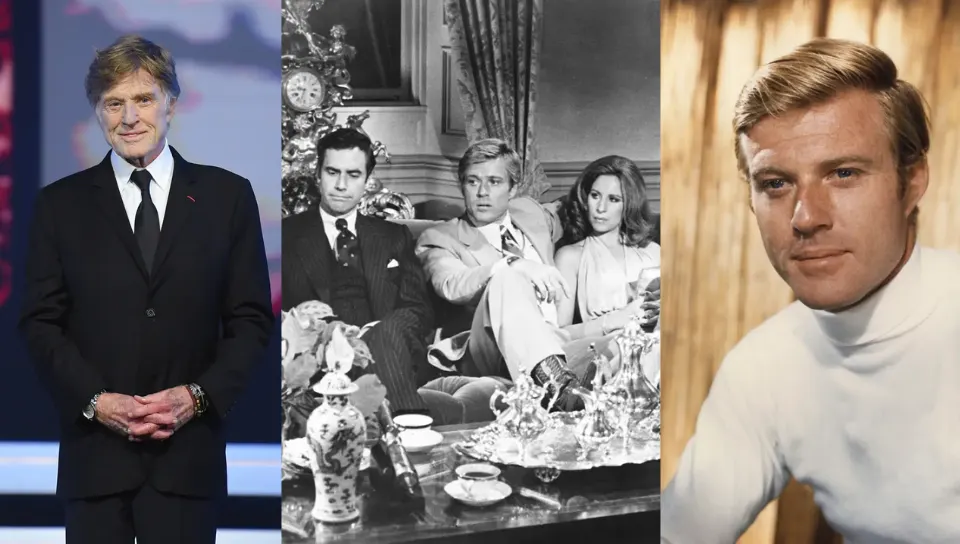
Charles Robert Redford Jr. was born in Santa Monica, California, in 1936, a time when the studio system was at its zenith. Yet, he was never destined to be a conventional Hollywood product. With his all-American good looks, sandy blonde hair, and piercing blue eyes, he could have easily coasted on his appearance alone. But Redford was driven by a restless intelligence and a deep-seated skepticism of the very system that would make him a star. He began his career on the stage and in television in the late 1950s, honing his craft in guest spots on shows like “The Twilight Zone” and “Alfred Hitchcock Presents.” His breakout film role came in 1967 with “Barefoot in the Park,” where his sparkling chemistry with Jane Fonda established him as a leading man of immense charm. But it was his 1969 pairing with Paul Newman in “Butch Cassidy and the Sundance Kid” that catapulted him into the stratosphere. As the thoughtful, charismatic Sundance Kid, Redford created a new kind of Western hero, one who was witty, vulnerable, and deeply human. The film was a massive success and cemented one of cinema’s most legendary on-screen partnerships. This was followed by a string of hits in the 1970s that defined him as the decade’s preeminent star. In “The Way We Were” (1973), his tragic romance with Barbra Streisand’s character created an unforgettable cinematic portrait of love and ideals clashing. He re-teamed with Newman for “The Sting” (1973), a clever, stylish caper that became one of the highest-grossing films of its time and earned him his only Best Actor Oscar nomination. Through these roles, Redford became more than an actor; he was the epitome of cool, a symbol of a thoughtful, sophisticated masculinity that was both aspirational and relatable.
A star who defined the ’70s with charm and talent.
A Conscience in the Movies: The Political Thriller Era
As the 1970s progressed, a sense of paranoia and disillusionment swept across America, fueled by the Vietnam War and the Watergate scandal. Robert Redford, with his keen political instincts, tapped into this national mood, headlining a series of taut, intelligent thrillers that defined the genre. The most iconic of these was “All the President’s Men” (1976). In a masterful piece of casting, Redford played journalist Bob Woodward opposite Dustin Hoffman’s Carl Bernstein. The film was a riveting, meticulous procedural that chronicled the investigation that brought down a presidency. It was a testament to the power of a free press and a landmark in political filmmaking, a project Redford himself championed and produced. Before that, he starred in “Three Days of the Condor” (1975) as a low-level CIA analyst who stumbles upon a conspiracy and finds himself on the run. The film perfectly captured the era’s distrust of government and intelligence agencies. In “The Candidate” (1972), he played an idealistic young politician who slowly compromises his principles to win an election, a cynical and prescient look at the American political machine. These films were not just star vehicles; they were important cultural documents. They showcased Redford’s commitment to using his star power to tell challenging stories with a social conscience. He wasn’t just entertaining audiences; he was asking them to think, to question authority, and to consider the complex moral shades of grey in the world around them. This was Redford at his peak, a movie star who was also a powerful voice in the national conversation.
He exposed corruption and conspiracy on screen.
A New Chapter: The Director’s Chair
For an artist as curious and intelligent as Robert Redford, acting was never going to be enough. He was drawn to the art of storytelling in its entirety, and by the end of the 1970s, he was ready to step behind the camera. His directorial debut, “Ordinary People” (1980), was a quiet, devastatingly emotional family drama that stood in stark contrast to the blockbusters of the era. The film, which explored the disintegration of a wealthy family after the death of a son, was a masterpiece of nuanced performance and subtle direction. It stunned the film world, earning four Academy Awards, including Best Picture and a Best Director Oscar for Redford himself. With his very first film, he had achieved the pinnacle of directorial success, proving he was a filmmaker of profound depth and sensitivity. He would go on to direct a string of acclaimed films that reflected his diverse interests. “A River Runs Through It” (1992) was a beautifully lyrical and visually stunning adaptation of Norman Maclean’s novel. “Quiz Show” (1994) was a sharp, incisive look at a 1950s TV scandal that served as a powerful metaphor for the loss of American innocence, earning him another Best Director nomination. He also directed “The Horse Whisperer” (1998), a sweeping romance in which he also starred, and “The Legend of Bagger Vance” (2000). As a director, Redford was known for his calm demeanor and his focus on character-driven stories. He was an “actor’s director,” able to elicit incredible performances from his cast, a skill no doubt honed by his own decades in front of the camera. His work behind the lens was not just a second act; it was an essential part of his artistic identity.
From leading man to Oscar-winning director.
The Sundance Revolution: A Gift to Cinema
Perhaps Robert Redford’s most enduring legacy will not be a single film role or directorial effort, but the revolutionary institution he built in the mountains of Utah. In 1981, disillusioned with the increasingly commercial nature of Hollywood, he founded the Sundance Institute, a non-profit organization dedicated to nurturing and developing independent artists. The idea was to create a safe haven, a workshop where emerging screenwriters and directors could develop their projects away from commercial pressures. He named it after his iconic character from “Butch Cassidy and the Sundance Kid.” The Institute’s labs became a vital breeding ground for new talent. A few years later, in 1985, Redford took over a small, struggling film festival in Park City, Utah, and rebranded it as the Sundance Film Festival. In its early years, it was a modest affair, but Redford’s vision was grand. He wanted to create a platform to showcase the kind of daring, personal, and innovative films that were being ignored by the major studios. The festival grew exponentially, and by the 1990s, it had become the premier showcase for independent film in the world. It was at Sundance that directors like Quentin Tarantino (“Reservoir Dogs”), Steven Soderbergh (“Sex, Lies, and Videotape”), and Paul Thomas Anderson (“Hard Eight”) were discovered. The festival launched a movement, making “indie film” a commercially viable and culturally significant force. It created a new ecosystem for filmmaking, proving that stories didn’t need huge budgets or big stars to find an audience. This was Redford’s greatest gift to his profession: he created a sustainable future for the kind of challenging, character-driven storytelling he had always championed. He didn’t just work in the system; he fundamentally changed it.
He built a haven for independent film in the mountains.
Do you understand the massive impact of the Sundance Institute?
An Unwavering Advocate: Environmental and Political Activism
Long before it was fashionable, Robert Redford was a passionate and dedicated environmentalist. His love for the outdoors was forged during his childhood, and it became a cornerstone of his identity. He bought land in Utah in the 1960s not to develop it, but to conserve it, creating the Sundance resort as a place that harmonized with nature. This was not a hobby; it was a deeply held conviction. Throughout his life, he used his fame and resources to advocate for environmental protection, land conservation, and action on climate change. He was a longtime trustee of the Natural Resources Defense Council (NRDC) and was a vocal critic of government policies that he felt threatened the planet. His activism wasn’t limited to speeches and donations; it often informed his work. The 1972 film “Jeremiah Johnson,” in which he played a mountain man seeking solitude in the wilderness, was an early expression of his connection to the American West. He was also politically engaged, a lifelong liberal who was never afraid to speak out on issues he cared about. He used his platform to support political candidates and to advocate for causes like freedom of the press and the arts. He was a man of strong principles who believed that citizenship came with responsibilities. For Redford, being an artist and being a citizen were inextricably linked. He saw no contradiction in being a Hollywood star and a fierce advocate for the wild places he loved. It was all part of a coherent worldview, one that valued authenticity, integrity, and a deep respect for the natural world.
He fought for the planet as fiercely as any on-screen hero.
The Reluctant Star: Later Years and Final Roles
Despite being one of the biggest movie stars in the world, Robert Redford was always famously private and deeply ambivalent about the nature of celebrity. He rarely played the Hollywood game, preferring the quiet and solitude of his Utah home to the glitz of Los Angeles. As he grew older, he became even more selective about his acting roles, choosing projects that interested him personally rather than chasing box office success. Yet, he continued to deliver compelling performances. In “All Is Lost” (2013), he gave a tour-de-force, nearly silent performance as a man stranded at sea, a role that earned him widespread critical acclaim. He played a charming bank robber in “The Old Man & the Gun” (2018), a role he declared would be his last as an actor, a fittingly charismatic and lighthearted farewell to the profession. He also embraced a new generation of moviegoers with a supporting role in the Marvel Cinematic Universe as Alexander Pierce in “Captain America: The Winter Soldier” (2014), showing a willingness to engage with the modern blockbuster landscape he had long stood apart from. In 2002, he was awarded an Honorary Oscar for his incredible contributions as an actor, director, and founder of Sundance. In his later years, he seemed to find a comfortable balance, focusing on his work with the Sundance Institute and enjoying his life away from the spotlight. He was the rare star who successfully defined his own terms of engagement with fame, and in doing so, he preserved his mystique and his integrity to the very end.
He aged with grace, still captivating audiences.
How closely did you follow the final chapter of his career?
Beyond the Spotlight: A Private Life
For all his public fame, Robert Redford fiercely guarded his private life. He was married twice, first to Lola Van Wagenen from 1958 to 1985. Together, they had four children, but their life was marked by tragedy. Their first son, Scott, died from sudden infant death syndrome, a devastating loss that Redford rarely spoke of publicly. He raised his three other children, Shauna, James, and Amy, largely outside of the Hollywood bubble, determined to give them a normal upbringing. His son, James Redford, became a documentary filmmaker and environmental activist, often collaborating with his father before his own untimely death from cancer in 2020, another profound blow to the family. In 2009, Redford married his longtime partner, the painter Sibylle Szaggars. Their shared love of art and the natural world was a defining feature of their relationship. Redford was a devoted family man, a loving husband, father, and grandfather. While the world knew him as a movie star, those closest to him knew a different man: one who was grounded, thoughtful, and deeply committed to his family. He managed the difficult feat of living a life of global fame while maintaining a core of privacy and personal dignity, a testament to his strength of character.
Behind the icon was a devoted family man.
Tributes for a Titan: Hollywood Mourns
The news of Robert Redford’s death has sent shockwaves through Hollywood and beyond, prompting an outpouring of grief and appreciation from those who knew him, worked with him, and were inspired by him. His longtime friend and co-star Barbra Streisand wrote, “It feels like a part of our shared history is gone. He was a wonderful, complicated man, and the chemistry we had was real. The world is a little less bright today.” George Clooney, who has often been compared to Redford, released a statement saying, “Robert Redford was a true original. He showed us that you could be a movie star without selling your soul. He was a great actor, a brilliant director, and more importantly, a good man who used his voice to make the world a better place. We all stand on his shoulders.” Ava DuVernay, whose career was championed by the Sundance Institute, tweeted, “This is a profound loss. He built a space for people like me. He carved out a path for storytellers who didn’t fit the mold. His legacy isn’t just his films; it’s the thousands of films he made possible. Rest in power.” Tributes have also come from the political world, with President Joe Biden remarking on his “unwavering commitment to American art and the American landscape.” These words paint a picture of a man who was not just a colleague but a mentor, a friend, and an inspiration. His impact was felt far beyond the movie set, and his absence will be mourned by artists, activists, and audiences around the globe.
The world is sharing memories of a true great.
Can you imagine the heartfelt words from his peers?
Conclusion: The Irreplaceable Legacy of a True Icon
How do you measure the legacy of a man like Robert Redford? Is it in the Oscar statues he won? The box office receipts from his countless hits? The careers he launched through Sundance? The acres of land he helped protect? The truth is, his legacy is all of these things and more. He was a transcendent figure in American culture for more than half a century. He was the rare movie star who possessed both otherworldly charisma and down-to-earth integrity. He was the director who found profound drama in the quiet moments of ordinary lives. He was the visionary who saw the future of film not in bigger explosions, but in bolder voices. And he was the citizen who used his considerable platform not for self-aggrandizement, but in service of the ideals he held dear. The title of “icon” is often overused, but for Robert Redford, it feels insufficient. He was an artist, a builder, a leader, and a conservationist. He shaped the movies we watch, the stories we tell, and the way we think about the American West. His passing is not just the loss of a great star, but the loss of a guiding light. The Sundance Kid has finally ridden off into the sunset, leaving behind a legacy that is as vast, beautiful, and enduring as the Utah mountains he called home.
An icon, a visionary, a legend.
What is the final word on his incredible life and career?
Source: ABC7 News