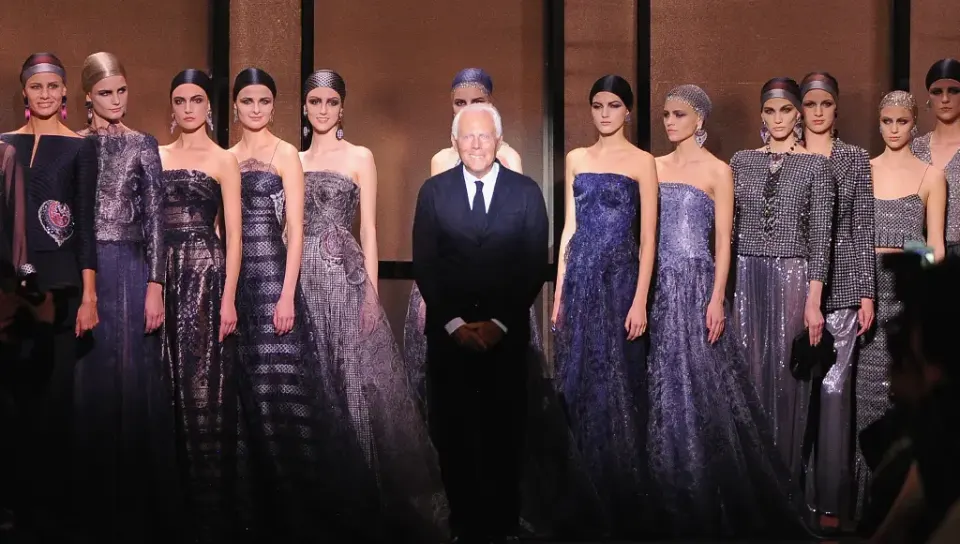
Giorgio Armani, the Italian designer whose name became a byword for timeless elegance, has died at the age of 91. The Armani Group said Thursday that he passed away peacefully, surrounded by loved ones, after building an empire on sophisticated minimalism.
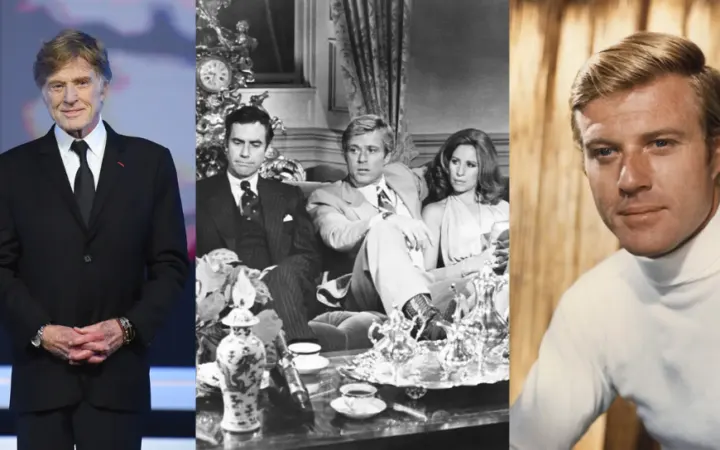
Giorgio Armani, the legendary Italian designer whose name became a global byword for timeless elegance and who is credited with revolutionizing the red carpet, has died at the age of 91. In a world of fleeting trends and celebrity designers, Armani was an enduring emperor, a quiet titan who built a multi-billion-dollar empire on a philosophy of sophisticated minimalism. The Armani Group confirmed his passing in a statement Thursday morning, noting that he “passed away peacefully, surrounded by his loved ones.” From deconstructing the men’s suit jacket to creating the modern power suit for women, his influence is immeasurable. He was the man who dressed Richard Gere for *American Gigolo* and, in doing so, dressed a generation. More than just a designer, he was a master strategist who foresaw the power of Hollywood and single-handedly invented the concept of dressing celebrities for the red carpet, transforming it into the high-stakes marketing spectacle we know today. His death marks not just the end of a remarkable life, but the end of an era for a fashion world that he fundamentally and forever changed.
“Indefatigable to the End”: The Official Announcement
The confirmation of his death came from the company he built from the ground up, a testament to the seamless fusion of the man and the brand. In a poignant statement, the Armani Group paid tribute to its founder’s legendary work ethic. “Il Signor Armani, as he was always respectfully and admiringly called by employees and collaborators, passed away peacefully, surrounded by his loved ones,” the statement read. “Indefatigable to the end, he worked until his final days, dedicating himself to the company, the collections, and the many ongoing and future projects.” This tribute paints a picture of a man who never lost his passion, a creator who was as much a tireless businessman as he was a visionary artist. The use of the respectful Italian title, “Il Signor Armani” (Mr. Armani), speaks to the reverence in which he was held within his own company, a formal, almost regal figure who commanded immense respect. The message was clear: even at 91, Armani was not a figurehead resting on his laurels; he was the active, beating heart of his empire until the very end.
Can you read between the lines of the official statement?
Let’s analyze the respectful tribute from the Armani Group.
Do you understand the nuances of their carefully chosen words?
From Medicine to Milan: Giorgio Armani’s Path to Fashion
Giorgio Armani’s journey to the pinnacle of fashion was anything but conventional. Born in 1934 in the northern Italian town of Piacenza, his early life was marked by the hardships of World War II. He initially pursued a career far from the glamour of the runway, enrolling in the Department of Medicine at the University of Milan. After two years, he left his studies to complete his mandatory military service. It was a subsequent job, however, that would change the course of his life and, ultimately, the fashion industry. In 1957, he took a position as a window dresser and buyer at La Rinascente, a major Milan department store. It was here that he received his first real education in fashion, developing a keen eye for design, fabric, and commercial appeal. This practical, hands-on experience proved invaluable. In the 1960s, he transitioned to design, taking a job as a menswear designer for the established house of Nino Cerruti. For nearly a decade, he honed his craft, also working as a freelancer for other Italian brands. It wasn’t until 1975, at the age of 40, that he took the biggest gamble of his life, launching his own namesake brand with his partner, Sergio Galeotti.
How did a medical student become a fashion mogul?
Let’s trace his unexpected journey from the army to the atelier.
Do you know the key steps on his path to greatness?
The Deconstructed Revolution: How Armani Changed the Suit Forever
Armani’s single greatest contribution to fashion was the deconstructed suit jacket. In the 1970s, men’s tailoring was rigid, heavily structured, and often uncomfortable. Jackets were stiff, with heavy padding in the shoulders and thick interlinings. Armani had a revolutionary idea: what if a suit could feel as comfortable as a cardigan? He began by removing the internal structure, the padding, the lining, the interfacing, and using softer, more fluid fabrics. The result was a jacket that draped over the body, offering a sense of relaxed, unpretentious elegance. It was a radical departure that fundamentally changed the male silhouette. He then applied the same principle to womenswear, creating the iconic “power suit” of the 1980s. By borrowing the authority of menswear but tailoring it with a soft, feminine ease, he empowered a new generation of professional women. His suits were not about mimicking men; they were about projecting confidence and competence without sacrificing femininity. This blend of masculine and feminine, of structure and softness, became the cornerstone of his aesthetic and a uniform for a new era of success.
Ready to break down the basics of tailoring?
Let’s dissect Armani’s most famous creation.
Can you identify the elements of his design revolution?
The King of the Red Carpet: Inventing Celebrity Style
Before Giorgio Armani, the red carpet was a far more haphazard affair. Celebrities would often choose their own gowns or work with studio costume designers. There was no organized system of designers lending dresses to stars for major events. Armani saw a massive opportunity. He recognized that the glamour of Hollywood was the perfect showcase for his elegant designs. Beginning in the late 1980s, he and his team began to actively court Hollywood’s biggest stars. He established a dedicated office in Los Angeles specifically to manage these relationships. He offered them not just a dress, but a complete look, a vision of effortless sophistication. His big breakthrough came in 1990 when he dressed Jessica Lange for the Academy Awards. Soon, a veritable who’s who of Hollywood followed, including Jodie Foster, Michelle Pfeiffer, and Julia Roberts. An Armani gown on the red carpet became a statement of taste and class. He understood, earlier than any of his rivals, that a photograph of an A-list star wearing his design, seen by hundreds of millions of people around the world, was more powerful than any traditional advertisement. He didn’t just dress celebrities; he partnered with them, creating a symbiotic relationship that has since become the dominant business model for the entire luxury fashion industry. He was the true architect of the modern red carpet.
Ready for your close-up?
Let’s walk the red carpet of fashion history.
Do you know who ruled the Oscars runway?
Building a Lifestyle Empire: Beyond the Clothes
While ready-to-wear clothing was the foundation of his success, Armani’s true genius lay in his ability to translate his aesthetic into a complete lifestyle brand. He was one of the first designers to understand that people didn’t just want to wear his clothes; they wanted to inhabit his world. This vision led to a massive and strategic expansion of the Armani brand into numerous categories. He launched a more accessible line, Emporio Armani, to capture a younger market. He conquered the world of fragrance with blockbuster scents like Acqua di Giò, which remains one of the best-selling men’s fragrances of all time. He moved into high fashion with the launch of his haute couture line, Armani Privé, in 2005, proving he could compete with the grand Parisian houses. But he didn’t stop there. The empire grew to include Armani/Casa, a line of luxurious home furnishings; Armani Hotels in Dubai and Milan, offering guests the chance to literally live inside the brand; and a global network of restaurants and cafes. This diversification was key to his longevity. By creating an all-encompassing universe of elegance, he ensured that the Armani name would be synonymous not just with a suit or a dress, but with a complete and aspirational way of living.
From couture to cushions, he designed it all.
Let’s explore the vast expanse of the Armani global empire.
Can you identify the key pillars of his business?
Conclusion: The Enduring Legacy of Il Signor Armani
Giorgio Armani’s legacy is as vast and varied as the empire he built. He was a revolutionary who liberated both men and women from the rigid constraints of traditional tailoring. He was a visionary who saw the untapped power of Hollywood and forever changed the relationship between fashion and fame. He was a brilliant businessman who fiercely protected his independence, building a global lifestyle brand that remained under his sole control. But above all, he was a champion of a specific kind of beauty, one that was quiet, confident, and timeless. In an industry defined by constant change, he remained a beacon of consistency, a designer who believed that style was about more than just a single season. It was about creating clothes that made people feel comfortable and powerful in their own skin. While the man is gone, the elegance he championed and the empire he created will undoubtedly endure, a testament to a quiet Italian boy who saw the world not just as it was, but as it could be: a little more elegant, a little more comfortable, and a lot more beautiful.
You’ve reached the final tribute.
Let’s summarize the monumental legacy of a true fashion emperor.
Source: The Local Italy