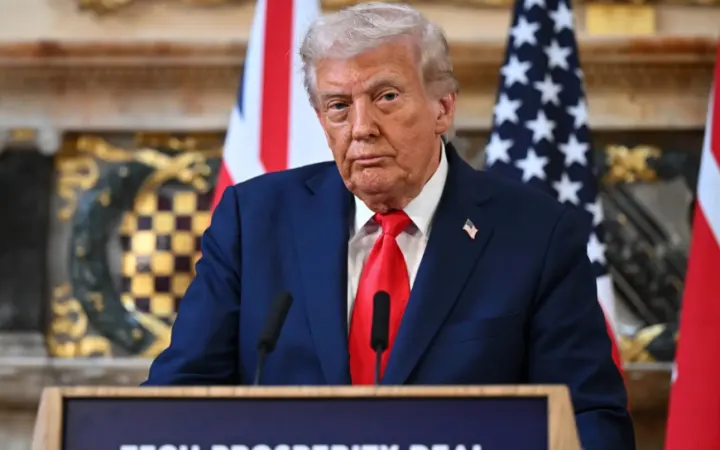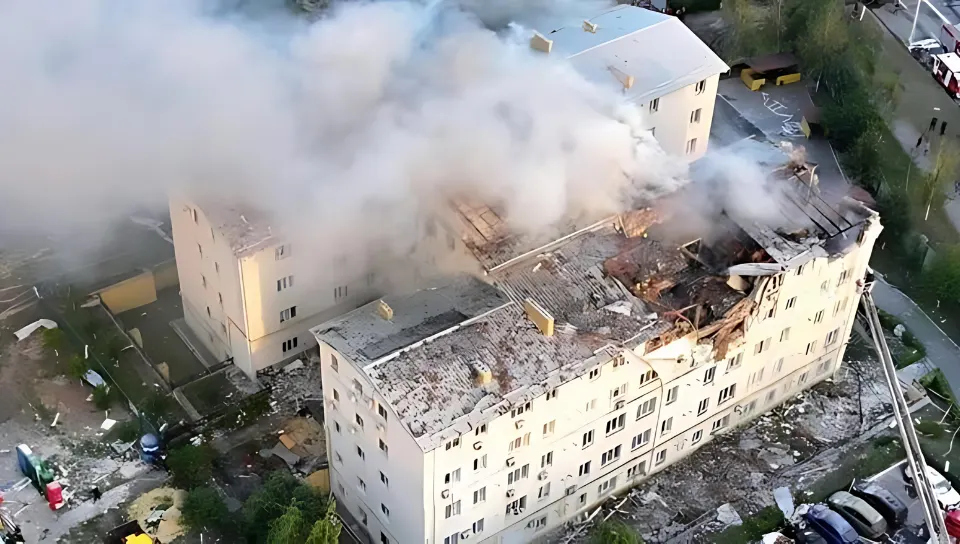
On August 18, 2025, a Russian drone strike on Kharkiv killed seven people, including a toddler and a 16-year-old, as the Zelensky DC visit to meet President Donald Trump began. The attack hit a five-story residential building, sparking fires and injuring many.
Seven Killed in Kharkiv Drone Strike as Zelenskyy Meets Trump in Washington
Who, what, where, when, why, how: On August 18, 2025, a Russian drone strike on the Ukrainian city of Kharkiv killed seven people, among them a toddler and a 16-year-oldas President Volodymyr Zelenskyy arrived in Washington, D.C. to meet U.S. President Donald Trump. Local authorities said the attack hit a five-story residential building, igniting multiple fires and injuring scores. Ukrainian officials called the strike a signal from the Kremlin that it has no intention of easing the war during high-profile peace discussions. The assault was carried out with Shahed-type drones, fired overnight at densely populated neighborhoods, according to regional emergency services.
The timing sharpened the stakes of the White House meetings, where the U.S., European leaders, and Kyiv discussed a framework for security guarantees, expanded air defense, and the conditions for direct talks with Moscow. While the summit did not announce a cease-fire, participants said the goal was to reduce civilian casualties and build a path to verifiable de-escalation, an aim shaken by the grim scenes from Ukraine’s second-largest city.
Rescuers spent hours searching the rubble for survivors as smoke poured from shattered apartments. By morning, authorities confirmed the death toll and warned of further attacks.
What Local Officials Reported from the Scene
Regional authorities described a fast, concentrated strike on a residential block in Kharkiv’s industrial district. Four drones impacted within minutes, collapsing stairwells and trapping residents. Fire crews fought blazes across several floors while medics treated victims for shrapnel wounds and smoke inhalation. The victims, officials said, included an 18-month-old girl and a teenager, while children were among the wounded.
The city’s emergency management office urged residents to heed air-raid alerts, seek reinforced shelter, and keep go-bags with water, medication, documents, and phone chargers. Utilities crews assessed damage to power lines and gas pipes to prevent secondary explosions. Investigators collected fragments believed to be from Iranian-designed Shahed drones, which Russia has used widely against urban targets.
Residents were relocated to shelters and nearby schools. Psychologists offered crisis counseling as families queued to register for emergency assistance and temporary housing.
Why the Attack’s Timing Matters for the Zelensky DC Visit
The strike unfolded as Zelenskyy entered a day of high-visibility meetings with Trump and a group of European leaders at the White House. Diplomats described a dual track: push for security guaranteesfrom air defense to long-term financing, and prepare the ground for direct talks with Russia, potentially mediated by the U.S. The deaths in Kharkiv reinforced Kyiv’s warning that any pause without credible enforcement risks becoming a “reload period” for the Kremlin.
Officials said the focus is on deterrence rather than symbolism: more interceptors, faster logistics, and clearly defined penalties for violations. European capitals framed their role as guardrails to prevent Ukraine from being boxed into concessions while it is still under fire.
With images from Kharkiv circulating globally, the Washington meetings carried a sharper urgency, and a higher bar for tangible outcomes.
Competing Messages: Moscow’s Red Lines vs. Kyiv’s Demands
Russia has repeatedly rejected the idea of NATO troops or peacekeepers inside Ukraine, calling such proposals escalatory. Ukraine argues that any cease-fire needs credible enforcementrobust monitoring, protected corridors, and real consequences for breaches. Western officials say that while NATO membership is not part of the current window, a coalition of partners can still deliver air defenses, training, and intelligence support at scale.
For Kyiv, credibility means the ability to stop drones and missiles from hitting homes like those in Kharkiv, now, not only after a signature. For Moscow, credibility means avoiding a Western footprint it cannot control. Between these aims, diplomats are trying to build a narrow bridge made of verification, deterrence, and sustained supply lines.
That architecture is where the Washington talks concentrated, with Kharkiv’s losses underscoring the stakes.
Inside the White House: What Leaders Sought to Deliver
American and European officials presented a united message: support for Ukraine’s sovereignty and a structured path to reduce attacks on civilians. The near-term deliverables under discussion included air-defense missiles, radars, and financing mechanisms to keep ammunition deliveries steady. Trump signaled he favors exploring a trilateral meeting with Vladimir Putin if preconditions are met. Zelenskyy said Ukraine is “ready” to engage but not to accept territorial concessions.
Both sides emphasized that no U.S. ground troops would be deployed to Ukraine. Instead, the focus is on security guaranteesassurances that Ukraine will have the tools and backing needed to protect its cities during and after any political process.
For families in Kharkiv, those words will matter only if incoming fire slows, and defenses speed up.
How Energy and Markets React to Headlines Like This
When violence spikes during diplomacy, markets price uncertainty. A deadly strike can widen the geopolitical risk premium embedded in oil and LNG, lifting energy prices and nudging airlines and shippers to adjust fuel hedges. Conversely, credible steps on air defense and monitoring can calm volatility. Investors track these moves across ETFs, defense names, and safe-haven assets such as gold and Treasuries while reassessing portfolio diversification.
For households, the link shows up in pump prices, inflation expectations, and ultimately interest rates. A steadier outlook supports more predictable mortgage rates, travel budgets, and business planning. It’s why diplomatic signals, and tragedies like Kharkiv, echo through wallets as well as war rooms.
Stability is not a headline; it is a cumulative effect of credible steps. The Washington talks tried to lay those bricks.
What a Non-NATO Enforcement Mechanism Could Look Like
With NATO troops off the table, planners sketched other tools: a coalition of non-NATO states for corridor security; expanded roles for monitors; satellite-based verification of strikes; and automatic penalties if agreed lines are crossed. Technology, ground sensors, radars, independent imagery, would feed a joint investigations panel able to attribute violations within hours, not weeks.
Kyiv’s test is practical: will the system intercept more drones and missiles tomorrow than it did yesterday? If yes, civilians live; if not, paperwork won’t matter. That’s why delivery of air-defense interceptors, electronic warfare gear, and generator protection remains central to the conversation.
In Kharkiv, residents are not debating formats; they’re asking for fewer funerals. Any deal must answer that demand.
Kharkiv Under Fire: The Humanitarian Picture
Kharkiv’s hospitals continue to treat children and adults hurt in overnight bombardments, broken bones, burns, concussions, trauma. Volunteers deliver food, water, and blankets to displaced families. Schools and subway stations double as shelters when sirens sound. The city’s social services track families with infants and elderly relatives to prioritize aid and transport.
Ukraine’s government is preparing for winter by fortifying power infrastructure, pre-positioning transformers and repairing lines after each attack. International groups are sought for generator support, medical supplies, and mental-health resources as children process explosions, blackouts, and loss.
For Kharkiv families, the metric of success is simple: quieter nights and lights that stay on.
Statements from Washington: What Leaders Said on the Record
At the White House, Trump reiterated there would be no U.S. ground troops in Ukraine and floated a potential trilateral format to bring Zelenskyy and Putin together under specific conditions. Zelenskyy said Ukraine is “ready” to negotiate but emphasized that any framework must protect sovereignty and civilians. European leaders described the discussions as “constructive,” highlighting plans to craft synchronized security guarantees over the coming days.
Even supporters of talks warned that a cease-fire without enforcement simply produces new targets. The Kharkiv strike, they said, is why air defenses and penalties must move in lockstep with diplomatic language.
The next week will test whether pledges become deliveries, and whether the night skies grow quieter.
Ripple Effects: Travel, Insurance, and Household Budgets
Geopolitical shocks move daily life in subtle ways. A darker risk outlook can lift travel insurance purchases, delay corporate events, and alter freight routes. For families, it influences decisions about savings accounts, credit cards with travel rewards, and whether to lock in a home loan now or wait. If the summit’s security steps are credible, expect steadier airfares and hotel prices; if not, volatility can creep into ticketing and logistics.
Small businesses revisit cash flow, inventory, and cyber coverage when conflict headlines spike. Insurers may adjust deductibles or premiums on business interruption insurance and cargo policies tied to at-risk corridors. These are not abstract considerations; they show up in invoices, family budgets, and end-of-month ledgers.
Calmer skies over Ukraine would ripple outward into calmer plans for travelers and businesses worldwide.
What to Watch Next: Timelines, Deliveries, and Verification
Officials hinted at a near-term window to finalize elements of a security package. Watch for synchronized European announcements on air defense, U.S. guidance on financing, and whether Kyiv and Moscow accept a schedule for direct talks. Also track movement on humanitarian corridors and the return of deported childrenareas that can progress even amid hard politics.
For the battlefield, the immediate indicator will be intercept rates and injury counts in cities like Kharkiv. For diplomacy, the tell will be whether verification teams can attribute violations quickly enough to trigger responses, without relitigating every clause.
If those mechanisms lock in, the probability of quieter nights rises. If not, headlines like Kharkiv’s will return.
Final Take: A City in Mourning, a Summit on the Clock
Seven lives lost, including a toddler and a teenagerturned a diplomatic calendar into a moral countdown. The Kharkiv strike did not derail the Washington talks, but it reframed them: any plan that cannot protect families in apartment blocks will not hold. Leaders spoke of security guarantees, verification, and future meetings; the test now is whether those words translate into interceptors, hardened grids, and real consequences for new attacks.
In the days ahead, look for actions that reduce funerals: faster air-defense deliveries, clearer penalties for violations, and transparent reporting on strikes. Diplomacy matters; so does the sound of sirens at 3 a.m. The memory of the seven lost in Kharkiv should guide the next steps, from strategy tables in Washington to rescue crews in Ukraine, until the night sky gets quieter.