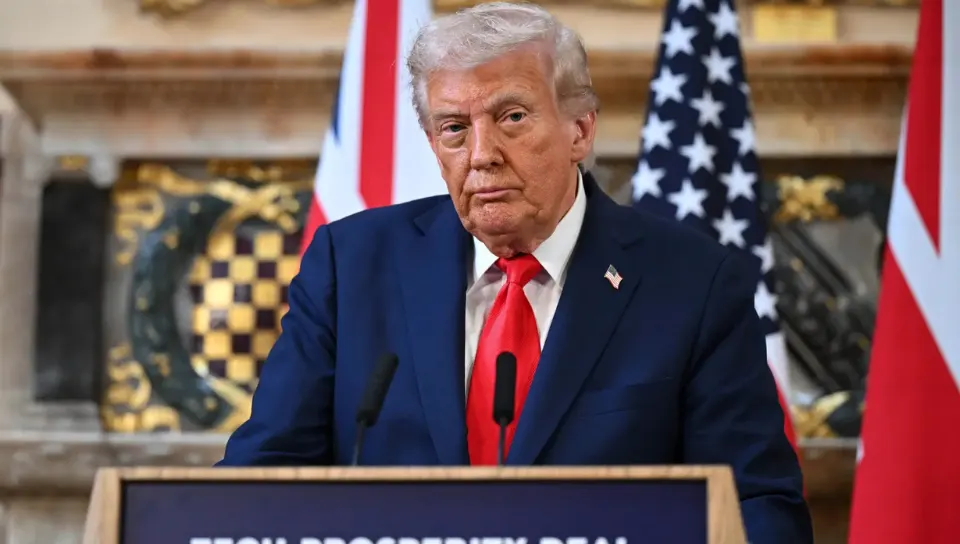
The new Trump H1B policy centers on an executive order imposing a $100,000 fee on all visa applications in the program, a White House official confirmed. The administration says the program has been exploited to undercut American workers, while it has long drawn skilled foreign talent to the United States.
In a move that sent shockwaves through the global technology and business communities, President Trump is set to sign an executive order imposing a staggering $100,000 fee on all H1-B visa applications. A White House official confirmed the dramatic policy shift, framing it as the administration’s most aggressive crackdown yet on a program they argue has been exploited to undercut American workers. The H1-B visa, long considered a vital artery for attracting high-skilled foreign talent to the United States, is now at the center of a firestorm. The administration contends that the program, which admits hundreds of thousands of workers annually, has become a tool for companies to hire lower-wage employees, depressing domestic salaries and displacing U.S. citizens. This unprecedented fee is designed to make it prohibitively expensive for all but the wealthiest applicants and corporations, fundamentally altering the landscape of skilled immigration. The announcement has ignited a fierce debate, pitting the White House’s “America First” labor protectionism against the tech industry’s warnings of a catastrophic blow to innovation and global competitiveness.
A six-figure price tag has just been slapped on the American Dream.
The Trump H1B Policy: “America First” Doctrine in Action
At the heart of this explosive policy is the Trump administration’s long-standing “America First” ideology, which posits that the primary goal of the U.S. government should be the protection of its own citizens’ economic interests. The White House has aggressively argued that the H1-B program, in its current form, is a failure in this regard. According to an official familiar with the executive order, the administration sees the visa as a loophole exploited by large corporations to replace American employees with cheaper foreign labor. This, they claim, creates a downward pressure on wages in critical fields like science, technology, engineering, and mathematics (STEM), ultimately discouraging young Americans from pursuing these careers. The official document reportedly frames the issue as a matter of national security, suggesting that this wage suppression weakens the domestic workforce. In addition to the fee, the President will direct the Labor Secretary to begin a thorough revision of prevailing wage rules, making it much harder for companies to use the program to undercut the U.S. salary market. The message is clear: the administration believes the H1-B visa has morphed from a tool to fill specialized skill gaps into a corporate subsidy that harms American workers, and they are using this massive fee as a sledgehammer to force a correction.
The White House claims it’s protecting U.S. workers.
Do you understand the administration’s core argument?
Silicon Valley Sounds the Alarm
The reaction from the tech industry was immediate and apoplectic. Silicon Valley, which has long been the primary beneficiary of the H1-B program, views the new fee as a direct assault on its business model and its ability to innovate. Tech giants like Amazon, Google, Microsoft, and Meta are among the top employers of H1-B workers, relying on a global talent pool to fill highly specialized roles in areas like artificial intelligence, software engineering, and biotechnology. Industry lobbying groups have warned that this policy will have a chilling effect on their ability to attract the “best and brightest” from around the world. They argue that a $100,000 fee per employee is simply unsustainable, even for large companies, and will make it impossible for smaller startups to compete for talent. The fear is that this will not only slow down research and development in the U.S. but also actively encourage companies to move jobs and entire departments overseas to countries with more welcoming immigration policies. Critics of the order argue that far from protecting American jobs, this move will ultimately weaken the U.S. economy by crippling its most dynamic sector and redirecting the world’s top minds to competitor nations. It’s seen as a self-inflicted wound that could cede America’s technological dominance.
The tech industry is warning of an economic catastrophe.
Do you understand why Silicon Valley is in an uproar?
The Human Cost: A Dream Deferred
Beyond the corporate boardrooms and political chambers, the new policy lands with devastating force on the individuals who dream of working in America. The typical H1-B applicant is not a millionaire; they are often brilliant students graduating from top U.S. universities or skilled professionals, particularly from countries like India and China, seeking to advance their careers. For decades, the H1-B visa has been a pathway to the American dream, a chance to contribute to cutting-edge fields and build a life in the United States. A $100,000 fee slams that door shut for nearly everyone. It transforms the visa from a merit-based opportunity into a luxury work permit, accessible only to the independently wealthy or those sponsored by the world’s richest corporations. This creates a scenario where a talented but middle-class engineer from Mumbai or a promising AI researcher from Beijing has no chance, regardless of their qualifications. Immigration advocates argue this is profoundly un-American, betraying the nation’s ethos of welcoming talent regardless of financial background. The human cost is immense: countless dreams will be shattered, and families who have invested everything in a U.S. education could see their hopes evaporate overnight.
For thousands of skilled individuals, a dream just became a nightmare.
Can you grasp the personal impact of this six-figure fee?
How H1-B Works Now: A System of Caps and Chance
To understand the magnitude of this new fee, it’s essential to look at the current H1-B system. As it stands, the U.S. government issues a total of 85,000 new H1-B visas each fiscal year. This number includes 65,000 for applicants with a bachelor’s degree and an additional 20,000 reserved for those with a U.S. master’s degree or higher. However, the demand far outstrips this supply. In recent years, U.S. Citizenship and Immigration Services (USCIS) has received several hundred thousand applications annually. Because of this overwhelming demand, the agency uses a random, computerized lottery to select who even gets to file a full petition. This system has long been criticized for its arbitrary nature, reducing a skilled professional’s future to a game of chance. The current filing fees are also a tiny fraction of the proposed new amount, typically ranging from a few hundred to a few thousand dollars, mostly paid by the sponsoring employer. The current process is already a high-stakes gamble; the addition of a $100,000 entry fee would effectively turn it from a lottery into an auction, where only the highest bidders can participate.
The current system is already a high-stakes lottery.
Do you know the facts about the existing H1-B process?
Economic Fallout: Innovation Engine or Wage Suppressor?
The economic debate over the H1-B program is fierce and deeply polarized. Proponents, primarily in the business and tech communities, argue that skilled immigrants are a powerful engine for economic growth. They point to studies suggesting that H1-B workers create a “multiplier effect,” where each foreign hire leads to the creation of several additional jobs for American workers. They also emphasize that these workers are not cheap labor; they are highly paid professionals who contribute billions in taxes and drive consumer spending. Furthermore, they are crucial to maintaining America’s innovative edge, with immigrants playing a disproportionate role in founding successful startups and winning Nobel prizes. On the other side of the argument are labor advocates and critics who claim the program is systematically abused. They argue that large IT outsourcing and staffing firms dominate the lottery, flooding the system with applications to hire workers whom they then place at client sites for far less than an American worker would command. Studies from this camp suggest that H1-B visas can lead to lower average employee earnings and often crowd out employment for other workers, particularly older, more experienced American tech professionals. The Trump administration has clearly sided with the latter view, seeing the program as a net negative for the domestic labor force. This $100,000 fee is their attempt to end the debate by making the supposed “cheap labor” option prohibitively expensive.
Is the H1-B program a job creator or a job killer?
Can you navigate the clashing economic arguments?
A Broken System? Bipartisan Calls for Reform
While President Trump’s proposed solution is extreme, his diagnosis of problems within the H1-B program is not unique to his administration or party. For years, there has been a growing bipartisan consensus that the system is flawed and in desperate need of reform. Prominent Democrats, including Senator Bernie Sanders, have been vocal critics, echoing many of the same concerns about worker exploitation. Sanders has described the program as a way for corporations to hire “low-wage indentured servants from abroad” to replace American workers. The core issue for many reformers is the lottery system, which prioritizes luck over skill or salary, and the loopholes that allow large staffing companies to game the system. Past reform proposals have often focused on moving away from the lottery to a wage-based system, where visas are awarded to the highest-paying jobs first, an idea the Trump administration has also explored. However, no proposal has ever come close to the drastic financial barrier of a $100,000 fee. This shared criticism from both sides of the aisle highlights the deep-seated problems with the current program, even as it underscores the radical and unprecedented nature of Trump’s approach to fixing it.
Surprisingly, both sides of the aisle agree the system is flawed.
Can you identify the common ground in the H1-B debate?
A New Front in the Global Talent War
This policy is not being enacted in a vacuum. Around the world, developed nations are in a fierce competition for a limited pool of highly skilled workers. Countries like Canada, the United Kingdom, and Australia have been actively reforming their immigration systems to make it easier for tech professionals, engineers, and scientists to live and work there. Canada, in particular, has become a major destination for tech talent that has been unable to secure a visa in the United States. A $100,000 barrier to entry in the U.S. is seen by many analysts as a massive gift to these competitor nations. It effectively tells the world’s top minds that America is no longer interested in their contributions unless they come with a hefty check. This could trigger a significant “brain drain,” where talented individuals who were educated in American universities and hoped to build their careers in the U.S. will now take their skills, ideas, and entrepreneurial spirit elsewhere. The long-term consequences could be a hollowing out of America’s innovation ecosystem, as rival countries build up their own tech hubs with the very people the U.S. has turned away. In the global war for talent, this move could be seen as an act of unilateral disarmament.
While the U.S. builds a wall, other nations are rolling out the welcome mat.
Who stands to win the global war for talent?
Legal Hurdles and Political Showdowns
The announcement of the executive order is only the beginning of what is certain to be a protracted and bitter fight. Legal experts are already predicting a barrage of lawsuits from business groups, immigration advocacy organizations, and universities. The central legal question will be whether the President has the authority to impose such a massive fee through an executive order, or if such a sweeping change to immigration law requires an act of Congress. Opponents will argue that this is a gross overreach of executive power, designed to bypass the legislative process. The policy will also ignite a political firestorm on Capitol Hill. While some Republicans will likely rally behind the President’s tough stance, many pro-business Republicans may join Democrats in condemning the move as economically reckless. This could lead to legislative attempts to block the order, setting up a high-stakes confrontation between the White House and Congress. The fate of the H1-B program and the hundreds of thousands of individuals who rely on it will now be decided in courtrooms and the halls of Congress, with the future of American innovation hanging in the balance.
A massive legal and political war is about to erupt.
Do you understand the battles that lie ahead for this policy?
Conclusion: A New “Golden Door”?
The Trump administration’s decision to attach a $100,000 price tag to the H1-B visa is more than just a policy change; it is a fundamental redefinition of America’s relationship with global talent. It shifts the nation’s immigration philosophy from one that, at least in principle, values skills and merit to one that explicitly prioritizes wealth. The “golden door” of American opportunity, long a symbol of hope for immigrants, now appears to be literally golden, accessible only to those who can pay a king’s ransom. The long-term effects of this policy, should it survive the inevitable legal challenges, are unknown but potentially immense. Will it, as the administration hopes, protect American jobs and raise wages? Or will it, as critics fear, stifle innovation, damage the nation’s most vibrant economic sector, and send the world’s best and brightest minds running to competitor nations? The H1-B program has long been a subject of intense and valid debate, but this move escalates the conflict to a new level. A complex problem has been met with a blunt and costly solution, and the future of America’s role as a global beacon for talent is now more uncertain than ever.
America’s “golden door” of opportunity now has a literal price tag.
What is the ultimate takeaway from this seismic policy shift?
Source: ABC7 News