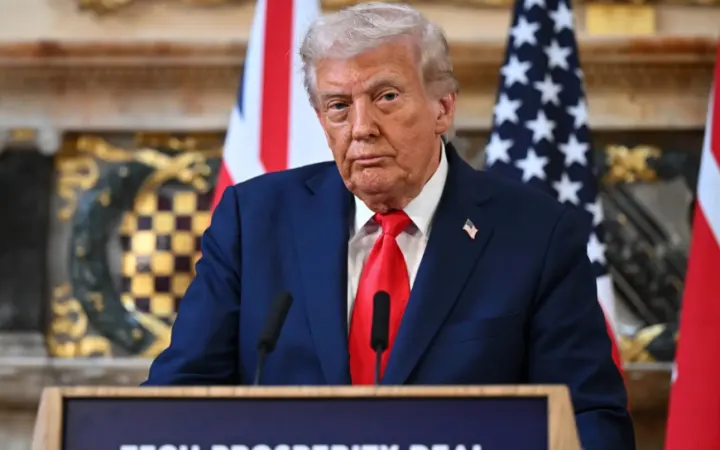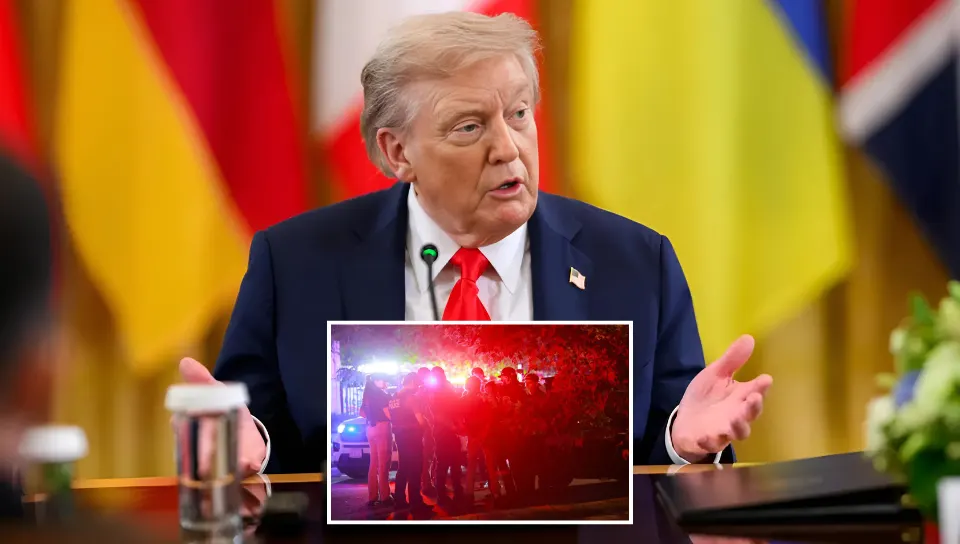
President Donald Trump said he would join police and National Guard patrols, but the planned Trump DC patrol became a visit to the US Park Police Anacostia facility. There he thanked officers and distributed food, and later reporting showed no street patrol took place.
Trump Says He’ll Patrol D.C. with Police and Troops, What Actually Happened
President Donald Trump told a conservative radio host he planned to join D.C. police and National Guard patrols Thursday night as part of his crime crackdown. By evening, the public-facing event was a visit to the U.S. Park Police Anacostia facility, where he thanked officers and distributed food, without an on-camera street patrol.
The claim drew immediate attention because Secret Service logistics make true “ride-alongs” unusual for a sitting president. Officials said details were being worked out earlier in the day; later reporting showed no patrol took place.
The Quote and the Context
Earlier Thursday, Trump said, “I’m going to be going out tonight, I think, with the police and with the military, of course,” in a call-in interview that fueled expectations of a ride-along. News outlets reported the Secret Service was assessing logistics amid an ongoing federal surge in the capital.
By night’s end, coverage focused on the police facility stop, remarks to officers, and a photo-op with pizza boxes, rather than a street patrol. Officials emphasized continued operations under the broader crackdown.
What Counts as a Trump DC Patrol for a President
Ride-alongs by presidents are rare because motorcades, counter-sniper teams, and route locks complicate real-time policing. More common are controlled site visits where officers are assembled at a facility and the president offers remarks.
Even where short movements occur, they’re tightly scripted. The aim is to signal support without creating risks for officers, the public, or the protectee.
D.C. Is Different: Why the District Allows a Bigger Federal Footprint
Washington, D.C., is a federal district. The administration has asserted direct control over local policing and deployed National Guard support during the current surge. That authority is broader than what the White House could assert in a state without consent or specific statutes.
Operationally, that means the federal government can coordinate Park Police, U.S. Marshals, and Guard units with fewer jurisdictional hurdles than in Chicago or New York.
From Pledge to Photo-Op: How the Night Unfolded
After the on-air pledge, attention shifted to where and when a patrol might happen. By evening, cameras captured Trump at the Anacostia operations facility, thanking officers and troops and posing with boxes of food.
Reporters on scene did not observe a live patrol. Instead, the visit resembled past law-enforcement appreciation stops during high-visibility operations.
What Officials Say the Crackdown Is Doing
The White House argues the surge has reduced crime and vows to keep resources flowing. City leaders counter that violent crime was already trending lower and caution against over-militarization of public spaces.
As with most surges, the most telling numbers will be shootings, homicides, and the share of arrests that become indictmentsnot just raw arrest totals.
Security Logistics: Why a Presidential Patrol Is Hard to Stage
Any street movement involves motorcade route locks, advance teams, and tactical overwatch. That footprint can disrupt operations and draw crowds, undercutting the purpose of a patrol meant to deter crime and protect officers.
Officials often opt for facility visits, which ensure controlled access and shorter exposure windows while still sending a symbolic signal.
What Supporters and Critics Are Watching For Next
Backers want more federal cases for gun and gang crimes, plus visible progress in hot spots. Skeptics are tracking civil-liberties concerns, stop practices, and whether federal actions are narrowly tailored to violent crime.
Both sides will look for weekly data and docket activity to see if high-profile visits translate into results.
How the Messaging Fits the Broader Push
Trump framed the operation as making the capital “safe” and vowed to stay until it is “perfect,” language designed to bolster support for expanded federal roles. The rhetoric dovetails with plans to replicate the model in other big cities.
Whether the visuals match the claims will hinge on public dashboards and regular case updates, not sound bites.
Legal Lines: Assistance vs. Takeover
Federal agents can always pursue federal crimes in the District, but visible troop roles and federal direction of local policing raise home-rule tensions. In D.C., the administration has more latitude than it would in states, yet courts still scrutinize tactics.
Expect future legal tests if strategies expand or touch areas unrelated to violent crime, such as encampment clearance or immigration enforcement.
Data Check: Reading Claims About Crime
Officials tout immediate success; city leaders note multi-year trends. The clearest view pairs CompStat-style indicators with case outcomes. Short windows, one night or one week, can mislead in either direction.
Independent groups typically compare D.C. to peer cities to see whether changes outpace national trends already moving since 2024 peaks.
What to Watch Tonight and Beyond
Look for additional briefings on arrests, gun seizures, and any U.S. Attorney filings stemming from surge activity. If the White House repeats talk of patrols, watch for pool notes and photo logsthe surest evidence of what actually occurred.
Absent that, expect more facility visits and controlled visuals as agencies continue operations across the city.
Legal Reality Check: What a President Can Actually Do on “Patrol”
Presidents can visit police operations and observe, but routine street enforcement remains the job of sworn officers. In Washington, D.C., federal authorities have wider coordination powers than in states, yet individual arrests and searches still follow local and federal law, not presidential discretion.
Even in a surge, executive messaging does not override probable cause, warrant rules, or department policies. Any role for the commander in chief is observational and ceremonial, with decisions left to incident commanders and line supervisors.
Secret Service 101: Why True Ride-Alongs Rarely Happen
Protective movements require locked routes, advance teams, counter-sniper overwatch, medical units, and contingency motorcades. That footprint can disrupt quiet police work, draw crowds, and complicate officer safety in active corridors.
To reduce risk, the norm is a controlled facility visit where officers are pre-assembled and movement is brief. When “patrols” are promised, logistics typically narrow them to greetings, briefings, and carefully staged walk-throughs.
Who’s Really on the Street: The D.C. Task-Force Mix
Operationally, surges lean on joint task forces that combine MPD, U.S. Park Police, U.S. Marshals, ATF, FBI, and DHS components. The emphasis is on gun cases, warrants, and violent crews with interstate footprints.
Agents bring investigative reach and federal charging options; local officers bring neighborhood knowledge and patrol power. The blend is case-driven, not event-driven.
Could a President “Help” with Arrests? Here’s the Line
Arrests must be executed by sworn law-enforcement officers acting under lawful authority. A president physically participating would create evidence-chain, liability, and protocol problems, and invite courtroom challenges.
What does happen: quick briefs from commanders, a walk-through of staging areas, and thanks to officers and Guard members. The operational levers remain with chiefs and prosecutors.
Optics vs. Operations: Managing the Message
High-profile visits aim to show support and momentum, but they can also crowd out quiet case-building. Agencies try to keep the camera moment separate from active enforcement so they don’t burn surveillance or tip targets.
Pool notes and short clips deliver the visual; commanders keep teams focused on warrants, gun traces, and follow-ups started long before any podium remarks.
Field Tempo: How Motorcades Can Slow, or Shift, Policing
Motorcades freeze intersections and alter radio traffic. That can pull resources from hot spots or force teams to resequence warrants to avoid routes locked for VIP movement.
Well-run commands pre-plan time windows so patrol zones stay covered and sensitive operations aren’t compromised by predictable traffic stops and crowds.
Civil Liberties Lens: Speech, Filming, and Checkpoints
Security footprints can intersect with First Amendment activity and the public’s right to record in public spaces. Agencies issue guidance to narrow stops to specific objectivesguns, warrants, violent offenders, rather than broad dragnets.
Clear complaint channels, body-cam audits, and after-action reports help distinguish policy disagreements from actual misconduct.
Lessons from Prior Surges: Precision Beats Volume
2020-era operations showed that the biggest gains came from repeat-offender targeting, fast ballistics turnaround, and strong U.S. Attorney partnerships. Broad sweeps inflated arrest counts but diluted case quality.
The playbook now: focus on guns that shoot and people who use them, then show the work with weekly metrics, not sporadic pressers.
Measuring Impact: The Metrics That Matter
Short-run numbers bounce. The durable indicators are shootings, homicides, the share of gun arrests that become indictments, and average time-to-charge. Analysts also track ballistics hits that link seized guns to prior incidents.
Pair those with complaint trends and you can judge both effectiveness and legitimacythe twin pillars of any surge.
Resident Toolkit: If You Encounter a VIP Movement
Expect temporary closures and re-routed buses. Use official alerts for detours, give space to motorcades, and avoid stopping on bridge spans or tunnel portals when sirens approach.
If an enforcement action unfolds nearby, keep distance, record only when safe, and follow officer directions. Submit tips to hotlines with time stamps and location notes.
Home Rule & Oversight: Keeping Roles Clear in the District
D.C. allows greater federal coordination, but elected leaders, courts, and inspectors general still police the boundaries. Expect scrutiny of use-of-force stats, stop data, and any mission creep beyond violent crime.
Public document indexes, warrant numbers, and weekly dashboards are the best guardrails against rumor and overreach.
Scenario Map: Best-, Middle-, and Worst-Case Paths
Best case: Targeted arrests convert to indictments, shootings decline, and trust holds thanks to transparent reporting and minimal disruption from VIP movements.
Middle case: Mixed optics and logistics; arrests rise but filings lag, and community cooperation stalls.
Worst case: Heavy footprints fuel rights complaints, motorcades hinder enforcement, and short-term numbers mask long-term stagnation.
Takeaways for Readers: Separate Show from Substance
Photo-ops can boost morale, but the substance lives in warrants served, guns traced, and cases filed. The best barometer is weekly datanot a one-night promise of patrols.
As updates roll out, anchor expectations to primary documents and court filings. That’s where policy becomes measurable progress.
Conclusion: Precision, Partnership, and Proof Over Promises
The capital’s surge will be judged on precision targeting, federal-local partnership, and proofnot presidential proximity to a patrol car. Sustainable gains come from case quality and community cooperation, not motorcade routes.
Keep eyes on the metrics that matter. If shootings fall and strong filings rise with minimal rights complaints, the strategy works, no matter who brought the pizza.
Source: NPR