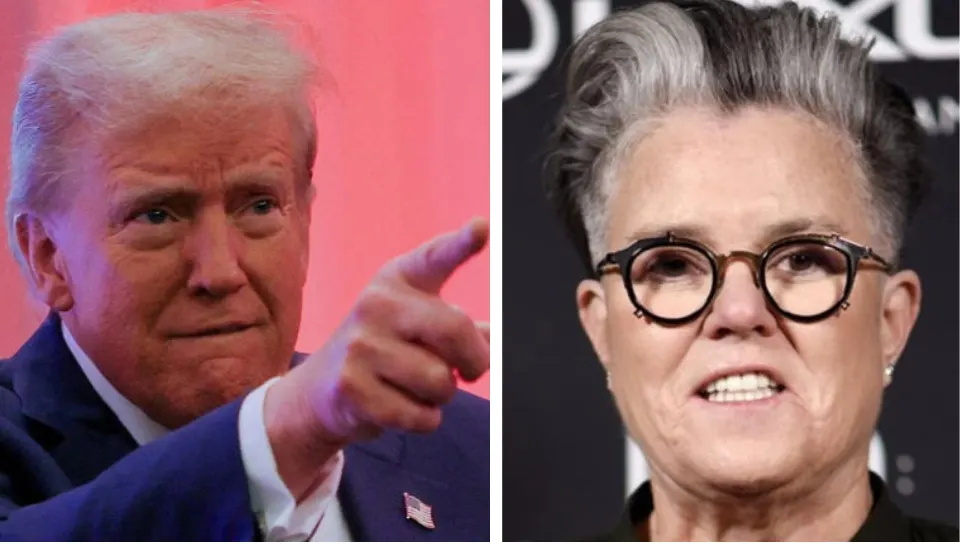
The long feud between Donald Trump and Rosie O’Donnell turned to the Constitution after a reported Trump citizenship threat aimed at revoking her U.S. citizenship. O’Donnell dismissed it, telling fans and the President that he cannot do that because it is against the Constitution.
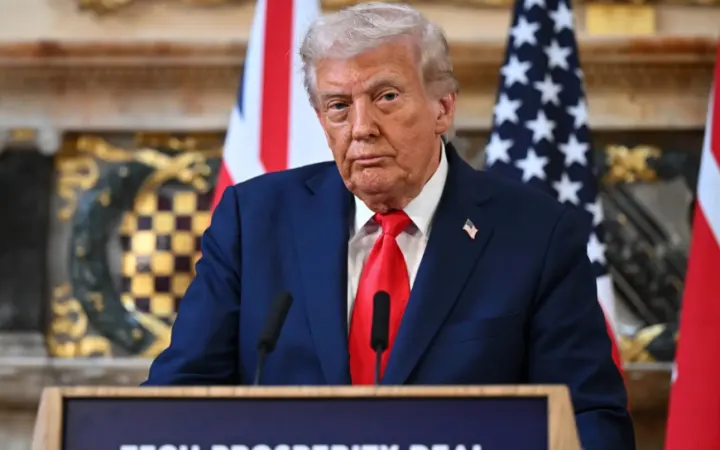
The long and famously bitter feud between Donald Trump and Rosie O’Donnell has taken a startling turn, escalating from personal insults to a debate over fundamental constitutional rights. In a move that has stunned observers, President Trump reportedly threatened to revoke the U.S. citizenship of his long-time adversary, a threat that strikes at the very heart of American identity. But O’Donnell, a comedian and actress never known for backing down, met the unprecedented challenge head-on. In a direct message to her fans and the President himself, she dismissed the threat with unwavering confidence: “He can’t do that because it’s against the Constitution.” The exchange marks a dramatic new chapter in their decade-plus war of words, transforming a celebrity spat into a high-stakes confrontation over the limits of presidential power and the inalienable rights of a U.S. **citizen**. As legal experts and the public scramble to weigh in, a simple but profound question hangs in the air: Can a president actually do that?
Their war of words is legendary.
Let’s see if you can handle the truth!
A Feud For the Ages: A Timeline of Insults
This latest conflict is not a sudden eruption but the culmination of nearly two decades of animosity. The saga began in 2006 when O’Donnell, then a co-host on “The View,” criticized Trump for his handling of a controversy involving the then-Miss USA, Tara Conner. O’Donnell called him a “snake-oil salesman” and mocked his hair and multiple bankruptcies. Trump’s response was swift and brutal, setting the tone for all their future interactions. He called O’Donnell a “real loser” and a “woman out of control,” attacking her appearance by calling her a “fat, ugly pig.” This pattern of O’Donnell criticizing Trump’s actions or character, followed by a deeply personal and often vicious attack from Trump, became a recurring theme in American pop culture. The feud intensified during Trump’s 2016 presidential campaign, with him bringing her up unprompted during a Republican primary debate. The animosity continued throughout his presidency, largely playing out on social media, where O’Donnell became one of his most relentless and high-profile celebrity critics. This long history of **bad blood** provides the context for a threat that, while shocking, feels like a grimly logical escalation of their personal war.
It all started on daytime television.
Can you recall the key moments in this epic war of words?
The Constitutional Clapback: Rosie’s Defense
In the face of an attack on her very status as an American, Rosie O’Donnell’s response was not to trade insults but to appeal to a higher authority: the U.S. Constitution. Her message, “He can’t do that because it’s against the Constitution,” was a masterclass in concise and powerful pushback. She immediately reframed the issue away from their personal animosity and onto the bedrock principles of American law. By invoking the Constitution, O’Donnell positioned Trump not as her personal rival, but as an opponent of the nation’s founding legal document. She effectively crowd-sourced her defense, reminding millions of people that her rights as a natural-born citizen are not a gift to be revoked by a politician, but are enshrined in law. Her stance transformed her from a celebrity combatant into a defender of civil liberties, highlighting the **gravity** of a president using the threat of expatriation, however empty, against a political critic. The move was widely praised as a calm, factual, and devastatingly effective rebuttal to a threat designed to intimidate and silence.
She brought out the ultimate rulebook.
Do you know your constitutional rights?
Can the Trump Citizenship Threat Work? A Constitutional Reality Check
Rosie O’Donnell is right. A U.S. President has no authority to unilaterally revoke the citizenship of a natural-born American. This principle is firmly rooted in the **14th Amendment** to the Constitution, which states, “All persons born or naturalized in the United States, and subject to the jurisdiction thereof, are citizens of the United States and of the State wherein they reside.” The Supreme Court has repeatedly upheld this principle. In the landmark 1967 case *Afroyim v. Rusk*, the Court affirmed that citizens have a constitutional right to remain citizens unless they voluntarily renounce their citizenship. The process of losing citizenship, known as expatriation, requires a clear and willing intent on the part of the citizen to give it up. Actions like formally renouncing citizenship at an embassy, serving in a foreign army engaged in hostilities against the U.S., or committing treason can lead to loss of citizenship, but it cannot be taken away by presidential decree, especially as a punishment for political speech. Legal experts have been unequivocal: Trump’s threat is legally baseless. It is a piece of political rhetoric, not a statement of actual power. While it may energize his base and intimidate critics, it has zero standing in a court of law.
Time for a legal deep dive.
Is the President above the Constitution?
Let’s see if you paid attention in civics class!
The Power of Rhetoric: A Chilling Effect
If the threat to revoke Rosie O’Donnell’s citizenship is legally impossible, why make it? The answer lies in the power of political rhetoric. For a president, words are not just words; they are signals to supporters and warnings to opponents. By suggesting that a critic’s citizenship is conditional, Trump is engaging in a dangerous form of political theater. The goal is not legal action but delegitimization. It serves to paint his opponents, like O’Donnell, as fundamentally un-American and therefore unworthy of having a voice. This tactic can have a chilling effect on free speech, as other citizens might fear facing similar attacks if they speak out. It creates an atmosphere of intimidation, suggesting that dissent is a form of disloyalty punishable by the most extreme measures. While constitutional scholars and lawyers can easily dismiss the threat, the message it sends to the public is far more insidious. It blurs the line between a citizen and a subject, and between a president and a ruler. The **danger** is not that O’Donnell will lose her citizenship, but that the very idea is being normalized in political discourse.
The words are meant to silence critics.
What is the “chilling effect” of this kind of threat?
Public Reaction: Outrage and Applause
The reaction to the Trump-O’Donnell citizenship clash was as polarized as American politics itself. On one side, there was widespread outrage. Legal scholars, civil liberties organizations, and political commentators from across the spectrum condemned the President’s remarks as an authoritarian overreach and an attack on democratic norms. Social media erupted with messages of support for O’Donnell, with many users adopting the hashtag #IAmRosie to signal their solidarity and affirm their own rights as citizens. Many saw it as a terrifying glimpse into a president’s mindset, where personal loyalty is valued above constitutional law. On the other side, the threat was met with applause from some of the President’s most ardent supporters. For them, O’Donnell is a symbol of the “liberal Hollywood elite,” and the President’s attack was seen as a bold and justified takedown of a political enemy. In this view, her vocal criticism of the president makes her “disloyal” and therefore undeserving of the protections of citizenship. This starkly divided **response** demonstrates the deep fissures in American society, where even a foundational concept like birthright citizenship can become a partisan issue.
The nation is fiercely divided.
Was it an authoritarian outrage or a justified takedown?
A History of Questioning Citizenship
The threat against Rosie O’Donnell does not exist in a vacuum. It is part of a broader pattern of President Trump questioning the legitimacy and citizenship of his political opponents, most famously through his promotion of the “birther” conspiracy theory against former President Barack Obama. For years, Trump was the most high-profile proponent of the baseless claim that Obama was not born in the United States and was therefore an illegitimate president. He has also suggested that Vice President Kamala Harris, who was born in Oakland, California, might not be eligible to serve because her parents were immigrants. This pattern reveals a political strategy that seeks to “other” his opponents, casting them as outsiders who do not belong. By questioning their very American-ness, he attempts to disqualify them from the political arena. The threat against O’Donnell, a white, natural-born citizen, is a significant escalation of this tactic. It suggests that, in his view, even birthright citizenship can be nullified by perceived **disloyalty**, a radical and constitutionally unfounded position that redefines citizenship as a privilege, not a right.
This isn’t the first time he’s done this.
What is the “birther” conspiracy theory?
Rosie’s Role as a Celebrity Foil
Throughout the Trump era, Rosie O’Donnell has carved out a unique role for herself as one of the President’s most consistent and unyielding celebrity critics. While other stars have spoken out, few have matched O’Donnell’s relentless and deeply personal level of engagement. She has used her social media platform as a daily bulletin of opposition, sharing news articles critical of the administration, promoting anti-Trump activism, and often directly responding to the President’s own posts with mockery and outrage. This has made her a hero to the anti-Trump resistance, who see her as a fearless truth-teller willing to stand up to a bully. At the same time, it has made her a prime villain for Trump supporters, who view her as the embodiment of an out-of-touch, loud-mouthed Hollywood liberal. O’Donnell seems to have embraced this role as a political foil. She understands that her long and public history with Trump gives her a unique platform to challenge him. She has become more than just a comedian or actress; she is a symbol of the culture war that has defined modern American **politics**.
A hero to some, a villain to others.
How has Rosie O’Donnell defined her role in the Trump era?
The Bigger Picture: Citizenship as a Weapon
The threat against a high-profile celebrity like Rosie O’Donnell resonates far beyond the world of entertainment. It taps into a growing and deeply contentious debate about the nature of citizenship in the United States. In recent years, rhetoric questioning the validity of birthright citizenship has moved from the political fringes to the mainstream. Politicians have openly discussed ending the constitutionally guaranteed right of citizenship for all born on U.S. soil. This is often framed as an issue of immigration, but the threat against O’Donnell reveals a more alarming dimension. It suggests a desire to use citizenship not just as a tool to control borders, but as a weapon to enforce political conformity. If a president can threaten the citizenship of a natural-born American for being a vocal critic, where does it stop? This question moves the conversation from a partisan squabble to a fundamental issue of national identity. Is American citizenship a permanent, inalienable right, or is it a conditional status that can be revoked based on the whims of those in **power**?
The very meaning of citizenship is being debated.
Is it an inalienable right or a conditional privilege?
Conclusion: A War of Words with Real-World Stakes
The feud between Donald Trump and Rosie O’Donnell has long been a source of grim fascination for the American public. It’s a clash of two larger-than-life personalities who seem to bring out the absolute worst in each other. But with the threat to revoke O’Donnell’s citizenship, the feud has crossed a dangerous line. It has moved beyond the realm of personal insults and into a direct challenge to the constitutional fabric of the nation. O’Donnell’s calm, fact-based response served as a powerful reminder that in the United States, citizenship is a right, not a gift from the government. While the President’s threat is legally void, its rhetorical power is undeniable and its implications are chilling. This latest episode is more than just another chapter in a celebrity feud; it is a stark illustration of the ongoing battle over American values, the rule of law, and the very definition of what it means to be a **citizen**.