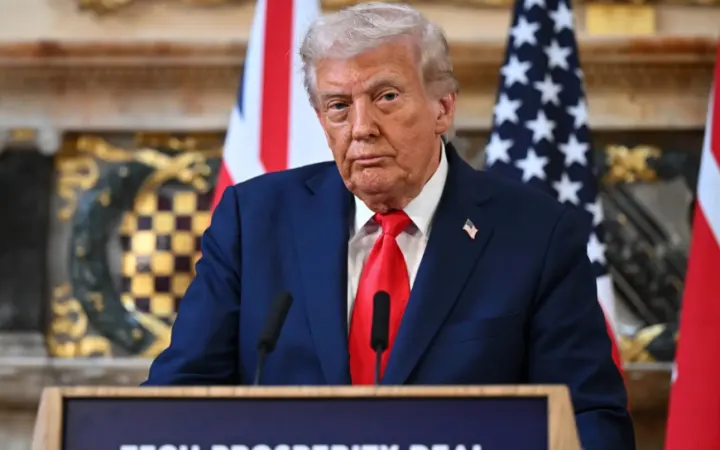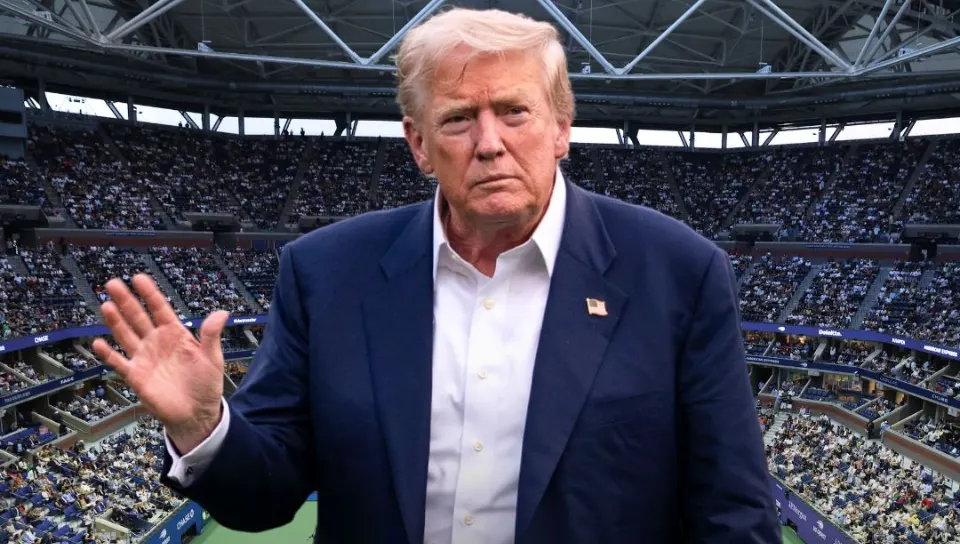
The Trump US Open final appearance will see President Donald Trump attend the men’s singles final at Arthur Ashe Stadium in New York on Sunday. It is his first return to the tournament since 2015 and his first as sitting president, making the match a major national security event.
In a move that promises to blend the worlds of elite sport and high-stakes politics, President Donald Trump is expected to attend the U.S. Open men’s singles final at Arthur Ashe Stadium in New York on Sunday. The visit marks his first return to the storied tournament since 2015, when he was a presidential candidate, and his first appearance as the sitting Commander-in-Chief. The attendance of a U.S. President at one of the nation’s most high-profile sporting events is a rare occasion, one that immediately elevates the tennis final into a significant national security event. The presence of President Trump in his former home city of New York, a place with which he has a long and complicated history, adds another layer of intrigue to the day. For the thousands of fans set to descend on Queens, and for the two athletes competing for a Grand Slam title, Sunday’s match will now be played against a backdrop of Secret Service agents, security checkpoints, and the undeniable presence of the most powerful political figure in the world.
A President is coming to the court!
Are you up to speed on this major political and sporting event?
Only the most informed will ace this opening volley of questions!
Trump US Open Final Security: A Fortress in Queens
The moment it was confirmed the President would be in attendance, the U.S. Open final transformed from a major sporting event into one of the most complex security challenges of the year. The responsibility for protecting the President falls to the U.S. Secret Service, which will orchestrate a massive, multi-agency operation. This involves creating a fortified perimeter around the entire USTA Billie Jean King National Tennis Center. The preparation begins days in advance, with sweeps for explosives and the establishment of a command center. On match day, the area will be teeming with heavily armed agents, both in uniform and plainclothes, blending in with the crowd. Spectators will face a level of security far beyond the usual bag checks. Expect magnetometers, K-9 units, and extensive background checks on anyone working in or near the presidential viewing area. The airspace above the stadium will become a no-fly zone, patrolled by military aircraft. The NYPD will deploy thousands of officers to manage traffic, control crowds, and secure the surrounding neighborhoods. Road closures are inevitable, causing significant disruptions. This “security bubble” is designed to be impenetrable, ensuring the safety of the President, but it will undoubtedly alter the experience for every single person at the event.
A bubble of steel is descending on the stadium.
Do you grasp the immense scale of a presidential security detail?
A New York Homecoming: Trump’s Complicated Relationship with the City
For President Trump, this visit is more than just a trip to a tennis match; it’s a return to the city that forged his public identity. Donald Trump is, quintessentially, a New Yorker. He was born in Queens, just miles from Arthur Ashe Stadium. He built his real estate empire and his celebrity status against the iconic backdrop of the Manhattan skyline. Trump Tower on Fifth Avenue was his home, his office, and the symbol of his brand for decades. However, his relationship with his hometown has always been a mix of mutual embrace and outright hostility. While he was a fixture of the city’s social and business scenes for years, his political rise was met with widespread opposition in the heavily Democratic metropolis. He has often criticized the city’s leadership and policies, and in turn, has been the subject of massive protests and intense political criticism from local officials. This visit as President places that complicated dynamic front and center. It is a return to his roots, but also a venture into what is often considered hostile territory. The reaction of the New York crowd, a diverse mix of local residents and international visitors, will be one of the most closely watched aspects of his appearance.
The native son returns to his concrete jungle.
A History with the Sporting World: More Than Just a Fan
President Trump’s appearance at the U.S. Open is consistent with a lifelong affinity for high-profile sporting events. His involvement goes far beyond that of a mere spectator. In the 1980s, he was a team owner in the United States Football League (USFL), a rival to the NFL, famously owning the New Jersey Generals. His casinos in Atlantic City hosted numerous blockbuster professional boxing matches, including some of Mike Tyson’s most famous fights, with Trump often sitting ringside. He is also an avid golfer who owns a global portfolio of elite golf courses, which he visits frequently. He has cultivated relationships with numerous high-profile athletes and league commissioners over the decades, from Tom Brady to Dana White. This history reveals a deep understanding of the power of sports as a platform for business, branding, and public spectacle. For Trump, sports are not just a pastime; they are an arena where deals are made, celebrity is cultivated, and a powerful image can be projected to a massive audience. His decision to attend the U.S. Open final, one of the premier events on the global sporting calendar, is a natural fit for a President who has always been drawn to the spotlight.
He’s owned a football team. He’s hosted title fights.
Do you know the President’s deep history with the world of sports?
The Political Dimension: More Than Just a Game
It is impossible to separate a presidential appearance from politics, and this visit is no exception. For a sitting president, every public move is scrutinized for its political message. Attending a major, non-political event like the U.S. Open can be a strategic move to project an image of being in touch with popular American culture and to enjoy a moment of leisure, offering a contrast to the daily grind of Washington. It provides a powerful photo opportunity, showing the President engaging with the public in a relaxed setting. However, it also comes with significant political risks. The crowd’s reaction is unpredictable. A warm reception can produce positive headlines, but a chorus of boos, a distinct possibility in New York City, could create an embarrassing and politically damaging moment. The visit could also be interpreted as an effort to make inroads in a “blue state” or to appeal to suburban voters who are a key demographic in tennis. Furthermore, the presence of the President inevitably invites protest. Activist groups may see the event as a prime opportunity to stage demonstrations and get their message seen by a global television audience, creating a potential for clashes and further politicizing the day.
Every move is a political calculation.
Can you analyze the potential political risks and rewards of this visit?
Presidential Precedent: A History of White House Visits to the Open
While a sitting president attending the U.S. Open is rare, it is not entirely without precedent. Several of President Trump’s predecessors have taken in the action at Flushing Meadows over the years. President Bill Clinton was a notable tennis fan and attended the U.S. Open on multiple occasions, both during and after his presidency. His visits were generally low-key affairs, and he was often seen enjoying the matches from the USTA president’s box. President George H.W. Bush also attended the tournament. These past presidential visits provide a template for how such an appearance is typically handled, focusing on celebrating the athletes and enjoying the sport. However, the current political climate is far more polarized than in previous decades. The level of media attention and the potential for public reaction, both positive and negative, are significantly higher today. Security protocols have also become much more stringent in the post-9/11 era. While there is a history of presidents enjoying the U.S. Open, President Trump’s visit is likely to be a much more intense and scrutinized affair than those of his predecessors.
It has happened before… but not like this.
How does Trump’s visit compare to those of past presidents?
A Look Back: Candidate Trump’s 2015 Appearance
To understand the potential atmosphere on Sunday, it’s worth looking back at Donald Trump’s last visit to Arthur Ashe Stadium in 2015. At the time, he was a longshot candidate for the Republican presidential nomination, though his campaign was already gaining significant media attention. His appearance at the women’s final alongside his wife, Melania, was a relatively minor news item at the time, but it offered a glimpse of what was to come. He was seated in a prominent location and was shown on the stadium’s large screens, drawing a mixed but audible reaction from the crowd. There were some cheers, but also a noticeable number of boos. It was a preview of the deeply divided public reaction that would come to define his political rallies and public appearances. Now, he returns not as a candidate, but as the 47th President of the United States. His presence is no longer a curiosity but a matter of state. The security will be exponentially tighter, the media coverage will be global, and the emotions of the crowd, both for and against him, will be far more intense. The 2015 visit was a footnote in a heated campaign; the 2025 visit will be a major event in his presidency.
Let’s rewind to his last visit.
How has the situation changed between his 2015 and 2025 appearances?
The Game Itself: How Will the Presidential Presence Affect the Players?
Lost amid the discussion of security and politics are the two athletes who must perform on the biggest stage of their careers. Playing in a U.S. Open final is already an experience of immense pressure. The stadium holds nearly 24,000 screaming fans, and the global television audience numbers in the millions. Now, add the presence of the President of the United States to that equation. The awareness that the Commander-in-Chief is watching from the stands can be an added distraction. The heightened security can disrupt normal routines and access to the grounds. The energy of the crowd, which may be reacting to the President as much as to the match, can also be a factor. Most athletes are skilled at blocking out external noise and focusing on the task at hand, but a presidential visit is a unique circumstance. The players will likely be briefed on security protocols, but their primary challenge will be to maintain their concentration and not let the spectacle surrounding the match affect their performance on the court. Their ability to manage this unprecedented level of distraction could be just as important as their forehand or their serve in determining who lifts the trophy on Sunday night.
멘 The pressure just got dialed up to 11.
Can the players block out the noise and focus on the match?
The USTA’s Balancing Act
For the United States Tennis Association (USTA), the organization that runs the U.S. Open, a presidential visit is both an honor and a logistical nightmare. The USTA must work hand-in-glove with the Secret Service to ensure the event proceeds safely and smoothly. This involves ceding a significant amount of control over their own venue, from security checkpoints to credentials for staff and media. The USTA’s role is to facilitate the needs of the presidential security detail while simultaneously trying to provide a positive and undisrupted experience for the players and the tens of thousands of ticket-holding fans. It is a delicate balancing act. The organization must also remain politically neutral. The U.S. Open is an event that welcomes fans from all over the world and from all political backgrounds. The USTA will be careful to treat the President with the respect due to his office, while not appearing to endorse his political agenda. Their public statements will likely focus on the honor of hosting a sitting president and their commitment to the safety of all attendees. Behind the scenes, it will be an all-hands-on-deck effort to manage the immense complexity of an event that has suddenly become much more than a tennis match.
It’s an honor… and a massive headache.
How does the U.S. Open’s governing body handle a presidential visit?
Conclusion: A Grand Slam of Politics, Security, and Sport
When the first serve is tossed on Sunday at Arthur Ashe Stadium, it will mark the beginning of more than just a tennis championship. The 2025 U.S. Open men’s final will be a remarkable confluence of athletic greatness, political power, and unprecedented security. The presence of President Donald Trump guarantees a global spotlight and transforms the event into a national spectacle. For the players, it is an added layer of pressure to an already career-defining moment. For the fans, it means navigating a security fortress to witness history. For the USTA and law enforcement, it is the ultimate logistical test. And for the President, it is a return to his home city, a chance to engage with a beloved American pastime, and a public appearance where the reaction will be analyzed and debated for days to come. The story of Sunday’s final will not just be about who won and who lost on the court; it will be about the unique day when the worlds of Washington and professional tennis collided in the heart of Queens.