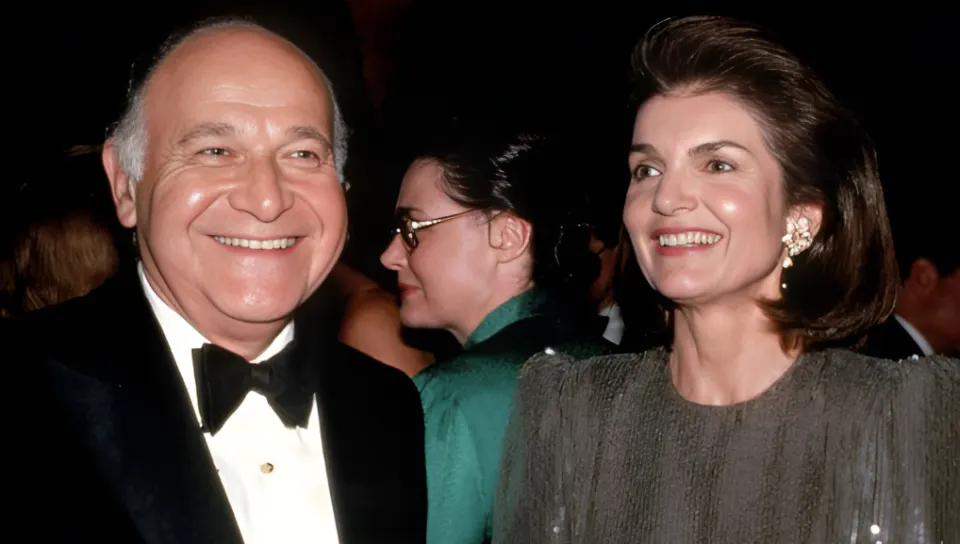
Maurice Tempelsman, the diamond magnate and longtime companion of Jackie Kennedy, died on August 23, 2025, in Manhattan from complications of a fall, his son Leon said. He was 95 and spent a half-century working at the intersection of global diamonds, politics and philanthropy.
Obituary: Maurice Tempelsman, Jackie Kennedy’s Final Partner, Dies at 95
Maurice TempelsmanBelgian-born diamond magnate and the longtime companion of Jacqueline Kennedy Onassisdied on August 23, 2025, in Manhattan from complications of a fall, his son Leon said. He was 95.
Known for a half-century at the intersection of global diamonds, politics, and philanthropy, Tempelsman kept a quiet public profile even as he became a confidant to world leaders and, in the 1980s and early ’90s, the last great love of the former first lady.
From Antwerp to New York: A Refugee to the American Century
Tempelsman was born into an Orthodox Jewish family in Antwerp, Belgium. In 1940, as Nazi forces advanced, his parents moved the family to New York City, where he attended public schools and briefly New York University.
As a teenager he joined his father’s firm, Leon Tempelsman & Son, learning the trade that would define his career: sourcing, cutting, and marketing diamonds with a focus on industrial supply and, later, high-end gems.
The Deal Maker: Building a Diamond Empire
In the 1950s, Tempelsman helped persuade Washington to stockpile African industrial diamondspositioning himself as a crucial intermediary. He later chaired Lazare Kaplan International, a U.S. leader in precision cuts, while maintaining a tight network of supply relationships across Africa.
Few nonmining executives matched his access: he was among the select global “sightholders” who purchased rough stones direct from dominant suppliers, then moved them through cutting and retail channels.
“Last Great Love”: A Private Life with Jackie Kennedy
After Aristotle Onassis died in 1975, Tempelsman and the former first lady deepened a friendship into partnership by about 1980. In 1988, he moved into her Fifth Avenue apartment. Friends recalled Central Park walks and quiet evenings, far from flashbulbs.
When Onassis died of cancer in 1994, he was at her side. At her funeral Mass, he read Ithaka by C.P. Cavafy, a farewell that became part of Camelot’s after-story.
Steward of an Estate: Managing Jackie’s Finances
Accounts from the period credit Tempelsman with helping manage Onassis’s assets with a conservative, long-view approach, prioritizing diversified holdings and tax clarity over headlines.
Reports have long circulated that he significantly grew her post-Onassis inheritance. The pair kept details private; what’s undisputed is his role as financial adviser and confidant in her final years.
Power and Policy: The Political Rolodex
A committed Democratic donor, Tempelsman maintained ties from the Kennedy era through the Clinton years. He moved easily between boardrooms and embassies, often advocating for trade access and development in resource-rich states.
Critics questioned his proximity to controversial African leaders during the Cold War; admirers argued that engagement helped channel investment and nudge reforms, including support for industry transparency as norms evolved.
Reputation & Ethics: Diamonds in the Public Eye
Tempelsman’s career spanned eras of growing scrutiny, conflict-diamond debates, sanctions, and the rise of the Kimberley Process. He was never charged with illicit trading; still, his ties to opaque markets drew periodic press investigations and academic interest.
His companies emphasized legal compliance and partnerships with U.S. agencies. Later in life, he backed civic and cultural causes, a philanthropic throughline less visible than his business work.
Boardrooms and Bench Jeweler’s Benches: LKI and Beyond
As chair of Lazare Kaplan International, he championed precision cutting and branding in an industry that once sold primarily on carat and clarity. The Lazare name became shorthand for “ideal cut” marketing in the U.S.
His private vehicle, Leon Tempelsman & Son, pursued investments beyond diamonds, real estate, ventures, and strategic partnerships in resource economies.
Family: A Private Circle, Public Losses
Tempelsman married Lilly Bucholz in 1949; they separated in the 1980s and had three children, Rena, Leon, and Marcy. The family endured tragedy when son-in-law Robert Speisman, a Lazare Kaplan executive, died on Sept. 11, 2001.
He is survived by his children, six grandchildren, and seven great-grandchildren, according to family statements. Plans for services were not immediately public.
Final Chapter: The Fall, the Hospital, the Farewells
Family members said Tempelsman died from complications following a fall, three days shy of his 96th birthday. He passed in Manhattan, where he had lived and worked for decades.
For those who knew him, the quiet end fit a life conducted largely off-camera, even as his relationships, and one in particular, tied him to American memory.
Legacy: A Connector of Worlds
Tempelsman leaves a mixed but consequential ledger: deal maker, philanthropic patron, and a companion whose devotion helped write the final chapter of a Camelot life. His career mirrored postwar globalization, its promise and its problems.
In New York he will be remembered for his privacy and for the image of a tall man walking quietly beside a woman the world adored.
What to Watch: Statements, Tributes, and Archives
Expect family statements, notes from cultural institutions he supported, and retrospectives on the Lazare Kaplan brand. Researchers will revisit files on his African ventures as a window into Cold War–era commerce.
For readers, the most telling tributes will likely come from those who saw him up close, in the diamond offices, on Fifth Avenue, and in hospital rooms where fame gave way to caregiving.
Diamond Market 101: How Tempelsman Played the System
In an industry long dominated by a few suppliers, Maurice Tempelsman excelled at the art of the relationship deal. As a longtime executive and later chair at Lazare Kaplan International, he focused on reliable access to rough stones and meticulous cutting and branding, turning supply predictability into retail value.
Rather than chase headlines, he invested in the quiet infrastructure of the trade: contracts, compliance, and manufacturing know-how. The result was a pipeline that could weather cycles while promoting the company’s “ideal-cut” message to consumers.
Washington Ties: The 1950s Stockpile That Built Credibility
Accounts from the period credit Tempelsman with promoting a U.S. effort to stockpile industrial diamonds during the Cold War, a move that aligned national-security planning with a young trader’s network across Africa.
The episode cemented his reputation as a bridge between government needs and commodity realitiesa role he would reprise for decades as markets globalized and supply chains grew more complex.
Africa Portfolio: Opportunity, Controversy, and Access
Tempelsman’s business footprint extended across Africa, where he cultivated ties in resource economies and, at times, drew scrutiny for proximity to authoritarian leaders. Supporters say engagement created jobs, standards, and investment; critics counter that elite networks can blur lines between commerce and politics.
What’s clear is that he favored on-the-ground presencebuying houses, technical agreements, and long relationships with ministries, over arms-length trading. That approach made him influential and, inevitably, controversial.
From “Blood Diamonds” to Standards: His Transparency Pivot
As concerns over conflict diamonds rose, Tempelsman’s companies backed industry efforts toward traceability, including the Kimberley Process framework for rough-diamond certification and buyer-seller warranty systems.
These measures didn’t solve every problem, but they marked a shift: a major U.S. brand publicly aligning with compliance norms that later became market expectations, not afterthoughts.
Lazare Kaplan’s Playbook: Cut, Brand, and Prove It
Under Tempelsman’s leadership, LKI popularized the “ideal-cut” narrative and leaned into technology, laser inscription, serials, and patents, to make premium claims verifiable. The bet: consumers would pay for measurable craftsmanship.
That strategy helped distinguish LKI in a market where many stones look similar to the untrained eye but can perform very differently under light.
Boards and Causes: Where He Gave Time and Money
Beyond business, Tempelsman served as a trustee and past chairman of the Africa-America Institute, chaired the Corporate Council on Africa at two intervals, and sat on boards including the National Democratic Institute.
The throughline was consistent: practical engagement with Africa’s private sector and civil society, paired with support for U.S. institutions that train leaders and foster exchange.
“Ithaka”: The Poem, the Farewell, the Public Memory
At Jacqueline Onassis’s funeral in 1994, Tempelsman read C. P. Cavafy’s “Ithaka”, a meditation on life as a voyage. The choice, spare, intimate, became a defining public moment for a man who otherwise shunned center stage.
In obituaries and remembrances, that reading endures as a shorthand for the couple’s final chapter: devotion without spectacle.
Managing Wealth: How He Thought About Risk
Those who worked with him describe a conservative posture on wealth management, favoring diversified assets, tax clarity, and patient compounding over flashier plays. That sensibility, admirers say, guided his advisory role to Jackie Onassis in her final years.
While precise figures remain private, the approach itself, slow, documented, and careful, was part of the brand he projected in life and in legacy.
Politics, Pragmatism, and the Donor’s Rolodex
A reliable Democratic donor for decades, Tempelsman moved with ease among U.S. policymakers and diplomats. Admirers called him a pragmatist who could translate field constraints for officials; skeptics worried that closeness to power dulls scrutiny.
Both views recognize the same fact: he treated political relationships as a toolfor business, for policy, and, at times, for philanthropic aims in Africa.
Media Portraits: The Man Beside the Icon
Coverage of Tempelsman often returned to a single image: a tall, reserved figure walking quietly beside a woman the world adored. The supporting role suited him, friends said; it also kept the focus where he believed it belonged, on her.
That discretion informed his business persona, too: deal rooms, not press rooms; briefings, not profiles.
Mileposts: A Life in Dates and Places
1929: Born in Antwerp, Belgium → 1940: Family flees to New York → 1950s: U.S. stockpile advocacy; rise in diamond trade → 1984: Tempelsman group takes control of Lazare Kaplan → 1980s–1994: Partnership with Jacqueline Onassis.
2000s–2010s: Industry compliance and Africa-focused civic roles → Aug. 23, 2025: Dies in Manhattan, age 95, after complications from a fall.
What Endures: Systems, Not Spotlight
Tempelsman’s most durable work may be the systems he backed: cutting standards, traceability norms, and cross-Atlantic networks for education and business. They outlast quarterly cycles and personal stories alike.
Even critics of his proximity to power acknowledge the institutional bent of his legacy, a preference for building rules, not simply riding waves.
Lessons for Today’s Market Makers
In volatile sectors, Tempelsman’s playbook feels current: De-risk supply, document provenance, respect policy, and invest in human ties. The approach won’t spare you from criticism, but it can make your enterprise resilient.
The caution is equally modern: access without transparency invites distrust. The next generation inherits both halves of that sentence.
Conclusion: A Life Lived in the Spaces Between
Maurice Tempelsman’s story moves between worlds, refugee and rainmaker, artisan brand and geopolitics, public legend and private love. He leaves behind companies, causes, and an image of quiet steadiness beside one of the most recognizable women of the 20th century.
However one weighs the debates around his work, the ledger is undeniable: he connected people and systems that rarely align easily, and he did so out of the limelight, step for step, until the journey’s end.
Source: Wikipedia