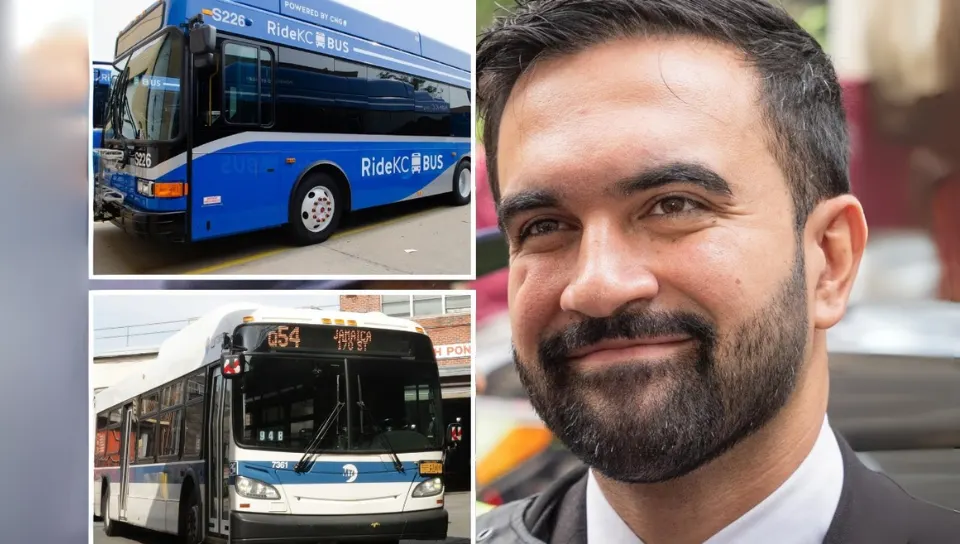
Kansas City, the first major U.S. city to make its buses fare-free in 2020, approved a contract that brings back fares in 2026 while keeping free or discounted rides for eligible low-income riders. The change followed the end of federal pandemic relief that had helped pay for the program, and it has fed the debate over fare-free bus proposals in New York City.
Kansas City moves to end universal free bus fares
Kansas City, Missouri, the first major U.S. city to adopt fare-free buses in 2020, has approved a contract with the Kansas City Area Transportation Authority (KCATA) that brings fares back in 2026, while keeping free or discounted rides for eligible low-income riders. The program had been paid for with federal pandemic relief and city money, and city leaders said it became hard to sustain once the relief funds ran out.
The decision has drawn attention in New York, where Zohran Mamdani made fare-free buses a central promise of his mayoral campaign.
What Kansas City decided
The contract keeps bus service running through April 2026 and directs the agency to reintroduce a base fare that year. The city plans to keep no-cost or low-cost access for low-income riders, moving from a universal free model to a targeted one. Bringing fares back also means paying to reinstall fare collection equipment on buses.
How the program was funded
Before 2020, fares covered only a small share of KCATA’s budget. When the city dropped fares, it replaced that revenue with federal relief money and local funds. As those one-time funds ended, the gap returned. Transit experts generally say universal fare-free service requires a dedicated, recurring source of money, such as a regional tax, or a narrower program aimed at specific riders.
What New York’s pilot found
New York ran a fare-free pilot on one bus route in each of the five boroughs starting in 2023. The MTA’s evaluation found that ridership rose on all five routes, mostly because existing riders took more trips. Assaults on bus operators on the pilot routes fell compared with the year before. The evaluation also found that buses on some pilot routes ran somewhat slower, as more people boarded and got off at stops. The pilot cost about $15 million in lost fares and related expenses.
Other cities’ experience
Boston kept three bus routes (23, 28 and 29) fare-free, pairing them with all-door boarding. Chapel Hill, North Carolina, has run a fare-free bus system since 2002, funded by the towns and the University of North Carolina. Critics of fare-free transit in several cities have raised concerns about conduct and cleanliness on buses. Agencies generally keep codes of conduct regardless of fare policy, and some have added outreach staff and transit ambassadors.
Why New York is different
New York’s bus network is far larger than Kansas City’s and is run by the Metropolitan Transportation Authority, a state agency. A citywide fare-free plan would need agreement from the MTA and state lawmakers, along with a recurring funding source large enough to replace hundreds of millions of dollars a year in bus fare revenue.
The debate over fare-free buses
Mamdani, who as a state assemblyman helped secure state funding for the New York pilot, has argued that free buses would ease costs for riders, reduce conflicts over fares and speed up boarding. Critics argue the city cannot afford to give up the revenue without cutting service or raising taxes, and point to Kansas City as an example of how such programs can be difficult to sustain.
Supporters of fare-free transit say Kansas City’s decision reflects a funding problem rather than a failure of the policy itself. Opponents say it shows the risks of launching programs that rely on temporary money. Proposals in New York and elsewhere are likely to be judged on how they would be paid for, how they would keep buses running on time and who would benefit first.
Source: KCUR