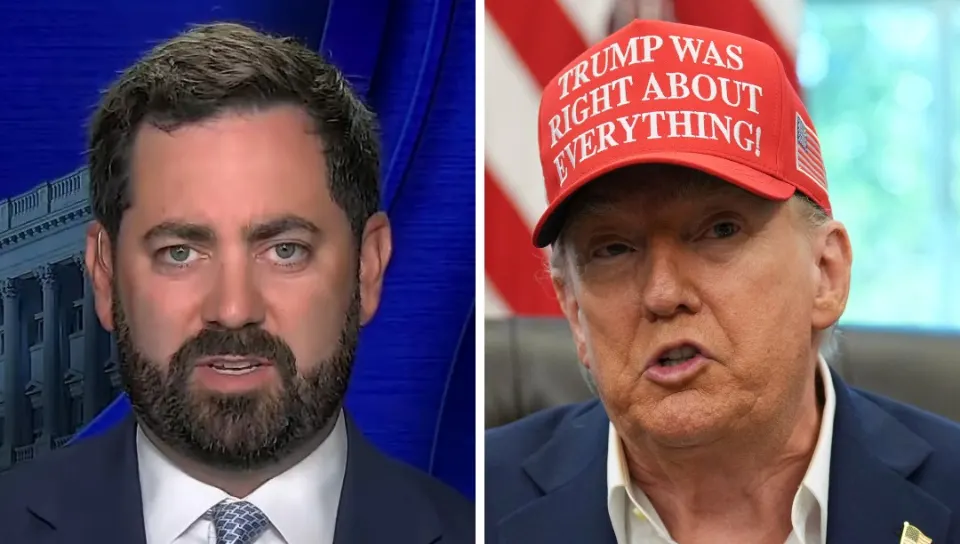
Congressman Mike Lawler backs Guard troops for New York City, telling CBS’s Face the Nation he would favor all of the above, with the National Guard working alongside the FBI and local police. His remarks add to a national debate over federal involvement in city policing.
Rep. Lawler Backs Possible National Guard Deployment in NYC, What’s on the Table
Rep. Mike Lawler (R-NY) publicly endorsed the possibility of President Trump sending National Guard troops to New York City to help fight crime, telling CBS’s “Face the Nation” he’d prefer “all of the above”, Guard forces working alongside the FBI and local police. His remarks add fuel to a national debate over when, how, and whether Washington should insert federal muscle into city policing.
The endorsement arrives as the White House signals a broader willingness to deploy forces to blue-run cities, and after a week of headlines about troop activity in Washington, D.C. The question for New York: how a federal push would intersect with NYPD strategy, state authority, and city crime trends that look better on paper than they often feel on the street.
Lawler Backs Guard Plans: What He Said, and Why It Matters
On Sunday, Aug. 24, 2025, Lawler told “Face the Nation” he supports a comprehensive approach that could include the National Guard, the FBI, and local police. He framed the move as a response to persistent concerns about violent crime and recidivism, citing prosecution and conviction gaps in gun cases during the segment.
It’s the clearest signal yet from a New York Republican aligned with the White House’s posture on urban crime. For City Hall and Albany, the practical question isn’t the sound bite; it’s the legal pathway the administration would use, and how that would mesh with NYPD deployments already underway.
What the President Can (and Can’t) Do: Title 10, Title 32, and the Insurrection Act
There are three main legal lanes. Under Title 32, Guard members remain under governor control but can be federally funded; they may assist with law enforcement tasks because the Posse Comitatus Act (PCA) limits don’t apply in the same way. Under Title 10, the president federalizes the Guard; troops become federal forces and the PCA bars them from most policing, unless Congress has authorized an exception.
The broadest exception is the Insurrection Act, which allows federal military participation in domestic law enforcement in extraordinary circumstances. It’s legally potent, politically explosive, and historically rare. Any NYC deployment would need to choose a lane, and defend it in court and public opinion.
Could Gov. Hochul Block a Federal Move? The Governor’s Role, Explained
New York’s governor controls the Guard in peacetime, but a president can federalize state Guard units. If that happens, a governor can protest politically, but cannot countermand federal orders. In short: once Title 10 status is invoked, Albany’s practical leverage shrinks.
That’s why this debate is as much about status (who’s in charge) as about substance (what troops would do). A cooperative, Title 32-style assist looks different from a top-down federalization under Title 10.
NYC by the Numbers: Record-Low Shootings, Uneven Perceptions
Through mid-2025, NYPD reports show major declines in violent crime, including record-low shootings and murders for the first five months of the year. As of the week ending Aug. 17, murders were down nearly 20% year-to-date versus 2024, even as some categories, including reported rapeticked up year-over-year.
City officials say the perception of disorder still runs hotter than the statistics, especially around quality-of-life issues and headline-driven incidents. That perception gap is feeding the political demand for visible responses, up to and including Guard uniforms in public spaces.
What Guard Missions Look Like in Cities (When They’re Allowed)
In recent years, governors have used the Guard for transit bag checks, infrastructure protection, and crowd support under state control, notably in NYC subways since 2024. Those missions free up local officers for case work and hot-spot patrols while keeping the Guard out of direct arrests and investigations.
Under federal command, law-enforcement roles are far more constrained by the PCA. Troops can secure perimeters, protect fixed sites, and support logistics. Arrests and searches remain primarily a job for police and federal agents with clear statutory authority.
Precedent Watch: D.C. 2025 and the Risks of Mission Creep
Washington saw a highly visible federal footprint this month as the administration surged personnel after violent incidents. Supporters called it decisive; critics warned of militarization and questioned the legal basis for troops performing law-enforcement-adjacent tasks absent an Insurrection Act invocation.
Those disputes will shadow any New York move. The more a mission looks like traditional policing, stops, searches, arrests, the more it invites PCA challenges and political blowback. The safer ground is support and deterrence functions alongside sworn officers.
How a NYC Deployment Would Likely Work, Step by Step
Expect a joint command cell to map missions: transit nodes, courthouses, and critical infrastructure; a memorandum defining what troops can and cannot do; and clear handoffs to NYPD for enforcement. The FBI’s role would focus on intelligence about gang networks, guns, and interstate crews.
The most defensible model: Guard secure perimeters and deterrence posts while NYPD handles stops and arrests. Anything broader would need robust legal scaffolding, and invite immediate court scrutiny.
Civil Liberties 101: Posse Comitatus, Protests, and Public Space
The Posse Comitatus Act limits federal troops from “executing the laws”, a phrase that covers detentions, searches, and arrests. Even under state control, agencies must guard against First Amendment overreach and maintain body-cam/recordkeeping standards where applicable.
For New York, the guardrails are familiar: protect lawful protest, focus on specific threats, document actions, and keep civilian oversight in the loop. Those steps make deployments defensible in court and sustainable with the public.
Politics & Optics: Data Says One Thing, Voters Feel Another
NYPD data show improvements; polls often show residents still feel unsafe. That split creates the space for dramatic ideas, and fuels backlash against them. Expect dueling visuals: Guard uniforms in transit hubs vs. CompStat charts showing declines in shootings and murders.
For campaigns and incumbents, the risk is over-promising what troops can deliver. The metric that matters isn’t how many soldiers stand at a station; it’s whether victimization and fear recede together.
Comparisons: When Albany Used the Guard in NYC Subways
New York already has a live example of a state-run Guard mission: since March 2024, hundreds of soldiers have supported bag checks and visible deterrence in the subways, with seasonal surges added later that year. That effort, under state commandkept arrests and investigations with NYPD.
Any federally led mission in city neighborhoods would be more controversial because of the command shift and the PCA backdrop. Expect lawyers to scrutinize mission creep and civil rights groups to watch street-level interactions closely.
What to Watch Next: Triggers, Timelines, and Legal Moves
Signals to monitor this week: whether the White House names a legal authority (Title 32, Title 10, or Insurrection Act), whether Governor Hochul and Mayor Eric Adams align or clash publicly, and whether DOJ or DHS outline specific roles for federal agents.
Also watch NYPD CompStat updates and any court filings. If deployment language hardens, expect fast-track lawsuits testing command authority and the Guard’s permissible role in civilian law enforcement.
Law, Not Slogans: How the Posse Comitatus Act Shapes Any NYC Plan
Under the Posse Comitatus Act, federal troops generally can’t perform civilian law-enforcement tasks like arrests or searches. That changes only if Congress or the president invokes a narrow exception, most notably the Insurrection Act. Any New York City deployment would live or die on these legal lanes.
Practically, the cleanest pathway is a support role that leaves policing to NYPD and federal agents, with Guardsmen handling fixed-site security, logistics, and deterrence posts. If missions creep toward street stops, the plan invites lawsuits and political blowback.
Title 32 vs. Title 10: The Command Question Drives Everything
In Title 32 status, Guard members remain under the governor’s command (often with federal funding). In Title 10, the president federalizes the Guard, triggering stricter Posse Comitatus limits. New York has recent experience with a state-run subway mission that paired soldiers with NYPD bag checks.
That history hints at a likely model: state-commanded Guard for visible deterrence, while police and federal agents handle enforcement and investigations. It’s the most legally durable, and familiar, approach for New Yorkers.
Mission Menu: What Soldiers Could Actually Do in NYC
Expect perimeter security around courthouses and transit hubs, presence posts at high-traffic nodes, and logistics that free police for case work. In subways, Guard support can augment bag checks that remain under NYPD authority.
What they wouldn’t do in a typical model: routine stops, searches, or arrests. Those actions stay with sworn officers to preserve evidence chains and avoid PCA entanglements.
Interagency Playbook: NYPD, FBI, DHS, and a Joint Cell
A credible deployment builds a joint command cell to assign missions and deconflict radios, routes, and response. The FBI focuses on gang, guns, and interstate crews; DHS components help with intel, critical infrastructure, and transit security.
Clean handoff rules are non-negotiable: soldiers see something → relay to police; police act under state law; federal partners take the long cases. That keeps authority clear and court challenges rare.
How We’ll Know It Works: The Metrics That Matter
Judge any Guard mission by shootings, robberies, weapons arrests, and response timesplus trend lines for repeat victimization in hot spots. For subways, track felonies per million rides and rider surveys.
If those move the right way while complaints and civil-rights filings stay flat or fall, the model is earning its keep. If not, scale back or retool fast.
Main Street Math: Retail, Tourism, and Transit Confidence
Businesses judge safety by loss prevention data, insurance premiums, and foot traffic. Tourists watch headlines and hotel reviews; commuters judge by platform experience. Troop presence can steady nerves, if paired with visible, professional policing.
Metrics to watch: retail shrink in known hot spots, ridership recovery, and occupancy rates. If these improve in step with crime stats, the mission is doing more than staging photo-ops.
Civil Liberties: Keeping Support Missions Within the Lines
Support missions must protect First Amendment activity and avoid turning presence posts into stop-and-frisk by another name. Clear signage, complaint channels, and documented use-of-force rules keep trust intact.
Body-worn cameras remain an NYPD tool; Guard posts rely on incident logs and coordination with police to preserve transparency.
Precedent Check: D.C. & Subway Missions Inform the Model
Recent deployments in Washington, D.C. and New York’s subway system show how visible forces can deter without replacing police. The lesson: stick to support roles, publish weekly metrics, and keep command authority unambiguous.
Crossing into everyday policing without airtight legal grounding risks PCA challenges and undercuts the very deterrence a deployment seeks.
Albany, City Hall, and the Courts: Who Says Yes, and How
Governors control the Guard unless it’s federalized. Mayors influence police deployments but don’t write criminal law. If Washington moves alone, expect fast-track litigation and state pushback on command and scope.
A cooperative Title 32 assist is the path of least resistance; a Title 10 or Insurrection Act move would be harder, louder, and shorter-lived.
Training & Readiness: Soldiers Aren’t Beat Cops, By Design
Guard units train for domestic support missions, disasters, logistics, infrastructure security, not day-to-day probable-cause decisions. That’s a feature, not a flaw: pairing soldiers with police keeps each profession inside its competency.
Before any rollout, brief troops on civil-rights rules, New York law, and the escalation matrix for calling NYPD when encounters shift from presence to enforcement.
Comms Plan: Photo-Ops vs. Public Information
Uniforms in hubs make headlines; dashboards make trust. Publish weekly figures on felonies, arrests, and service calls in zones with Guard presence. If the data don’t move, say so, and adjust.
Message discipline matters. Overpromising what troops can do sets up disappointment. Underpromise, measure, and iterate.
Costs & Tradeoffs: Budgets, Overtime, and Opportunity Cost
Support missions can cut overtime at the margins if they truly free officers for priority calls. But they also require activation pay, supervision, and coordination overhead. The ledger needs both columns: what’s saved and what’s spent.
Build in a sunset review: if compstat metrics and public surveys don’t justify the expense in 60–90 days, scale down or redeploy.
What New Yorkers Should Watch This Week
Three signals matter: the legal authority named in any announcement, the command structure (state vs. federal), and the mission list (support vs. enforcement). Then watch whether City Hall, Albany, and Washington speak with one voice or start arguing on camera.
Confusion is costly on the street. Clarity, in orders, maps, and metrics, is what keeps a high-visibility plan from becoming a high-profile problem.
Conclusion: Visible Support, Clear Limits, Measurable Results
Rep. Mike Lawler’s endorsement adds heat, but the outcome will hinge on law, command, and design. A support-first deployment, Guard for perimeters and deterrence, NYPD/FBI for enforcement, is the most lawful, legible, and likely to deliver results.
If leaders pair that structure with weekly transparency and fast course corrections, New Yorkers will know whether uniforms in public spaces are making them safer or just making the news.
Source: CBS News