Several Republican senators backed President Trump’s plan to send National Guard troops into Democratic-led cities to fight crime, and some welcomed deployments in their own states. Democrats from the cities Trump named rejected the plan as a political stunt and federal overreach.
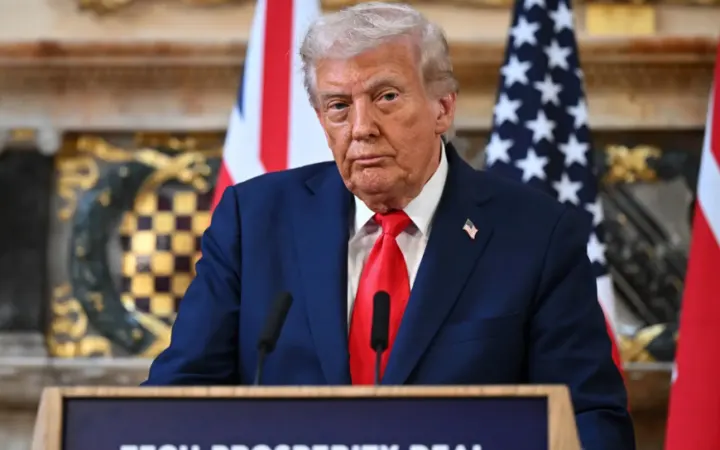
Several Republican senators have voiced support for President Donald Trump’s plan to send National Guard troops into Democratic-led cities to fight crime, and some said they would welcome deployments in cities in their own states. Democrats from the cities Trump has named have rejected the idea, calling it a political stunt and an overreach of federal power.
The debate follows Trump’s decision earlier this month to deploy the National Guard in Washington, D.C., and his repeated statements that Chicago, Baltimore and other cities could be next.
Republican senators back the plan
Sen. Marsha Blackburn of Tennessee, who is running for governor of her state, said Memphis would benefit from federal help. “Blue cities like Memphis need all the help they can get to combat violent crime,” Blackburn told Fox News Digital. “I support the Trump administration’s efforts to restore law and order in lawless cities across America.”
Sen. Eric Schmitt of Missouri said that “for too long, local leaders in blue cities have been more focused on the rights of criminals than victims.” He added that “American families want and deserve to feel safe in their communities,” and praised the deployment in the capital. “His efforts in D.C. have been hugely successful,” Schmitt said. “I have no doubt other cities could benefit from increased law enforcement presence.”
Supporters point to the president’s statements that crime in Washington has fallen since federal forces arrived. Trump has said there had been no killings in the city since the Guard began patrolling.
Democrats push back
Democrats representing the cities that Trump has singled out rejected the plan. Sen. D*** Durbin of Illinois called it “nothing more than a power grab to distract from his disastrous policies,” according to Fox News Digital.
Sen. Chris Van Hollen of Maryland said “Trump’s threats to invade our cities are not the answer,” and criticized the president for “politicizing our great City of Baltimore, which Trump knows nothing about.”
Illinois Gov. JB Pritzker has said there is no emergency in Chicago that would justify sending in the Guard or the military, and called Trump’s threat “a test of the limits of his power.” Chicago police have reported that violent crime in the city is down this year.
What has happened so far
On Aug. 11, Trump declared a crime emergency in Washington, D.C., took temporary control of the city’s Metropolitan Police Department under a provision of the Home Rule Act, and ordered the D.C. National Guard onto the streets. Six Republican-led states have since sent Guard members of their own, bringing the total to about 2,000 troops, according to Stars and Stripes. The Pentagon has said some of the Guard members in the city are now carrying firearms.
D.C. police data cited by news outlets shows violent crime in the city was already down about 26% compared with last year before the federal deployment, a figure critics have cited to question whether the surge was necessary.
On Aug. 25, Trump signed an executive order directing Defense Secretary Pete Hegseth to make sure each state’s National Guard has units trained and ready to be mobilized quickly to help maintain public order. Asked about Chicago the same week, Trump told reporters he had not made a final decision but added, “We may just go in and do it, which is probably what we should do.”
The legal limits
Washington, D.C., is unusual because its National Guard answers to the president rather than a governor. In states, Guard troops normally operate under the governor’s command, and the federal Posse Comitatus Act of 1878 generally bars the federal military from carrying out domestic law enforcement.
That law is already being tested. California Gov. Gavin Newsom sued the administration after Trump federalized thousands of California Guard members and sent hundreds of Marines to Los Angeles during immigration protests in June. As of late August, that case was still pending in federal court.
Sending troops into a state over its governor’s objection would likely lead to new legal challenges, and Democratic governors in Illinois and Maryland have signaled they would oppose any such move.
What comes next
For now, the D.C. deployment continues, and the White House has not announced a date for any deployment elsewhere. Republican support in the Senate gives the president political backing to expand the effort, while Democratic leaders say they will resist it in their states and in court. How Trump proceeds in Chicago is likely to be the next test of how far federal authority over local policing can reach.
Source: The Boston Globe