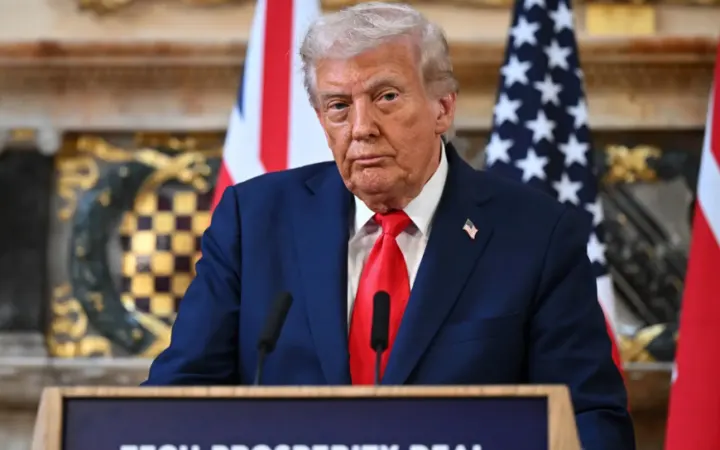
President Trump has signed an executive order aimed at closing the Education Department, but experts say an order alone cannot abolish it, because Congress created the department in 1979. Eliminating it or moving its programs would require new legislation.
President Donald Trump wants to get rid of the U.S. Department of Education. But experts say he cannot do that with an executive order alone, because the department was created by Congress, and only Congress can fully abolish it.
Trump has said he wants to return control of education to the states, arguing that state and local officials, rather than Washington, should make decisions about schools.
Congress must be involved
Because Congress created the Department of Education in 1979, it also decides whether the department continues to exist. The same applies to many of the programs it runs, such as Title I funding for schools serving low-income students and the Individuals with Disabilities Education Act (IDEA).
Eliminating the department or moving its responsibilities to other agencies would require Congress to pass new laws. Without that, many of the department’s functions cannot legally be removed.
Staff cuts and lawsuits
Even though Trump cannot dissolve the department on his own, his administration has cut its workforce roughly in half through layoffs and buyouts. The cuts led to lawsuits from Democratic-led states and strong criticism from teachers unions, who argue they could harm students and undermine programs required by law.
The administration has also directed agencies to identify which programs are required by law, as part of a broader effort to shrink the federal government.
McMahon acknowledges role of Congress
Education Secretary Linda McMahon acknowledged during her Senate confirmation hearing that closing the department would require action by Congress, and that some programs are set by law. She has said she wants to work with lawmakers on any major changes.
Democrats argue the administration is trying to sidestep Congress by weakening the department from within while it still legally exists.
A long-standing goal
Trump has long said he wants to shut down the Education Department. He argues that states should make decisions about schools and supports expanding families’ options outside traditional public schools.
McMahon described her role in a message to staff as the department’s “final mission.” Trump has said he hopes McMahon will put herself out of a job.
Teachers unions push back
Teachers unions say the plan would cut essential services. Randi Weingarten, president of the American Federation of Teachers, has said federal law requires the department to serve millions of students, and her union has vowed to challenge the cuts in court.
A wider fight over executive power
The dispute is part of a broader conflict over how far the executive branch can go in reshaping agencies that Congress created and funds. The administration has made similar moves at other agencies, including the U.S. Agency for International Development (USAID) and the Consumer Financial Protection Bureau (CFPB).
USAID and CFPB also targeted
Elon Musk, then a senior adviser to Trump, wrote on social media that his team had spent a weekend “feeding USAID into the wood chipper.” Secretary of State Marco Rubio later said most of USAID’s programs had been canceled. Courts are reviewing lawsuits over those moves.
The administration also moved to sharply cut staff at the CFPB. After unions sued, a federal judge paused the layoffs. The government says the agency will continue to carry out its legal duties, while critics argue its powers are being weakened.
Statutes vs. executive orders
The legal question comes down to how an agency was created. An agency set up by executive order can be ended by another executive order. An agency created by Congress can only be eliminated or substantially restructured through new legislation.
Trump has used executive orders to withdraw the United States from the World Health Organization and to scale back several small federal agencies. Closing a large, congressionally created department such as Education would require legislation.
Job cuts already under way
The department has reduced its workforce from more than 4,100 employees to about 2,100. Laid-off workers were to be placed on administrative leave starting March 21.
A group of Democratic state attorneys general, representing 20 states and the District of Columbia, has sued to stop the cuts, arguing that the department cannot carry out duties required by law with so few employees.
Comparison with the Reagan era
President Ronald Reagan also called for abolishing the Education Department in the 1980s, but Congress did not approve the plan. Some experts say the current administration’s approach to reducing the department through staffing cuts goes further than earlier efforts.
Source: Al Jazeera