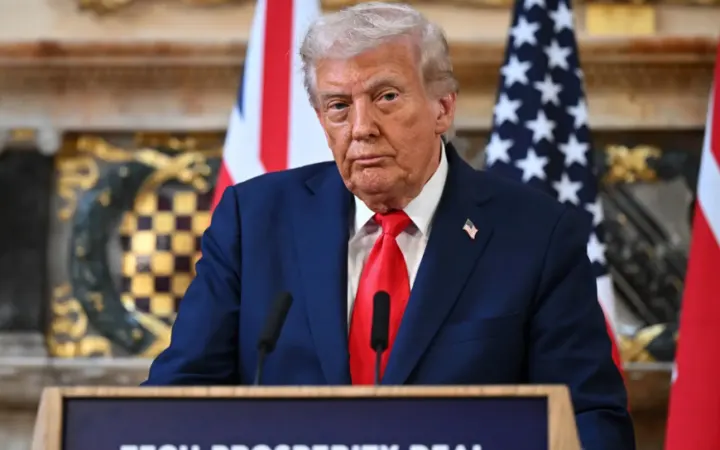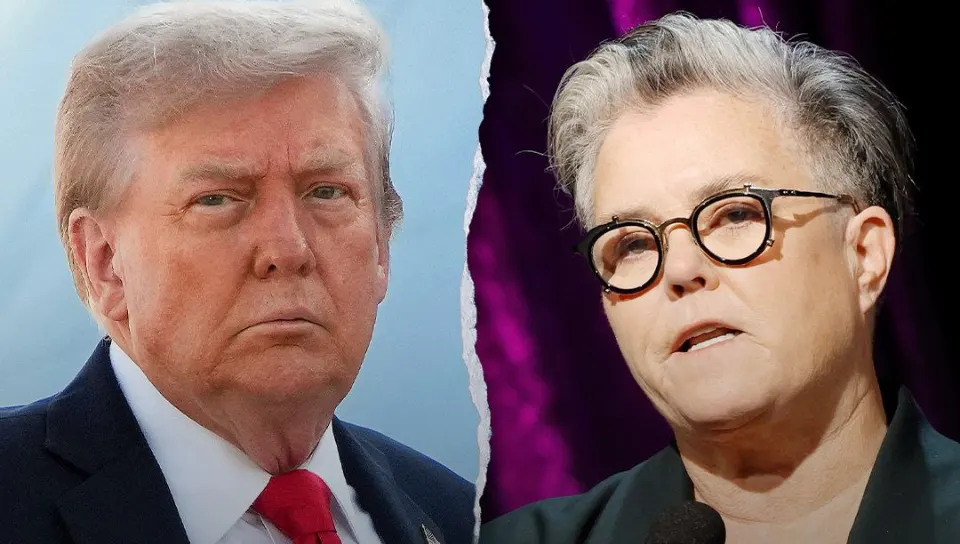
President Donald Trump said again in September 2025 that he is giving “serious thought” to taking away Rosie O’Donnell’s U.S. citizenship, repeating a threat he first made in July. Legal experts note that the government cannot strip a natural-born citizen’s citizenship against their will.
President Donald Trump has renewed his threat to take away the U.S. citizenship of actress and comedian Rosie O’Donnell, the latest turn in a feud between the two that dates back nearly 20 years. In a Truth Social post on Wednesday, September 3, 2025, Trump wrote: “As previously mentioned, we are giving serious thought to taking away Rosie O’Donnell’s Citizenship. She is not a Great American and is, in my opinion, incapable of being so!” The post included a close-up image of O’Donnell, and the White House’s official X account reshared it.
The statement drew criticism because O’Donnell was born in the United States, and the Constitution protects the citizenship of people born in the country. Legal scholars have said a president has no power to revoke a natural-born citizen’s citizenship.
The July threat
Trump first raised the idea on July 12, 2025. “Because of the fact that Rosie O’Donnell is not in the best interests of our Great Country, I am giving serious thought to taking away her Citizenship,” he wrote on Truth Social. “She is a Threat to Humanity, and should remain in the wonderful Country of Ireland, if they want her.” O’Donnell had said earlier in the year that she moved to Ireland in January 2025. She responded on Instagram at the time, calling Trump “everything that is wrong with America.”
How the feud began in 2006
The feud started in December 2006. Trump, then the owner of the Miss USA pageant, announced he would give the reigning Miss USA, Tara Conner, a second chance after reports about her conduct. O’Donnell, then a co-host of ABC’s “The View,” criticized Trump on air, questioning his standing as a moral authority by referring to his divorces and past affairs. Trump responded in interviews with a series of personal insults, calling her “a real loser” and mocking her appearance, and said he might sue her. No lawsuit followed.
How the Trump O’Donnell feud reached the presidential stage
The feud took on a political dimension after Trump launched his presidential campaign in 2015. At the first Republican primary debate in August 2015, moderator Megyn Kelly asked Trump about his comments on women, saying: “You’ve called women you don’t like ‘fat pigs,’ ‘dogs,’ ‘slobs,’ and ‘disgusting animals.'” Trump interrupted: “Only Rosie O’Donnell.” The exchange drew laughter from the audience and became one of the best-known moments of that campaign.
During Trump’s first term and afterward, O’Donnell remained an outspoken critic of Trump on social media, and the two continued to trade attacks.
What the law says about revoking citizenship
The 14th Amendment states that “All persons born or naturalized in the United States, and subject to the jurisdiction thereof, are citizens of the United States.” In the 1967 case Afroyim v. Rusk, the Supreme Court ruled that Congress cannot strip Americans of their citizenship without their consent. A natural-born citizen can lose citizenship by voluntarily renouncing it through a formal process.
Naturalized citizens are in a different position. Federal law allows the government to seek denaturalization in limited cases, such as when citizenship was obtained through fraud or illegal procurement. The government must prove its case in federal court. There is no legal process that allows a president to revoke someone’s citizenship because of their speech or political views.
Reaction
Critics, including Democratic lawmakers and civil liberties advocates, said the threat was an improper use of presidential power against a private critic. Some of Trump’s supporters welcomed the posts as Trump hitting back at a longtime opponent. The White House did not announce any legal steps toward acting on the threat.
Birthright citizenship in law
The 14th Amendment was ratified in 1868, after the Civil War, in part to guarantee citizenship to formerly enslaved people. In United States v. Wong Kim Ark (1898), the Supreme Court held that a man born in San Francisco to Chinese parents was a U.S. citizen by birth, establishing that birth on U.S. soil generally confers citizenship. That principle has guided American citizenship law for more than a century.
Trump’s other public feuds
The dispute with O’Donnell is one of many public clashes Trump has had with entertainers and media figures, including Megyn Kelly and several Hollywood performers. Supporters often see these exchanges as Trump fighting back against critics, while opponents say they are not suitable conduct for a president.
Conclusion
The Trump and O’Donnell feud, which began over a beauty pageant in 2006, has now moved into a dispute over citizenship. Under current law and Supreme Court precedent, the threat cannot be carried out against a natural-born citizen, but it has renewed debate over how presidents use their platform against individual critics.
Source: NBC News