The Musk Loophole Van Hollen Wants to Close
The Musk loophole is the gap Senator Chris Van Hollen of Maryland wants to close with a new bill announced on October 29, 2026, with Representative Robert Garcia of California. Current law already stops federal contractors from giving money to candidates, parties and committees, but Van Hollen says executives and major shareholders have slipped past that ban for years. His bill would extend the ban to cover them and stop campaign cash from people who profit from taxpayer funded contracts. For more, read a clash over midterm spending.
In the slides ahead we look at what the bill would change, who it would cover and why Van Hollen points to Elon Musk as the clearest example of the problem. Musk spent more than 440 million dollars on campaign contributions during the 2026 cycle while his companies earned tens of billions of dollars from federal contracts. Supporters say the plan would make sure contracts are awarded on merit, not on political connections, and critics will test its path through a closely divided Congress. You can also read Sanders and his reply to Musk for more on this story.
References:
Government Executive: Musk is the target of a new Democratic bill to curtail political donations from federal contractors
Van Hollen Senate: Van Hollen, Garcia Announce New Bill to Prevent Billionaires, Corporate Execs from Simultaneously Donating to Federal Campaigns While Benefiting from Government Contracts
Combat Rated: Senator Chris Van Hollen Calls for Ending Super PACs and Secret Political Spending, Cites Musk’s Federal Contracts
Left Scoop: Democrats Have a Powerful Plan to Slam Shut the Elon Musk Corruption Loophole
A Simple Idea From Senator Van Hollen

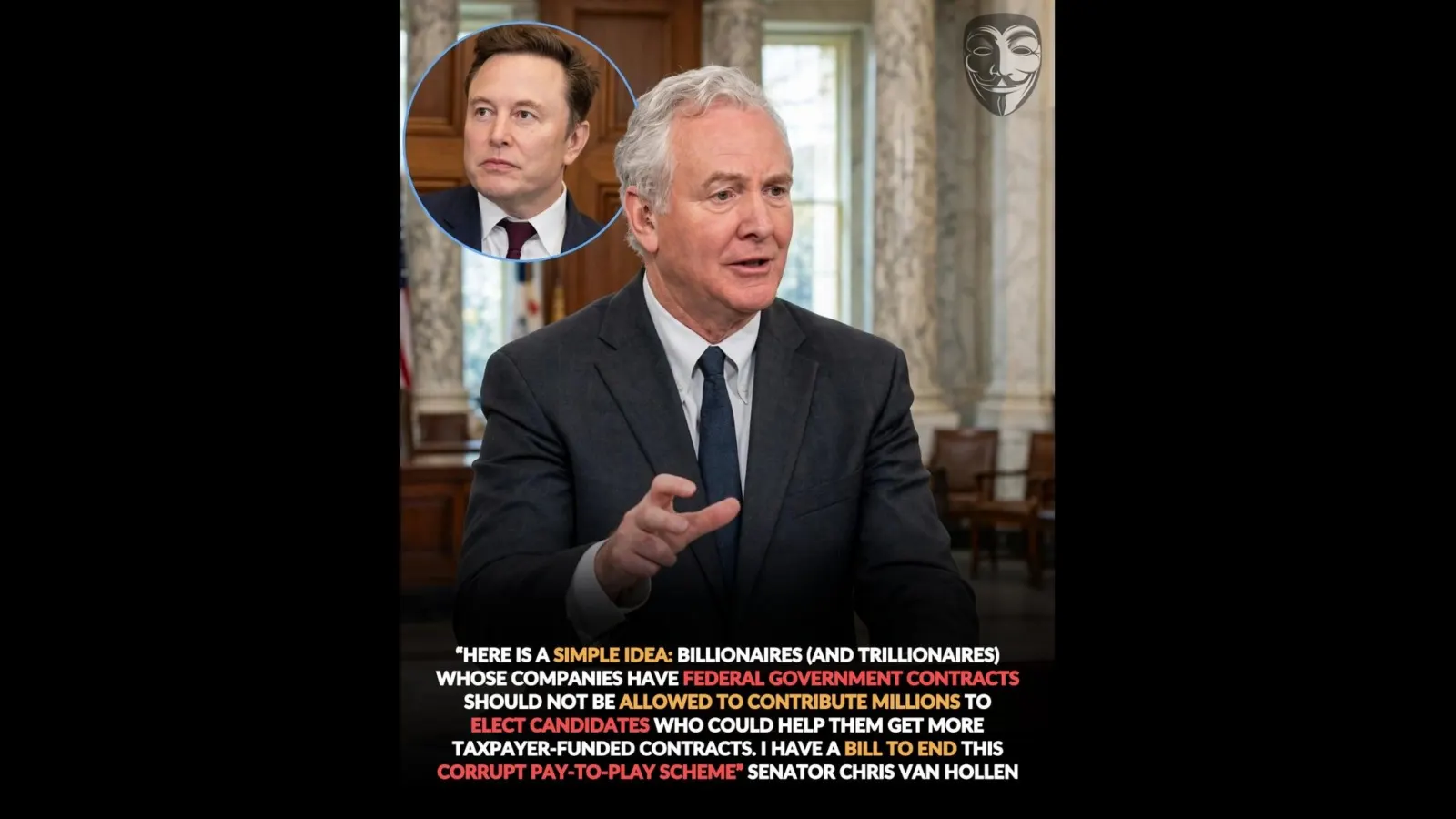
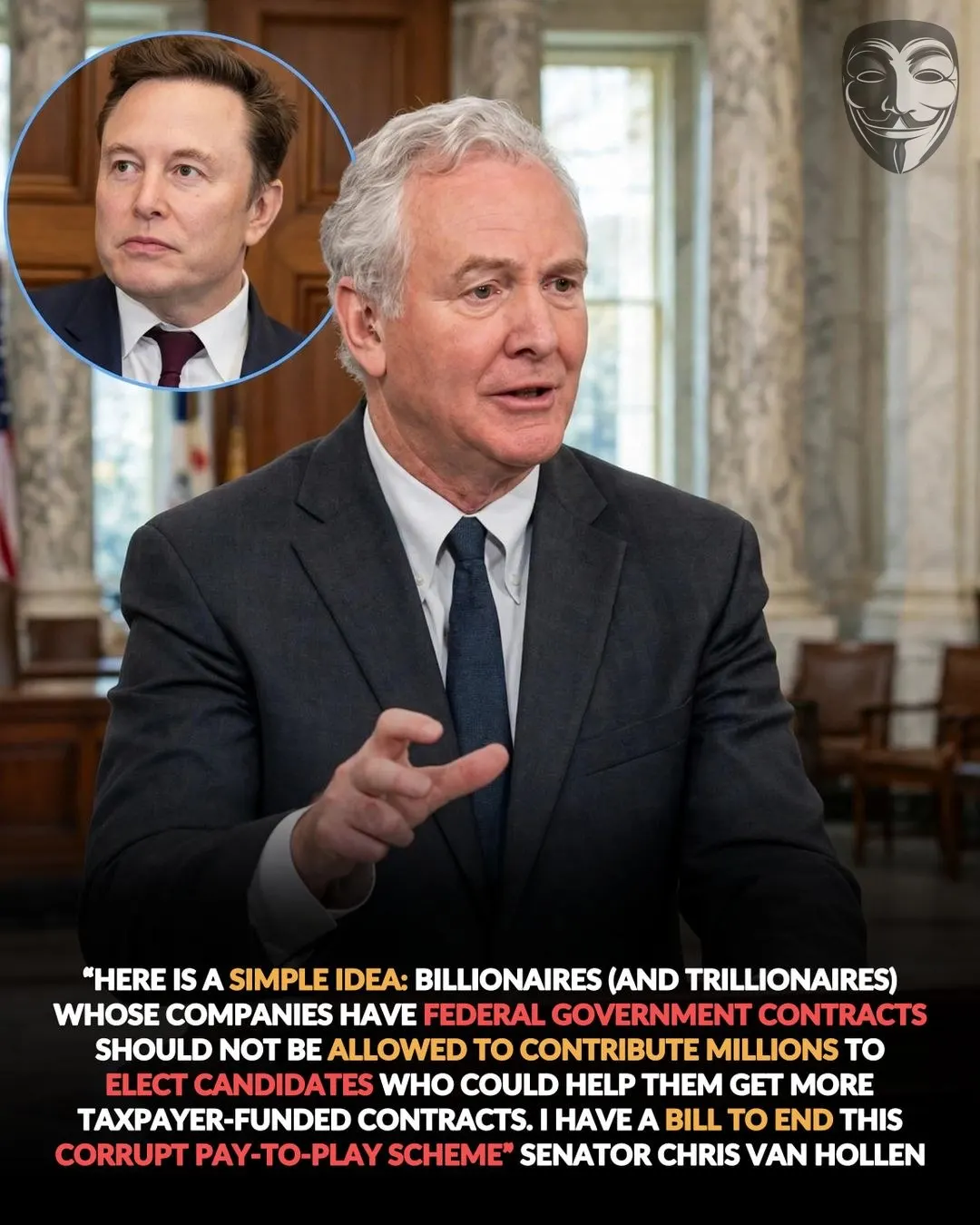
Van Hollen summed up his plan in plain words. He said billionaires and trillionaires whose companies hold federal government contracts should not be allowed to give millions to elect candidates who could help them win more taxpayer funded contracts. He called the setup a corrupt pay to play scheme and said he has a bill to end it. The line struck a chord because it frames a complex campaign finance fight as a simple question of fairness. You can also read Musk’s regret over midterm spending for more on this story.
The Musk Loophole Bill Announced on October 29

Van Hollen and Garcia announced the Close the Campaign Cash-for-Contracts Loophole Act on October 29, 2026. Van Hollen serves Maryland in the Senate, and Garcia serves California in the House, where he is the ranking member of the Committee on Oversight and Government Reform. The two lawmakers said the bill would end what they call the Musk loophole by widening a ban that already applies to federal contractors themselves. Their announcement drew quick praise from reform groups across the country. Read more in a warning about oligarchy and in the Starlink deals under review.
Robert Garcia Joins the Fight in the House

Garcia brings the House side of the effort, and his role matters because any new law must pass both chambers. As the top Democrat on the oversight committee, he has spent years pressing for stronger rules on ethics and government contracts. Garcia said the bill would strengthen the ban on campaign gifts from senior federal contractors and make sure contracts are awarded on merit, not on political connections. His support gives the plan a partner in the House from the start. For related reading, see a Starshield funding warning.
What the Current Law Already Bans

Federal law already bars companies with government contracts from giving money to a political party, a candidate or a committee. The rule sits in the campaign finance code at 52 U.S.C. section 30119. The idea behind it is simple. A company paid with taxpayer money should not use it to shape the elections that decide who hands out the next contract. The sponsors say the rule is sound, but it no longer covers enough people. Our coverage continues in a senator refusing a shutdown vote.
The Gap the Musk Loophole Leaves Open

The gap is the heart of the story. A contracting company itself may not donate, but the people who run it and own large parts of it may give as much as allowed, and through outside groups they may give far more. Van Hollen says that split makes little sense. The same dollars flow from the same business, yet the ban stops at the door. His bill would follow the money to the people who gain most from the next contract. For more, read a push to ban toxic pesticides.
Executives and the Five Percent Rule

The bill would extend the ban to executive office holders of federal contractors, to major shareholders and to affiliated corporations. Government Executive reported that the line would cover anyone with at least a 5 percent interest or share in the company. That threshold matters because it reaches the owners who shape company choices without catching small investors. Officers who sign the deals and owners who profit from them would face the same rule as the company itself. You can also read a first lady with five staff for more on this story.
Affiliated Companies Face the Same Ban

Affiliated corporations would also fall under the new ban, closing another path around the rule. A contractor could not simply shift its giving to a sister company or a related firm and keep the money flowing to the same candidates. The sponsors say affiliated firms share the same interest in winning the next deal, so they should share the same limits. The change would treat the whole business family as one donor for the purpose of the law. Read more in the Tesla robot and its big claim and in Musk’s daughter living with roommates.
One Year to Cool Off From the Musk Loophole
The bill would set a one year cooling off period after a federal contract ends. During that year, the contractor and the people covered by the ban could not give to federal campaigns, even though the work is done. The sponsors say the pause stops a familiar trick, where a firm finishes a job, gives generously and then lines up the next award. The ban would also start early, when contract talks begin, so gifts cannot shape the award itself. For related reading, see a promise to his mom.
Illegal Gifts Go to the Treasury

A gift that breaks the rule would not simply go back to the donor. Under the bill, any contribution made in violation must be handed over to the U.S. Treasury. The sponsors say a refund is too soft, because the donor keeps the goodwill and the candidate keeps the benefit of the gift. Sending the money to the Treasury turns a violation into a loss, which gives campaigns a reason to check every gift before they accept it. Our coverage continues in an actor and a remarks debate.
Dark Money Groups Can No Longer Hide Gifts

The bill would also block a quiet workaround that uses dark money groups as pass throughs. Contractor money given to such a group would have to be held apart and could not be spent on campaigns or election material. The sponsors say secret groups have let donors hide behind a wall of silence while their money still shapes races. By forcing the money into the open, the bill would make it harder to buy influence without a name attached. For more, read a warning about robots and toys.
The Musk Loophole and the 440 Million Dollar Question

Van Hollen points to Elon Musk as the clearest example of why the law must change. Musk spent more than 440 million dollars on campaign contributions during the 2026 cycle, according to the bill sponsors, while his companies earned tens of billions of dollars from federal contracts. Van Hollen said even spending 450 million dollars on campaigns this cycle still leaves Musk with a great return in taxpayer funded contracts. The numbers frame the whole debate. You can also read a warning on Brexit and Russia for more on this story.
Twenty Billion Dollars in Profits From Taxpayer Contracts

The post at the center of this story puts the scale in stark terms. It says Musk made roughly 20 billion dollars in profits from taxpayer funded government contracts while pouring hundreds of millions into campaigns. Van Hollen’s office notes that his companies have received tens of billions of dollars in federal contracts over the years. Supporters say those figures show why a contractor ban that stops at the company door cannot do the job it was written to do. Read more in a clash over midterm spending and in Sanders and his reply to Musk.
Musk Spent 290 Million Dollars in the 2024 Cycle

The 2026 figures are not the first of their kind. Van Hollen’s office says Musk gave more than 290 million dollars to President Trump and his Republican allies in the 2024 cycle, and his giving has grown since then. A New York Times review cited in the debate put his disclosed giving since January 2025 at 474 million dollars. The pattern is what troubles the sponsors, because the money flows in the same years the contracts keep coming. For related reading, see Musk’s regret over midterm spending.
Why Supporters Call the Musk Loophole Pay to Play

Pay to play is the charge at the center of the bill. Supporters say a donor who gives millions to elect lawmakers, then wins billions in contracts from the government those lawmakers fund, has bought an edge no ordinary bidder can match. The sponsors say contracts should go to the best bid, not the biggest donor. That is why Van Hollen calls the scheme corrupt, and why he says the only fix is a ban that reaches the people behind the company. Our coverage continues in a warning about oligarchy.
The Groups That Back the Musk Loophole Bill

The bill arrived with a long list of backers from the reform world. Campaign Legal Center, Brennan Center for Justice, Democracy 21, Public Citizen, End Citizens United Action Fund, Common Cause, Indivisible, Citizens for Responsibility and Ethics in Washington, Democracy Defenders Action and Stand Up America all support the plan. Their backing matters because these groups have pushed campaign finance reform for years and can press lawmakers in both parties to take the bill seriously. For more, read a Starshield funding warning.
Van Hollen Takes the Case to Meet the Press

Weeks after the announcement, Van Hollen took the case to NBC News Meet the Press on November 22. He said the fight needs more than a ban on stock trading by lawmakers and the president. He called for an end to super PACs and secret money in politics and a close to the loophole that lets Musk spend hundreds of millions while his firms collect billions in contracts. The appearance put the bill back in the news. You can also read a senator refusing a shutdown vote for more on this story.
Super PACs and the Musk Loophole Debate

Super PACs sit at the center of the wider debate. These independent groups can take unlimited gifts and spend them on campaigns, as long as they do not coordinate with a candidate. The Supreme Court opened that door in Citizens United in 2010, and the money has grown ever since. Van Hollen says ending super PACs is part of the same fight as closing the contractor loophole, because both let huge sums shape elections without clear limits. Read more in a push to ban toxic pesticides and in a law firm deal examined.
Citizens United and the Rise of Outside Money

The 2010 Citizens United ruling changed American campaigns by letting corporations and outside groups spend without the old limits. Since then, super PACs fueled by billionaires and companies have driven a surge in outside spending. OpenSecrets projected that total spending in the 2026 cycle would pass 12 billion dollars, with dark money gifts to super PACs above 1.5 billion dollars. Van Hollen says that flood is why piecemeal fixes are not enough. For related reading, see a first lady with five staff.
A Closely Divided Congress Will Decide

The bill now faces the hard part, winning votes in a closely divided Congress. Its sponsors know the path is uncertain, and a Senate filibuster stands as the biggest hurdle for any campaign finance plan. Some reports say the bill could move in a House led by Democrats, but its Senate prospects look far less sure. Van Hollen and Garcia say they will keep pressing the case, because the numbers behind the loophole keep growing with each cycle. Our coverage continues in the Tesla robot and its big claim.
Contracts Should Be Won on Merit

At its core, the bill is about how the government spends taxpayer money. Garcia said the plan would make sure contracts are awarded on merit, not on political connections, and that is a standard few lawmakers would argue against in public. A fair bidding system rewards the best price and the best work. A system shaped by campaign gifts rewards the best connected donor, and the taxpayer pays the difference. For more, read a promise to his mom.
What Happens Next for the Musk Loophole Bill

The next steps are committee hearings, co-sponsors and floor time, and none of them are guaranteed. Reform groups that back the bill will lobby lawmakers, and Van Hollen and Garcia will use hearings to air the numbers behind the loophole. Opponents are likely to raise free speech concerns and point to the courts, where campaign limits face tough tests. The sponsors say the debate itself is useful, because it forces every lawmaker to take a public stand. You can also read an actor and a remarks debate for more on this story.
What the Bill Would Mean for Taxpayers

For ordinary taxpayers, the bill is about value for money. Every dollar spent on a contract that was won with campaign gifts is a dollar that did not go to the best bid. Van Hollen says the current system lets a few wealthy donors shape the races that decide who controls the purse strings. Closing the loophole would not fix every flaw in campaign finance, but it would cut one clear path between big gifts and big contracts. Read more in a warning about robots and toys and in a close-up of a gorilla’s fingers.
Do You Think the Musk Loophole Should Close

That is the story of the bill, the numbers and the fight ahead. Van Hollen and Garcia say a simple idea should guide the law, that people who profit from federal contracts should not buy the elections that hand out the next ones. Critics will test that idea in Congress and in the courts. Do you think billionaires with federal contracts should be barred from giving millions to campaigns? Tell us in the comments below and share this story with a friend. For related reading, see a warning on Brexit and Russia.