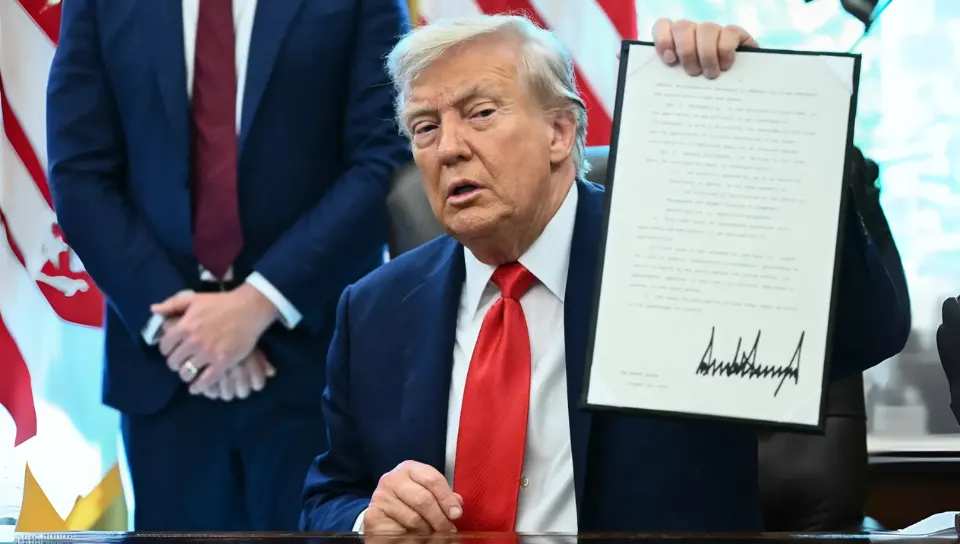
President Donald Trump signed an executive order on August 25, 2025, aimed at ending what the White House calls cashless bail in Washington, D.C. The order directs federal authorities to bring federal charges and seek pretrial detention where the law allows, and a companion order targets federal funding for jurisdictions nationwide that have eliminated cash bail. Critics say the measures test legal limits and could face court challenges.
Trump signs order aiming to end “cashless bail” in D.C.
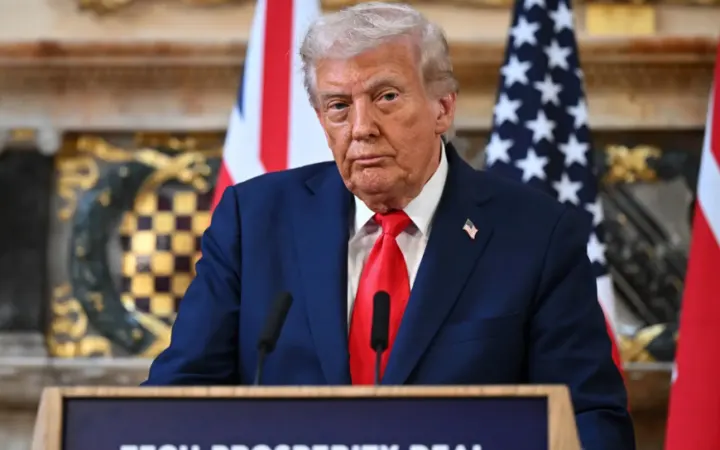
President Donald Trump signed an executive order on August 25, 2025, that aims to end what the White House calls “cashless bail” in Washington, D.C. The directive tells federal authorities to pursue pretrial detention more aggressively and frames the change as part of the administration’s “crime emergency” response in the capital, according to Axios.
The administration says the order will steer more arrests toward federal custody and federal charges, which it argues will reduce quick releases under local practice. Supporters describe it as a public-safety measure; critics say it tests legal boundaries and could face court challenges.
The order does not directly rewrite local court rules. Instead, it seeks to shift cases into the federal system, where prosecutors can argue for detention.
What the D.C. order does
The directive instructs agencies to pursue federal charges whenever legally possible and to keep arrestees in federal custody to improve the chances of pretrial detention. The White House argues that local release practices have contributed to repeat offending.
In practice, the U.S. Attorney’s Office for D.C., which already prosecutes most serious local crimes in the District, could move more cases that would normally proceed under the D.C. Code in Superior Court into federal court when federal statutes, such as gun, drug or interstate offenses, apply.
A separate national order on funding
A second executive order signed the same day directs the Attorney General to identify jurisdictions that have restricted or eliminated cash bail and to examine whether federal funds can be suspended or withheld from them where the law permits.
States that have reformed bail, including Illinois, which eliminated cash bail statewide in 2023, New Jersey, which largely replaced cash bail with risk assessment in 2017, and New York, which limited cash bail for many offenses and later amended its law, could face closer federal scrutiny. How far the administration can use grant conditions is likely to be decided in court, since conditions on federal grants generally must be authorized by Congress and related to the purpose of the program.
Legal limits on a president in D.C.
Because Washington, D.C. is not a state, the federal government has broader authority there than in states. Even so, the White House cannot directly change the legal standards judges apply when deciding pretrial release. The order relies on federal charging decisions, detention requests and custody choices, areas where the executive branch has more room to act.
Judges will continue to decide release on a case-by-case basis. Legal challenges could test whether parts of the order conflict with the District’s Home Rule Act or separation-of-powers principles.
How D.C.’s bail system works
D.C. has relied for decades mainly on non-monetary release, supervision and risk assessment rather than cash bail. The District’s Pretrial Services Agency monitors defendants and recommends release conditions, and judges can order detention for defendants considered dangerous or likely to flee.
The White House argues that releases have become too permissive. City officials and reform advocates counter that the system bases detention on risk rather than a defendant’s ability to pay.
What could change for defendants and courts
If more arrests are routed to federal court, defendants would face federal detention hearings, procedures and timelines that differ from those in D.C. Superior Court, along with different discovery rules and, in some cases, higher sentencing exposure. The shift could also add pressure on federal dockets, public defenders and jail space.
Supporters and critics
Supporters say limiting release without bail will reduce repeat offenses and keep people accused of serious crimes off the streets, pointing to cases in which released defendants were accused of new crimes.
Critics argue that cash bail ties detention to wealth rather than risk and could lead to more low-income defendants being jailed before trial. They also describe the orders as federal overreach that could undermine reforms they say have maintained court appearance rates without cash bail.
Part of a broader federal push in the capital
The bail orders follow the administration’s earlier declaration of a crime emergency in Washington, which included expanded federal law enforcement activity and National Guard deployments in the city. Implementation details for the bail order are expected to come through Justice Department guidance.
What to watch next
Key questions include how the Justice Department instructs prosecutors to apply the order, whether civil-rights groups or local officials challenge it in court, and how measures such as detention rates, failure-to-appear rates and rearrests change over the coming months. Any attempt to withhold federal funding from other jurisdictions is also likely to face legal challenges.
Source: Axios