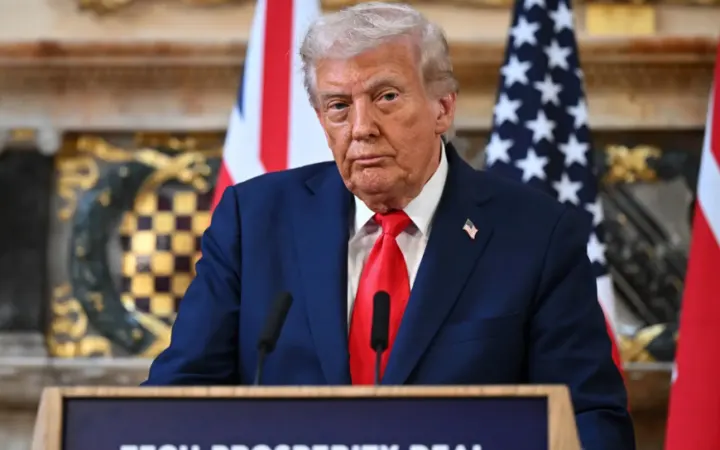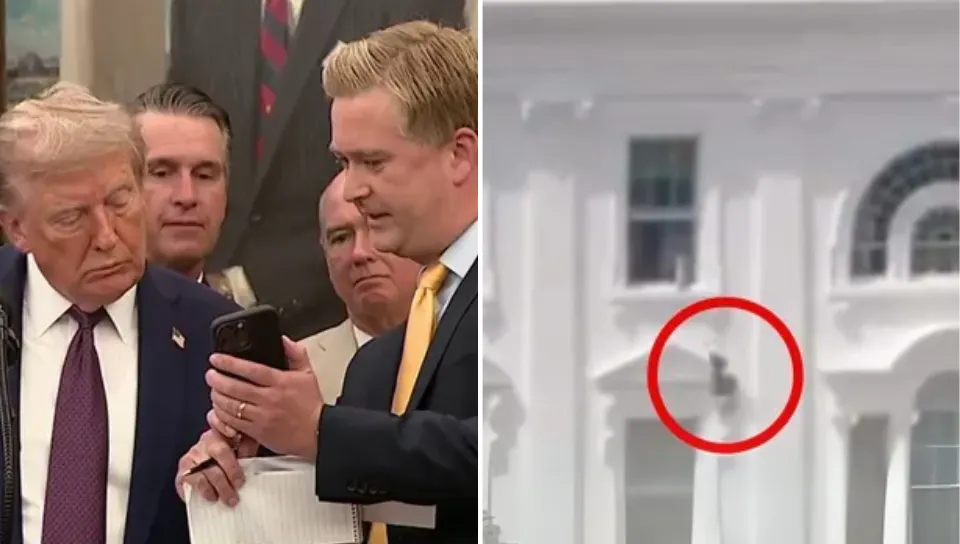
A short video that appears to show items being tossed from an upstairs White House window spread online on September 1, 2025. The White House first told news outlets it showed a contractor doing maintenance, but President Trump later said the video was probably fake and AI-generated.
A short, grainy video that appears to show items being thrown from an upstairs window of the White House spread widely on social media on Monday, September 1, 2025. The clip appears to show a small black bag and a long white object being tossed from a window on the east side of the Executive Residence.
The White House and President Donald Trump gave different explanations for it. Hours before Trump spoke about it, the White House told news outlets that the video showed “a contractor who was doing regular maintenance while the President was gone.” On Tuesday, Trump said the video “got to be fake” and suggested it had been made with artificial intelligence.
The video
What is going on here? pic.twitter.com/Sy0lRUEXPq
PatriotTakes (@patriottakes) September 1, 2025
What Trump said
Asked about the clip on Tuesday, September 2, Trump said the White House windows could not be opened. “I know every window up there,” he said. “They’re bulletproof. And number one, they’re sealed, and number two, each window weighs about 600 pounds.”
He described the spread of fabricated videos as a downside of AI, adding, “If something happens really bad, just blame AI.”
The White House did not respond to a later request to explain the difference between its earlier maintenance explanation and the president’s remarks, according to the Associated Press.
Questions about authenticity
The origin of the video has not been independently confirmed. Its low resolution makes it difficult to judge from the footage alone whether it was edited or generated. Online, users split over whether the clip was genuine, with many pointing to the conflicting explanations from the White House and the president.
The wider debate over AI fakes
The episode highlights a growing problem for the public and the press. As AI tools make realistic fake videos easier to produce, it becomes harder to know quickly whether footage is real. Researchers who study disinformation have also warned of the opposite risk, sometimes called the “liar’s dividend,” in which public figures can dismiss authentic footage by claiming it is fake.
Media literacy experts generally advise viewers to check where a video first appeared, whether its source can be identified and whether reliable outlets have confirmed it before sharing it.
Source: News4JAX