A court battle is unfolding over the removal of hundreds of Venezuelan nationals and a Rhode Island kidney doctor who worked at Brown University. Critics argue the deportations may have violated court orders, while officials tie the Venezuelans to the Tren de Aragua gang.
A legal and political conflict is unfolding over recent deportations carried out by the Trump administration. The removals included hundreds of Venezuelan nationals, along with a Rhode Island kidney doctor working at Brown University. Critics argue these actions may have violated court orders, and the dispute is now playing out in federal court.
Who was deported
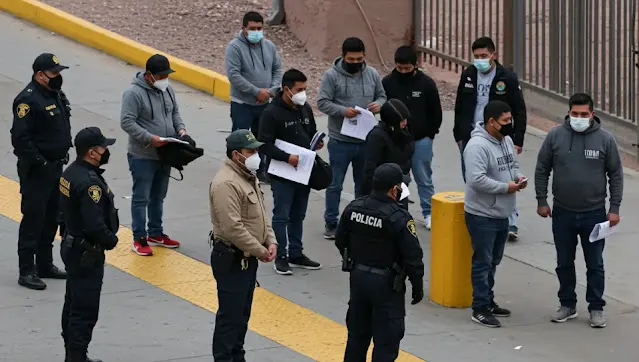
The Trump administration says the deported Venezuelans were connected to a criminal group called Tren de Aragua. Officials said the removals were part of national security actions. But lawyers argue that many of those deported didn’t receive a fair legal process before being removed.
Meanwhile, the administration also deported Dr. Rasha Alawieh, a Lebanese citizen and Brown University assistant professor, even though she held a valid H-1B visa. She was deported on Friday despite a court order telling the government not to deport her without giving 48 hours’ notice.
Judge delays hearing in Brown University doctor’s case
U.S. District Judge Leo Sorokin in Boston postponed a planned hearing on Dr. Alawieh’s deportation. He gave the government until March 24 to submit more details and allowed Alawieh’s legal team time to respond by March 31. A new hearing date has not been set.
According to court filings, border officials said they found photos and videos on Alawieh’s phone showing known figures connected to Hezbollah. Based on this, Customs and Border Protection canceled her visa and declared her inadmissible to the U.S.
About the Alien Enemies Act
The administration used the Alien Enemies Act, passed in 1798, to justify the removals. The law allows the president to detain and deport citizens of an enemy nation during a declared war or an invasion. It has been invoked only a few times, most recently during World War II, and its use here is disputed by many legal experts.
President Trump has argued that the large number of migrants who entered the country amounts to an invasion, which his administration says justifies using the wartime law.
Legal experts weigh in
Michael Kagan, an immigration law expert, said using this old law raises serious questions about civil liberties. “It has often been used in moments our country later regretted,” he said, referring to past events like the detention of Japanese Americans during World War II. Kagan said it’s unclear who Trump considers an enemy and whether this could result in unfair treatment based on association rather than legal proof.
The Venezuelan flights
On Saturday, Chief U.S. Judge James Boasberg issued an order stopping the deportation of five Venezuelans. Later that day, he expanded the order to apply to all Venezuelans being removed under the Alien Enemies Act.
However, deportation flights had already left Harlingen, Texas, according to flight-tracking data cited in news reports. One departed at 5:26 p.m. heading to Honduras and the other at 5:45 p.m. heading to El Salvador. The planes landed at 7:36 p.m. and 8:02 p.m., respectively. The judge’s oral order to turn the flights around reportedly came between 6:45 p.m. and 6:48 p.m., prompting debate over whether the administration followed the court’s instructions.
Administration responds
Government lawyers said the five individuals who first filed the case were not deported. They also stated that by the time the judge’s written order was officially published online, the planes had already left U.S. territory. White House officials argued the legal validity of a verbal court order is still in question and will be reviewed in court.
Customs and Border Protection stated that their officers followed standard protocols and that foreign citizens must prove their admissibility. “CBP is committed to protecting the United States from national security threats,” a spokesperson said.
What comes next
The Trump administration has asked a federal appeals court to halt Judge Boasberg’s expanded deportation order. Written arguments from both sides are expected this week, and a new hearing is scheduled for Friday.
Lawyers representing the Venezuelans have asked the court to review whether the administration violated the judge’s directive. Legal observers say the case could shape future use of the Alien Enemies Act and test the limits of presidential authority in immigration enforcement.
Concerns about a constitutional conflict
National security attorney Mark Zaid said this could escalate into a broader issue. “Defying a court order would move us closer to a constitutional crisis,” he said.
As the debate continues, immigration law, due process rights, and the balance of power between branches of government remain at the center of the dispute.
Source: NPR