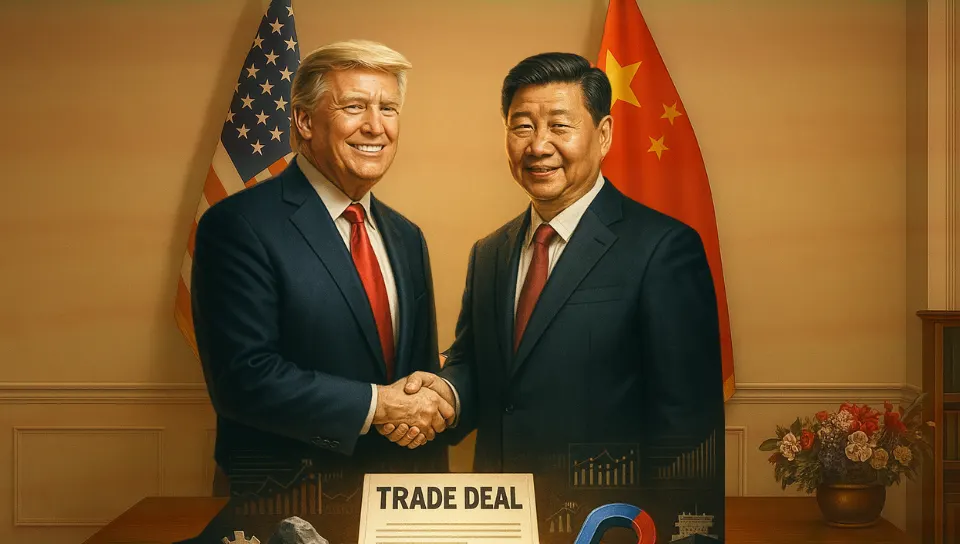
President Trump said a trade deal with China is done, pending final approval from him and Chinese President Xi Jinping. He said China would supply rare earth minerals and magnets up front, while the U.S. would allow Chinese students at American colleges.
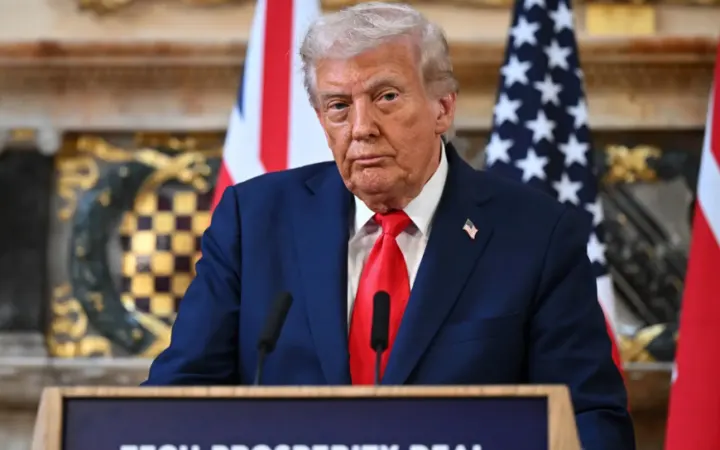
President Donald Trump said on June 11, 2025, that a trade agreement with China is “done,” subject to final approval from him and Chinese President Xi Jinping. He made the announcement on social media after two days of talks between U.S. and Chinese officials in London.
What Trump said is in the deal
According to Trump, China will supply magnets and “any necessary rare earths” to the United States “up front.” Rare earth elements and the magnets made from them are used in electric vehicles, smartphones, wind turbines and military equipment, and China controls most of the world’s supply.
In return, Trump said, the United States will provide what was agreed, including allowing Chinese students to attend American colleges and universities, which he said “has always been good with me.”
Trump also wrote that the U.S. would be “getting a total of 55% tariffs” while China would be “getting 10%.”
Why rare earths matter
Earlier in 2025, China restricted exports of several rare earth elements and magnets in response to U.S. tariffs. The restrictions led to shortages that affected some manufacturers, including automakers, and became a major point of dispute in the talks.
Chinese students
Trump’s comments on students came after the State Department had said it would “aggressively revoke” visas for some Chinese students, including those with ties to the Chinese Communist Party or studying in critical fields. Chinese students are one of the largest groups of international students in the United States.
How the 55% tariff figure breaks down
A White House official explained that the 55% figure combines several existing tariffs on Chinese goods:
- a 10% baseline “reciprocal” tariff
- a 20% tariff tied to the flow of fentanyl into the United States
- about 25% in tariffs on Chinese goods that were in place before Trump’s second term
China’s 10% figure refers to its retaliatory tariff on U.S. goods. The rates did not represent a new increase, but rather the levels in place after the two countries agreed to lower tariffs in May.
Background
The London talks built on a framework reached in Geneva in May 2025, when the United States and China agreed to temporarily reduce the very high tariffs they had imposed on each other’s goods earlier in the year. Disputes over rare earth exports and U.S. export controls continued after that agreement.
What comes next
The agreement still needed final approval from Trump and Xi. Many details, including how quickly rare earth shipments would resume, were not immediately made public. Economists continue to debate how much of the cost of tariffs is passed on to U.S. businesses and consumers.
Source: South China Morning Post