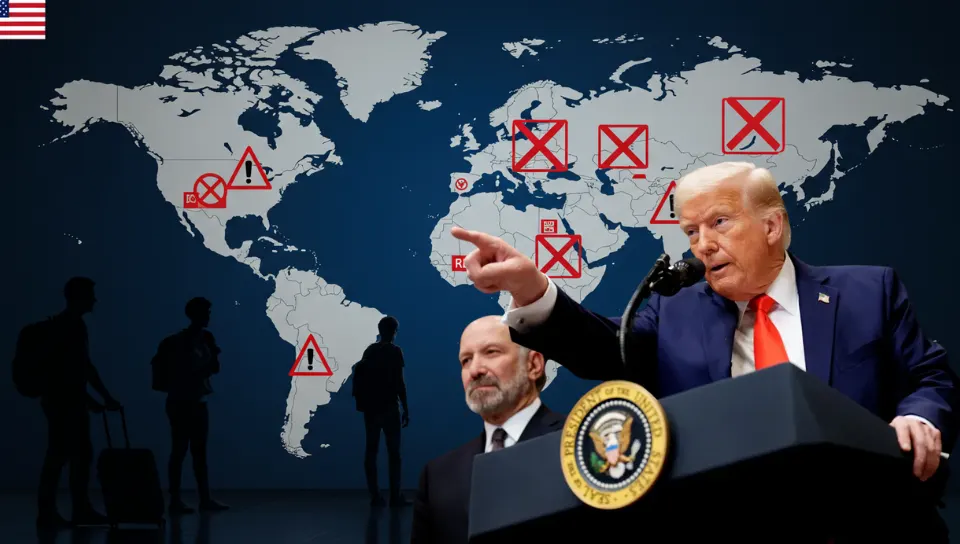
Since June 9, 2025, the Trump travel ban has barred new U.S. visas for people from 12 countries, including Afghanistan, Iran, Sudan and Yemen, with partial limits on seven more. Nationals of the fully banned countries cannot get new F-1 or M-1 student visas, though current visa holders inside the U.S. are not forced out.
Since June 9, 2025, a travel ban ordered by President Trump has blocked entry for people from 12 countries, including Afghanistan, Iran, Sudan and Yemen. Nationals of another seven countries, including Cuba, Venezuela and Laos, face partial restrictions on tourist, student and exchange visas.
The ban applies to people outside the U.S. who did not hold a valid visa issued before June 9. People who already hold a valid visa or a green card are not affected, and dual nationals can still enter using a passport from a country that is not on the list.
The restrictions cover student visas. Nationals of the fully banned countries cannot get new F-1 or M-1 student visas, although current visa holders already inside the U.S. are not required to leave.
In a separate proclamation targeting Harvard University, Trump suspended for six months the entry of new international students coming to study there. It also directed the State Department to consider reviewing the visas of current Harvard international students, citing security concerns.
Harvard challenged the move in court, arguing that it is illegal. Harvard’s Kennedy School also announced a contingency arrangement with the University of Toronto so affected students could continue their studies if they were unable to enter the U.S.
Critics, including education groups, economists and refugee advocates, warn that the policy could damage the U.S. reputation, reduce international student numbers and cost the economy billions of dollars.
The administration has also been weighing whether to extend restrictions to 36 more countries, according to a State Department memo reported by The Washington Post, citing concerns such as weak information sharing and high visa overstay rates.
Impact on Students and Universities
Many students and families abroad are now reconsidering plans to study in the United States, long the top destination for international students. Some are looking instead at Canada, the UK, Australia and other countries.
U.S. universities could also feel the effects. International students contribute billions of dollars a year to the economy, and college towns rely on their spending on housing, food and other services.
Some education experts warn that the ban could cause long-term damage to America’s standing in higher education if top students choose to study elsewhere.
It is not yet clear whether the restrictions will be lifted, narrowed by the courts or kept in place.
What Students Are Doing Now
Many international students and their families are following government announcements closely. Some are delaying their plans in the hope that the rules will change, while others are starting their studies in another country or online. Many universities are offering advice to affected students, and some business and education leaders are urging the government to keep the U.S. open to international talent.
Source: The PIE News