House Speaker Mike Johnson and Senate Majority Leader John Thune have not commented on the Trump administration’s deal to take a roughly 10% stake in Intel. The White House calls it a good deal for taxpayers and national security, while some Republicans, including Sen. Rand Paul, have criticized it.
The Trump administration’s agreement to take a roughly 10% ownership stake in chipmaker Intel has drawn criticism from several Republican lawmakers, while the party’s top leaders in Congress have so far stayed quiet. Neither House Speaker Mike Johnson, R-La., nor Senate Majority Leader John Thune, R-S.D., responded to requests for comment from Fox Business on the deal, which was announced on Aug. 22, 2025.
Congress was on its August recess, and congressional leaders had no formal role in the agreement, which was negotiated by the White House and the Commerce Department. Neither Johnson nor Thune voted for the 2022 CHIPS and Science Act, the law that originally awarded Intel billions of dollars in grants.
What the deal includes
Under the agreement, the U.S. government will invest $8.9 billion in Intel common stock, buying 433.3 million newly issued shares at $20.47 each, below the market price at the time, for a stake of about 9.9%, according to Intel’s filing with the Securities and Exchange Commission.
The money is not new spending. About $5.7 billion comes from CHIPS Act grants that had been awarded to Intel but not yet paid, and $3.2 billion comes from the Defense Department’s Secure Enclave program, which supports secure chip production for the military. Together with $2.2 billion in CHIPS grants Intel had already received, the government’s total investment comes to $11.1 billion.
The stake is passive. The government will not get a board seat or governance or information rights, and it agreed to vote with Intel’s board on matters requiring shareholder approval, with limited exceptions. The government also received a five-year warrant to buy another 5% of Intel at $20 per share, which it can use only if Intel stops owning at least 51% of its chip manufacturing, or foundry, business.
“Intel is deeply committed to ensuring the world’s most advanced technologies are American made,” Intel CEO Lip-Bu Tan said in the company’s announcement.
How the agreement came about
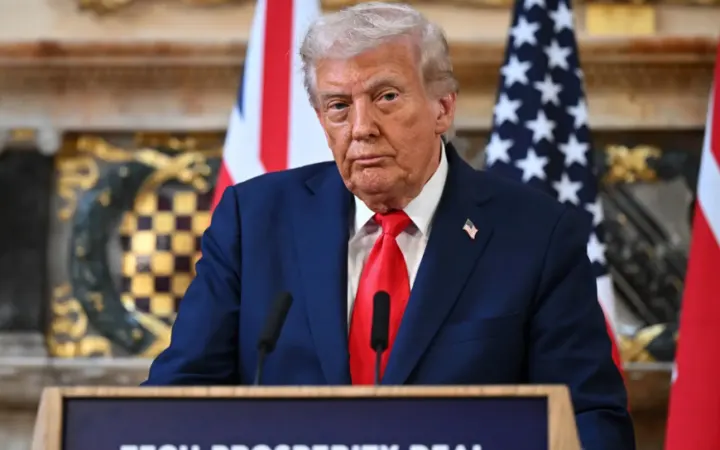
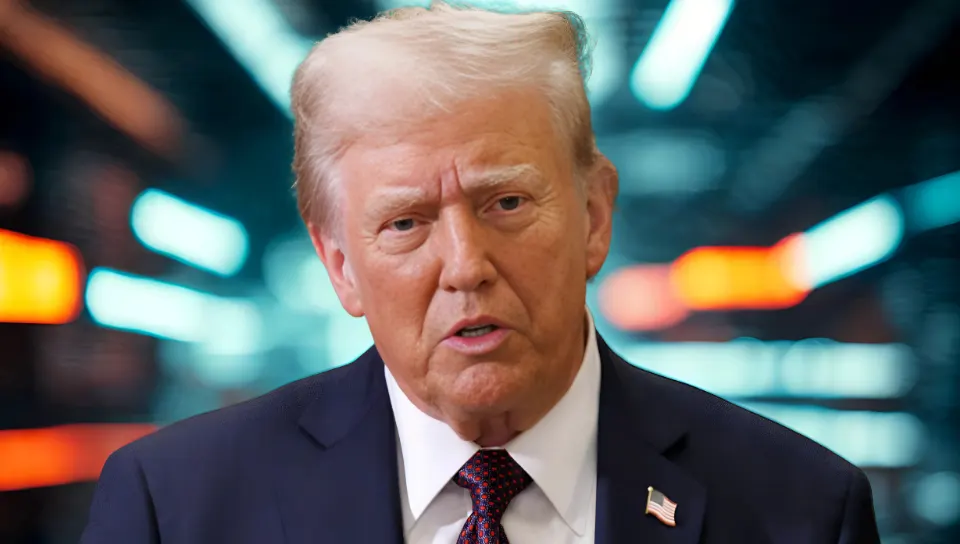
Earlier in August, Trump called for Tan to resign over reports about his past investments in Chinese technology companies. Days later, Tan met with Trump at the White House. Trump later said he had asked Tan for a 10% stake during that meeting. “He walked in wanting to keep his job,” Trump said, according to NPR, adding: “He agreed, and they’ve agreed to do it, and I think it’s a great deal for them.”
Commerce Secretary Howard Lutnick has argued that the government should receive equity in return for the grants. “We’ll get equity in return for it,” he said, according to NPR.
Trump has defended the arrangement on social media. “I PAID ZERO FOR INTEL, IT IS WORTH APPROXIMATELY 11 BILLION DOLLARS,” he wrote on Truth Social. “I will make deals like that for our Country all day long.” National Economic Council Director Kevin Hassett said, “There’ll be more transactions, if not in this industry then other industries,” and Lutnick told CNBC that defense contractors could be candidates for similar arrangements, according to the Associated Press.
Republican criticism
Several Republicans have raised objections on free-market grounds. Sen. Rand Paul, R-Ky., called the move a “Terrible idea” and asked on X: “wouldn’t the government owning part of Intel be a step toward socialism?”
“The U.S. federal government should not be buying companies,” said Rep. Don Bacon, R-Neb., according to Fox Business.
Sen. Todd Young, R-Ind., one of the authors of the CHIPS Act, questioned whether the deal is consistent with the law. “There’s concerns about precedent here, and also concerns about what is allowed under the law,” he said.
Sen. Thom Tillis, R-N.C., told CBS he did not see how the deal fits with conservative, free-market principles. “I don’t see it,” he said, according to the AP.
Support from an unusual direction
The deal has drawn some backing from the political left. Sen. Bernie Sanders, I-Vt., a self-described democratic socialist, has supported the idea that taxpayers should get a return when the government funds private companies, arguing that they should not be providing billions of dollars in corporate welfare, the AP reported.
Why it matters for Intel
Intel has struggled in recent years. It has lost more than $22 billion since the start of 2023, reported net losses in the first two quarters of 2025 and has fallen behind rivals such as Nvidia in chips for artificial intelligence. Its plans to build two chip plants in Ohio, a project worth more than $28 billion, have been delayed.
In a filing after the deal, Intel warned investors that it could lose customers outside the United States who may be reluctant to buy from a company partly owned by the U.S. government.
The Intel agreement is part of a broader pattern of direct government involvement in private companies under the Trump administration. Others include a “golden share” in U.S. Steel tied to its acquisition by Nippon Steel, a $400 million stake in rare-earth producer MP Materials, and an arrangement under which Nvidia and AMD will pay the government 15% of revenue from certain chip sales to China.
Source: Fox Business