Raskin Disappearing Messages Warning Puts Trump Officials on Notice
Raskin disappearing messages are at the center of a warning from Rep. Jamie Raskin, the incoming chair of the House Judiciary Committee, who says Trump administration officials have been doing official business on messaging apps that erase their words. Raskin sent preservation letters to the Justice Department, the FBI, Homeland Security, ICE and the Bureau of Prisons, asking them to save records, try to recover deleted ones and certify that they complied by December 3. He says his committee has evidence of the practice, and the letters put the agencies on notice before Democrats take control of Congress in January.
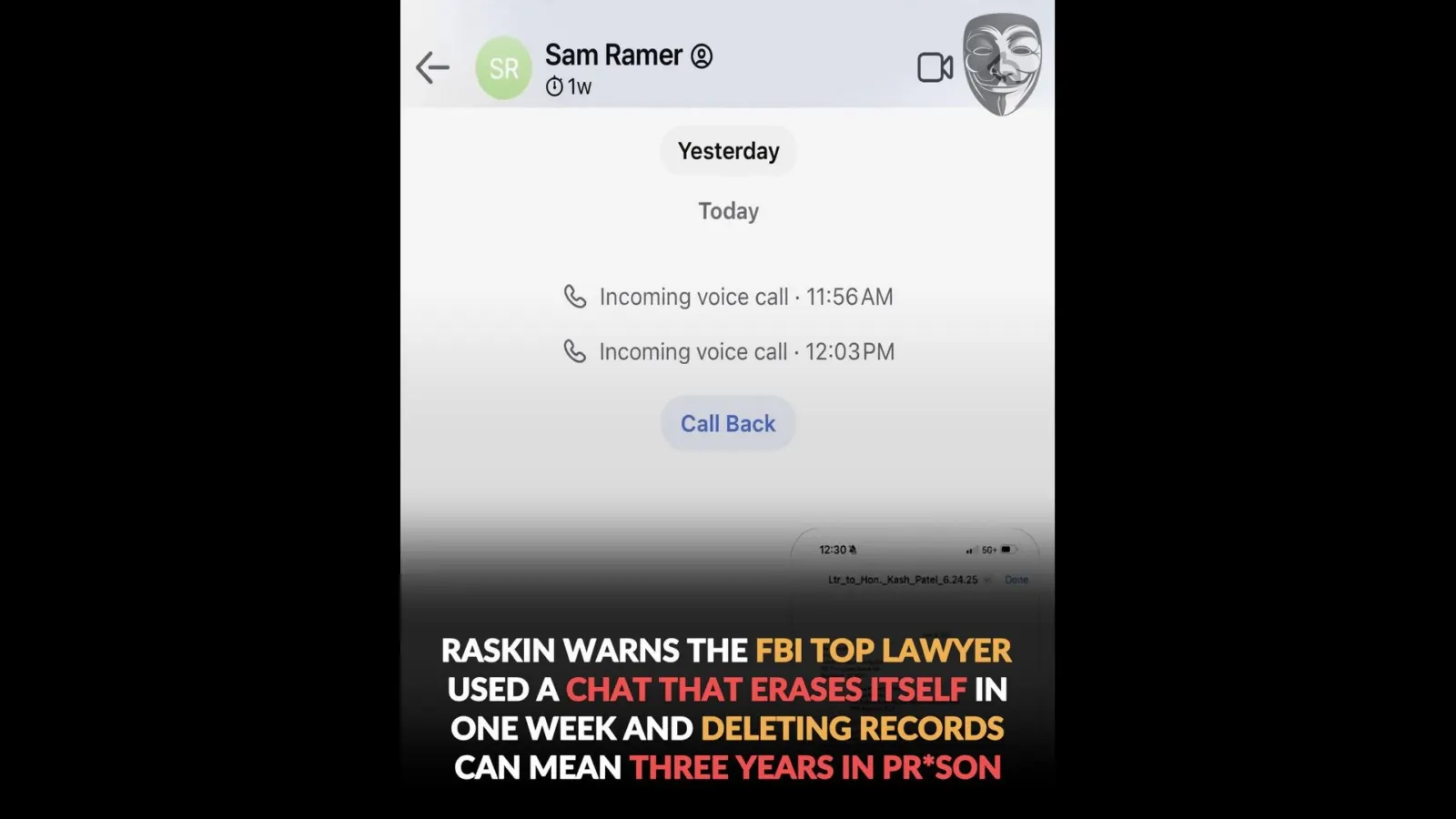
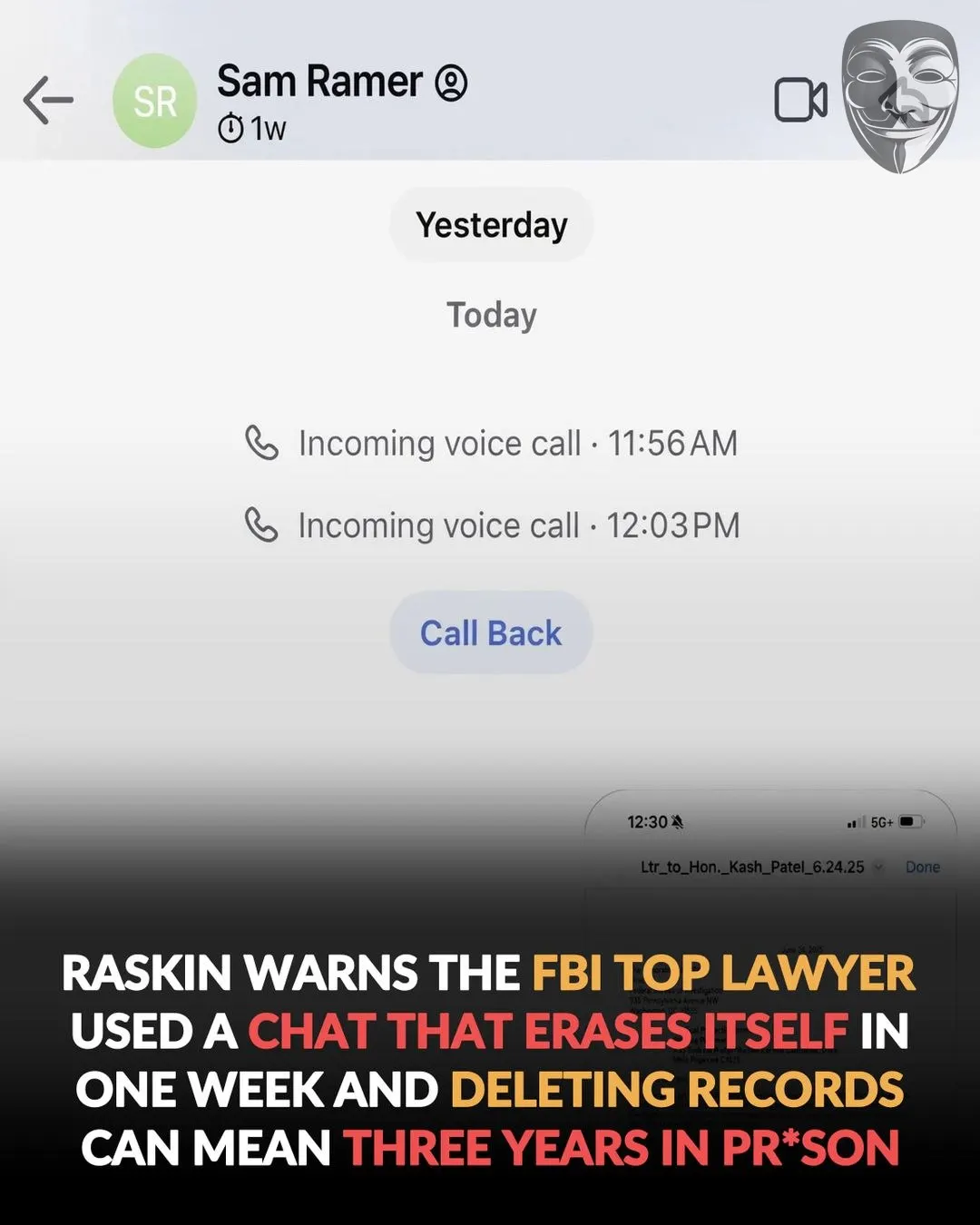
One example Raskin shared is a screenshot he says shows FBI General Counsel Samuel Ramer in a chat with Drew Lynch, an associate of Donald Trump Jr, set to erase messages after one week. The chat concerned a man wanted by federal authorities on health care fraud charges, and Raskin wrote that unlawfully destroying federal records is a felony punishable by up to three years in prison. The Justice Department says it follows all federal records laws. Read about Raskin is set to lead the House Judiciary Committee.
References:
Al Jazeera: Top US Democrat warns Trump admin against destroying records
Washington Post: Raskin asks Trump administration to stop using disappearing messaging apps
Dispute Index: Raskin, the FBI counsel’s auto-deleting Signal chat and records law
Daily States: Jamie Raskin Accuses Trump Administration of Improperly Deleting Government Records, Gives Five Federal Agencies Until December 3 to Respond
Raskin Disappearing Messages: Who Is Jamie Raskin

Jamie Raskin is a Democratic congressman from Maryland and the incoming chair of the House Judiciary Committee. The committee handles courts, civil liberties and oversight of the Justice Department, so its chair has a loud voice on questions of law. Raskin is a former constitutional law professor who often speaks about the duty of public officials to follow the rules that protect the public record. His warning about vanishing chats fits a career spent arguing that the law applies to everyone. Read more in Raskin is set to lead the House Judiciary Committee.
Five Agencies Got the Same Preservation Letter

Raskin sent his preservation letters to five federal agencies at once: the Justice Department, the FBI, the Department of Homeland Security, Immigration and Customs Enforcement and the Bureau of Prisons. The letters ask each agency to keep every record tied to official business and to try to recover anything deleted. They also ask for a written certification of compliance by December 3. Sending one message to all five agencies shows that Raskin sees the problem as wide, not limited to one office. Read about a House chair warning over SpaceX funding.
ICE and the Bureau of Prisons Are on the List Too

Two of the agencies on Raskin’s list often work far from the headlines: Immigration and Customs Enforcement, known as ICE, and the Bureau of Prisons, which runs federal prisons. Both hold records that matter in court cases, deportation proceedings and prison oversight, and both answer to the Justice Department or Homeland Security. Including them in the letters signals that the committee wants records saved across the whole enforcement system, not only at headquarters in Washington. Learn about a debate over strong public remarks.
The December 3 Deadline for Certification

Raskin’s letters set December 3 as the date by which the five agencies must certify that they complied with the preservation demand. A certification is a formal written promise that an agency has kept its records and followed the rules. Deadlines like this give a committee a clear date to measure against, and they let the public know when answers are due. If an agency misses the date or gives an unclear answer, the committee can follow up with hearings or subpoenas in the new year. See a debate over words and belonging.
What Raskin Disappearing Messages Really Means

Disappearing messages are a feature on apps like Signal and WhatsApp that erases messages after a set time, from a few seconds to a week. The feature is popular with ordinary people who want privacy, but it causes trouble when officials use it for government business, because the law says federal records must be kept. A chat that deletes itself can leave no trace of a decision, a favor or a warning. That gap sits at the heart of the warning. Read sharp questions at a confirmation hearing.
Samuel Ramer, the FBI’s Top Lawyer
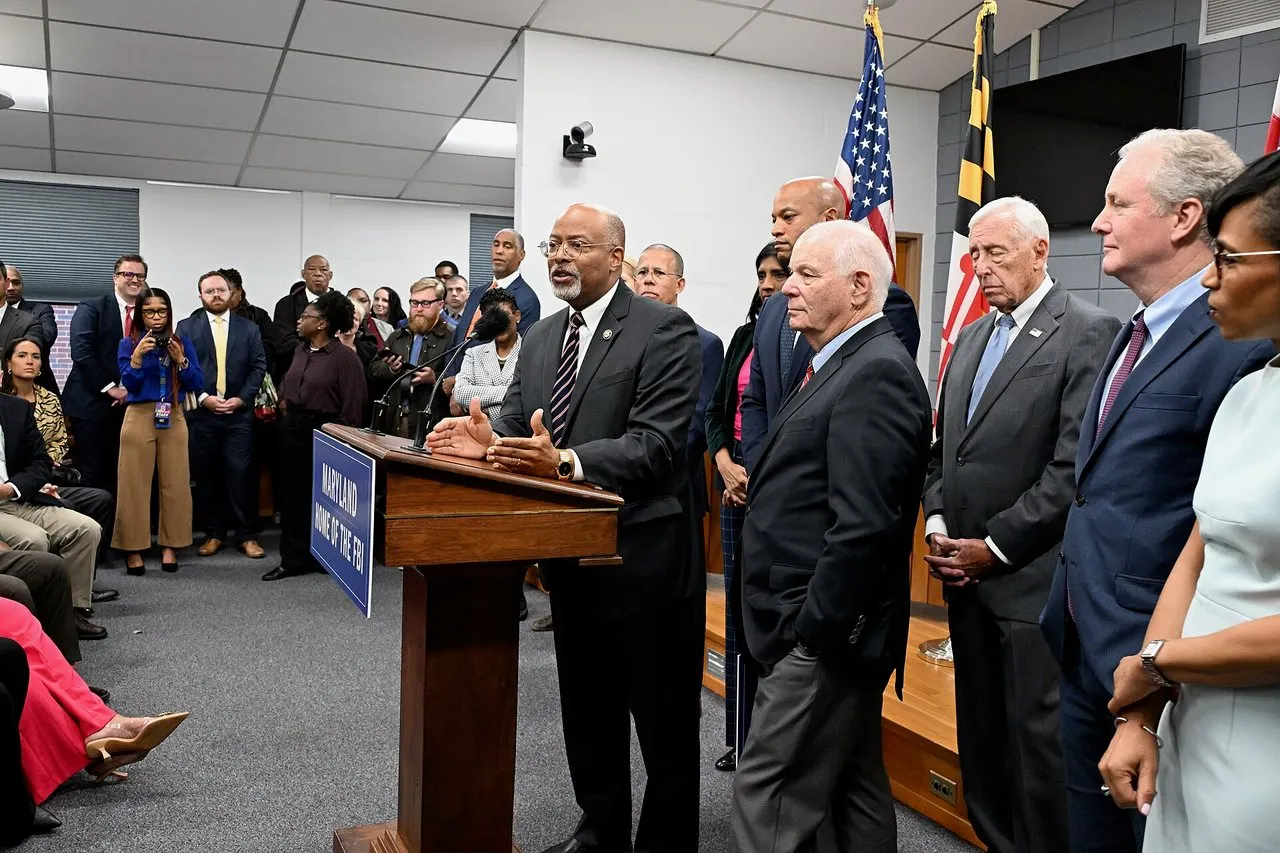
Samuel Ramer serves as general counsel of the FBI, the bureau’s top lawyer, who advises its leaders on what the law allows. The general counsel reviews sensitive decisions, signs off on legal risks and helps the bureau answer Congress. That is why Raskin’s example drew so much attention: the chat he pointed to did not involve a junior staffer but the FBI’s top lawyer. That role demands knowing the records rules better than anyone. Read about a father who refused to give up his son.
Drew Lynch and the Trump Jr Connection

The other person in the chat Raskin shared was Drew Lynch, described as an associate of Donald Trump Jr, the president’s son. The link matters because it ties the conversation to the president’s inner circle rather than to a routine agency matter. Raskin did not claim that Trump Jr himself was in the chat, only that Lynch is connected to him. The detail raised fresh questions about who in and around the administration has been using chats that erase themselves. See a claim about intelligence shared with Iran.
A Chat Set to Erase Itself in One Week

The chat in Raskin’s screenshot was set to erase its messages after one week, a common timer on disappearing message apps. A week sounds short, but it is long enough for a conversation to shape a decision and then vanish before anyone outside the chat can read it. Investigators who arrive later would find nothing but an empty thread. That is the danger Raskin wants the agencies to face: when the record deletes itself, the public loses the chance to check what its government did. Read a bill aimed at closing a loophole.
Raskin Disappearing Messages and the Health Care Fraud Case

The chat Raskin shared concerned a man wanted by federal authorities on health care fraud charges, which means the conversation touched a live criminal matter. Health care fraud cases often involve false billing, kickbacks or fake claims, and they can move large sums of public money. When officials discuss such a case on a chat that erases itself, investigators and defense lawyers alike lose a piece of the record. The stakes explain why Raskin chose this example first. Read about a hologram spotted at airport security.
Three Years in Prison for Destroying Records

Raskin wrote that unlawfully destroying federal records is a felony punishable by up to three years in prison, a warning meant to be heard clearly across the administration. The number comes from the federal law that guards government records, which treats the destruction of official papers as a serious crime rather than a paperwork slip. Three years is the maximum, not an automatic sentence, but the message is plain: deleting the evidence can carry real personal risk for the person who does it. See a possible third try at impeachment.
The Federal Records Act in Plain Words

The Federal Records Act is the law that tells federal agencies to keep records of what they do, so the public, Congress and the courts can see how decisions were made. It covers emails, memos and chats tied to official business, not private notes. The idea is simple: government work belongs to the public, and the paper trail is how citizens hold power to account. When messages vanish on their own, that paper trail breaks, and the law loses its bite. Read about former Justice Department lawyers preparing to investigate the DOJ.
What It Means to Preserve a Record
Preserving a record means more than not deleting it on purpose. Agencies must store messages and documents where they can be found later, keep them in their original form and make sure they survive staff changes and new phones. Turning off disappearing messages for official chats, saving copies in agency systems and training staff are all part of the job. Raskin’s letters ask the agencies to do this work now, before more messages vanish, and to say in writing that they did. See a banquet dance that drew mockery.
Raskin Disappearing Messages: How Recovery Might Work

Raskin asked the agencies to try to recover deleted records, a task that is sometimes possible and sometimes not. Phone companies, app makers and agency servers may hold copies, backups or logs that can bring back a vanished message. Forensic experts can also pull data from devices when the messages have not been overwritten. But recovery is slow, costly and never certain, which is why the law puts the duty on officials to save records in the first place rather than to rebuild them later. Read about a story about living unapologetically.
The Justice Department Says It Follows the Law
The Justice Department says it follows all federal records laws, a short answer that leaves the deeper questions open. The department has not said in public whether any official used disappearing message apps, whether any records were lost or what steps it took to save them. Raskin’s letters press for those details in writing, with a certification by December 3. The gap between a general assurance and a specific answer is exactly what Congress can test in hearings. Read a senator refusing to back a shutdown.
Robert Garcia Sends His Own Demands

Raskin is not acting alone. Robert Garcia, the incoming chair of the House Oversight Committee, has sent his own preservation demands to Trump officials and members of the president’s inner circle. The Oversight Committee is Congress’s main watchdog panel, and its chair can call hearings and demand documents across the government. Two committee chairs pressing the same point at the same time gives the demand far more weight than one letter alone. See another look at the Pete Rose pardon.
Democrats Take Control of Congress in January

Democrats are taking control of Congress in January, gaining the gavels, the hearing rooms and the power to compel testimony. A new majority can set the agenda, call witnesses and demand documents the old majority never sought. Raskin’s warning is timed to that change: the letters go out now, the deadline falls in December, and the investigations can begin once the new Congress is seated. The message is that the questions will not fade away. Read a meeting that drew a sharp line.
Why the Raskin Disappearing Messages Warning Worries Watchdogs

Watchdogs worry because a disappearing message habit is hard to prove and harder to undo. Each vanished chat removes one piece of the record, and the public may never learn what was decided or why. Over time the gaps add up, and trust in government fades. That is why Raskin framed his warning in plain terms and put a prison sentence beside it: the goal is to make every official think twice before switching on a timer that erases the public record. Read a House chair warning over SpaceX funding.
The Screenshot That Started the Story

At the center of Raskin’s warning sits a single screenshot, an image of a chat he says shows the FBI’s top lawyer talking with an associate of the president’s son. A screenshot is a simple thing, just a picture of a phone screen, but in this case it carries the whole argument: a named official, a named contact and a timer set to erase the words in a week. Raskin shared it as proof that the problem is real and close to the top. See a debate over strong public remarks.
WhatsApp and the Apps in the Warning

Raskin’s original caption named WhatsApp as one of the apps where officials were doing government business with messages set to disappear on their own. WhatsApp and Signal both offer timers that erase messages, and both are used by millions of people every day for private chats. The problem is not the apps themselves but the choice to use them for official work without saving the record. A tool built for privacy can become a tool for hiding when it meets public business. Read a debate over words and belonging.
Records Fights Are Nothing New in Washington

Fights over government records are as old as the republic, from missing letters to tapes, emails and now vanishing chats. Each new technology gives officials a new way to keep words off the record, and each time Congress and the courts had to catch up. The pattern is familiar: a warning, a demand to preserve, then an argument about what was saved and what was lost. Raskin’s letters fit that long history, and the new Congress will decide how the story ends. See sharp questions at a confirmation hearing.
What Happens If Agencies Ignore the Raskin Disappearing Messages Letters

If an agency ignores the letters or gives a thin answer, Congress has tools to push back. The committees can hold hearings, issue subpoenas, call officials to testify under oath and, in rare cases, hold a witness in contempt. Public pressure matters too, because voters can see which agencies cooperated and which ones stalled. Raskin’s December 3 deadline sets the first test: the answers that arrive, or fail to arrive, will shape the investigations that follow in January. Read a father who refused to give up his son.
The Judiciary Committee’s Job From Here
The House Judiciary Committee, which Raskin will chair, oversees the courts, the Justice Department and the FBI, so it is the natural home for this fight. The committee can demand records, question the FBI’s top lawyer and examine how the bureau handles its own chats. Its hearings are public, which means the answers given there are on the record for everyone to see. That visibility is part of the point: sunlight is the best answer to messages that erase themselves. See a claim about intelligence shared with Iran.
The Oversight Committee’s Job From Here
The House Oversight Committee, which Robert Garcia will chair, is Congress’s main watchdog, with wide power to look into waste, fraud and abuse across the government. Its preservation demands reach Trump officials and members of the president’s inner circle, a broader net than Raskin’s five agencies. Together the two committees can cover both the agencies that hold the records and the people who sent the messages. That one-two punch is what makes January look like a season of hard questions. Read a bill aimed at closing a loophole.
What an FBI General Counsel Actually Does

The FBI’s general counsel is the bureau’s chief lawyer, advising the director and senior agents on searches, surveillance, public statements and dealings with Congress. The job demands care with the law, because the bureau’s work touches liberty and privacy every day. When the person in that role appears in a chat set to erase itself, the questions grow sharper: who approved the timer, what was discussed and whether the bureau’s own rules were followed. The answers will matter to the committee. See a hologram spotted at airport security.
Health Care Fraud and the Raskin Disappearing Messages Example

Health care fraud is a crime that costs taxpayers billions, often through false bills, fake patients or kickbacks paid for referrals. Federal agents build these cases from billing records, emails and chats, so a missing conversation can weaken a prosecution or hide a tip. That is why the subject of the chat in Raskin’s screenshot matters: it was not small talk but talk tied to a man wanted on health care fraud charges. When the record vanishes, justice gets harder to do. Read a possible third try at impeachment.
Trust in the Public Record

At its heart, this story is about trust. Citizens cannot judge their government if the record of its work keeps deleting itself, and officials cannot prove they acted fairly without the paper to show it. Records laws exist so that the public can look back and check, years later, what was said and decided. When chats erase themselves, that check becomes impossible, and doubt fills the gap. Raskin’s warning asks a simple question: will the record survive? See former Justice Department lawyers preparing to investigate the DOJ.
What Happens Next

The next steps are clear and dated. The five agencies must certify compliance by December 3, Garcia’s Oversight demands are already in motion, and Democrats take the gavels in January. Hearings are likely, subpoenas are possible, and the screenshot at the center of the story will be examined again and again. Whether any messages are recovered, and whether any official faces charges, will take months to learn. For now, the warning stands: deleting the evidence will not make the questions go away. Read a banquet dance that drew mockery.
What Do You Think About the Raskin Disappearing Messages Warning?

Raskin says deleting government records can mean three years in prison, and he has put five agencies on notice with a December 3 deadline. Do you think officials who use chats that erase themselves should face charges, or is a warning and a new set of rules enough? Should Congress push harder, or is this a fight that will fade once the hearings begin? Share your thoughts in the comments below and tell us what you would ask Raskin if you had the chance. Read a story about living unapologetically.