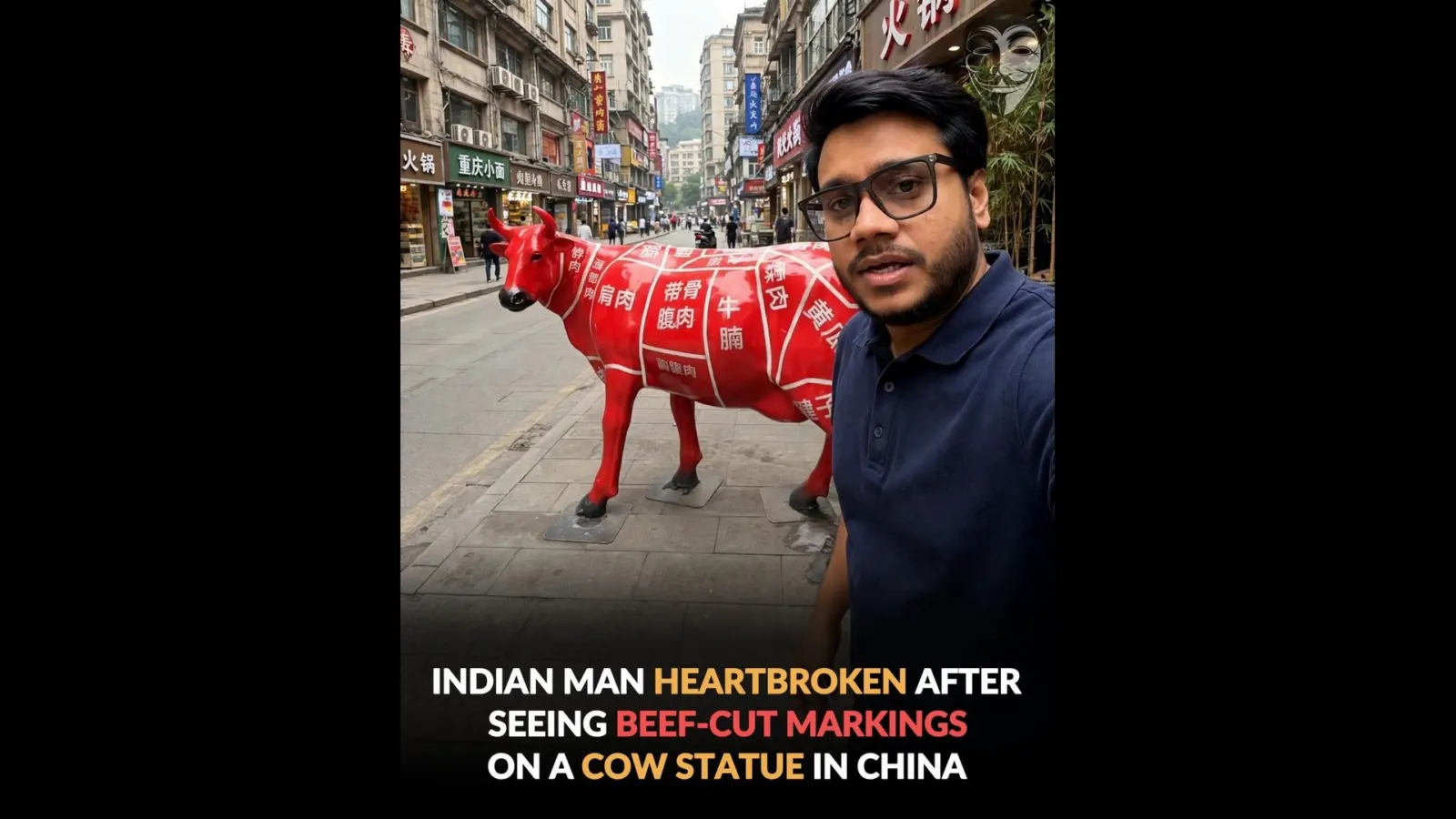
A Cow Statue in China Left an Indian Tourist Heartbroken
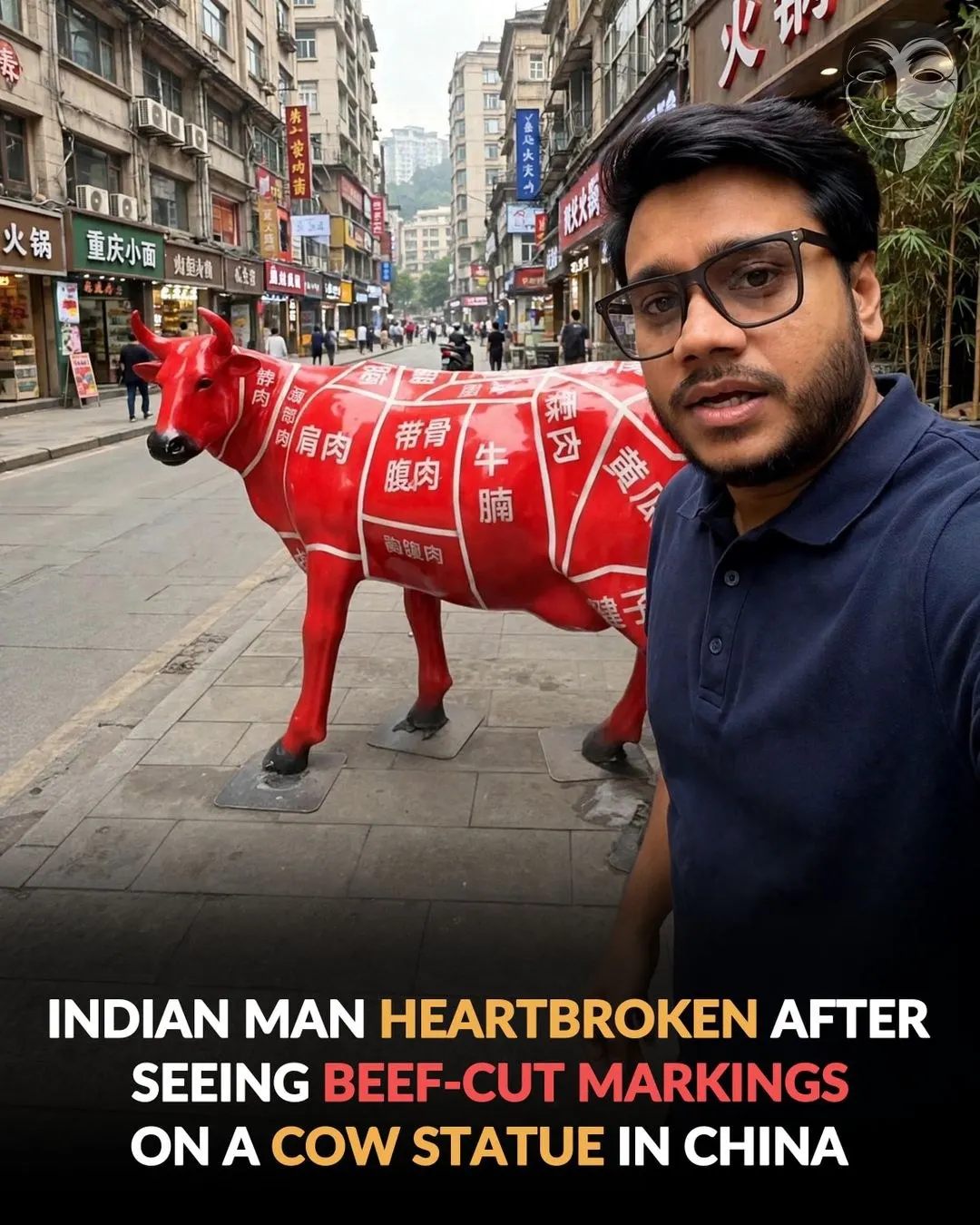
The cow statue in China that left an Indian tourist heartbroken stood outside a busy restaurant in Chongqing, painted bright red and marked with white lines. The lines divided the animal into sections, and each section carried a Chinese label naming a cut of beef and the protein it contains. The tourist had been walking through the city when he came across the statue, and he stopped to film it because the sight surprised him. In his video he explained that cows are worshipped in India, so seeing one shown as a chart of meat felt deeply wrong to him.
The short clip soon spread far beyond Chongqing, and people began to share it with their own views. Some viewers said they understood the tourist completely, because faith and feeling do not switch off when you cross a border. Others said travellers should accept that food and belief differ from place to place, and a restaurant sign is not meant as an insult. The debate kept growing because the same animal can mean dinner in one country and a sacred mother in another. You can also read about new visa rules for Indian travellers.
References:
The CSR Journal: Cultural Disappointment Over Cow Statue in China
Tezzfeed: Indian Tourist Left Heartbroken in China After Seeing Cow Statue Displaying Beef Cuts and Protein Information
Prime Time 24: Indian Tourist’s Video of Cow Model Outside Chongqing Restaurant Goes Viral
Curated News: Indian Man Disappointed by Cow Statue in China Showing Beef Cuts
The Cow Statue in China Outside the Restaurant
A bright red cow stood on the pavement outside a busy restaurant in Chongqing. The statue was life size and glossy, and it caught the eye from far down the street because of its bold colour. White lines ran across its body like the lines on a butcher chart, and Chinese characters filled each section. The restaurant had placed it there as a decoration and a guide, so people walking past could see at once what kind of food waited inside. You can also read about a trip across Asia.
The Cow Statue in China Mapped Out the Beef Cuts
Every white line on the statue marked off a different part of the animal, from the shoulder to the belly and the leg. Each part carried a label in Chinese characters, naming the cut of beef that comes from that spot. The labels also gave the protein content of each cut, so a customer could compare one part with another before ordering. It was a menu written on a cow, plain and clear for anyone who could read the labels. You can also read about a hologram at airport security.
He Filmed the Cow Statue in China on His Phone
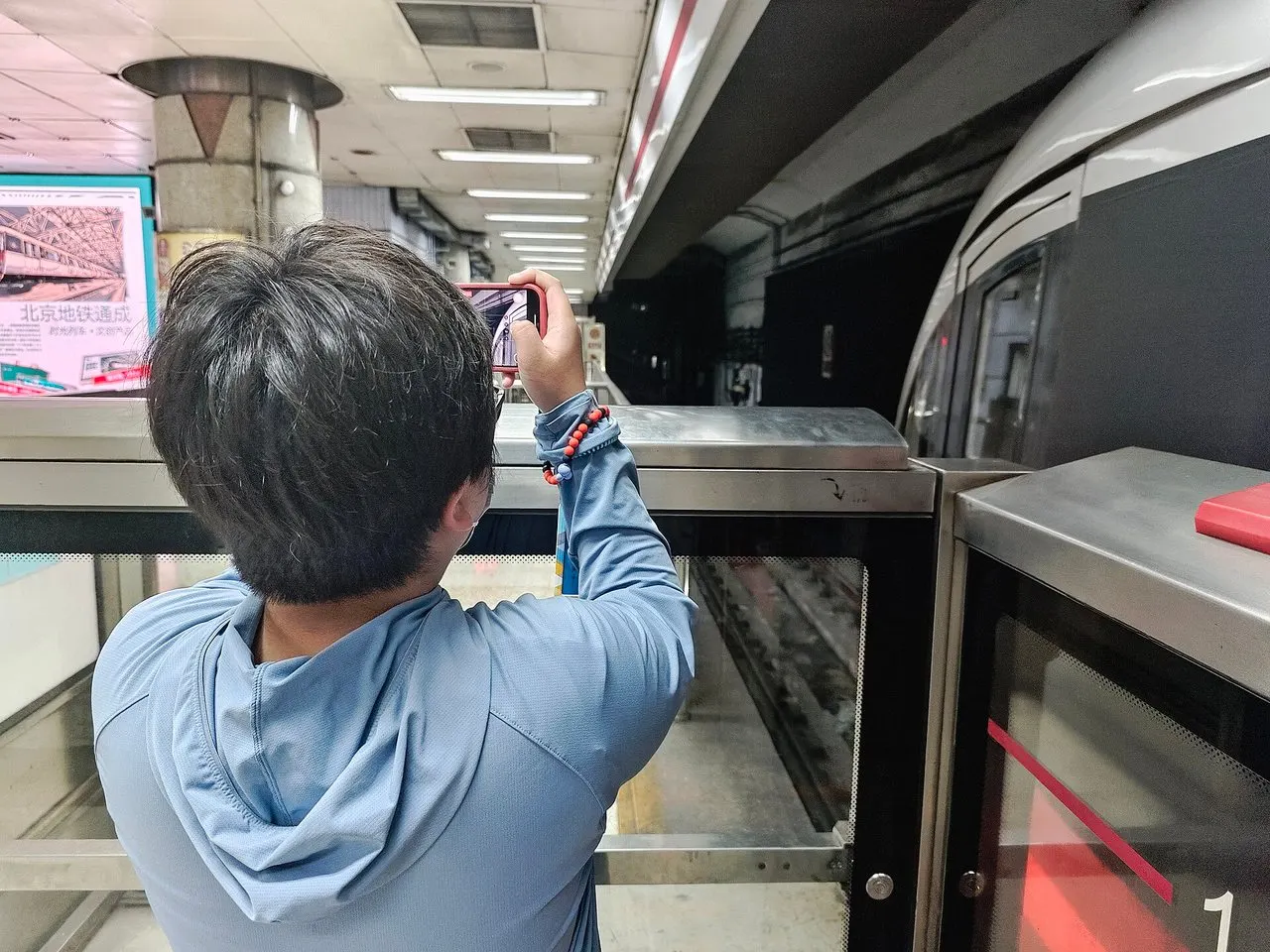
The Indian tourist stopped in front of the statue and raised his phone to film the bright red figure. He pointed out the white lines and the labels, and he read the meaning of the display for the people watching his video. He said he had not expected to see anything like this in China, and his voice showed how upset the sight had made him. The clip was short, but it carried his whole reaction. You can also read about a drone that carried food to a stranded chimpanzee.
Cows Hold a Sacred Place in India
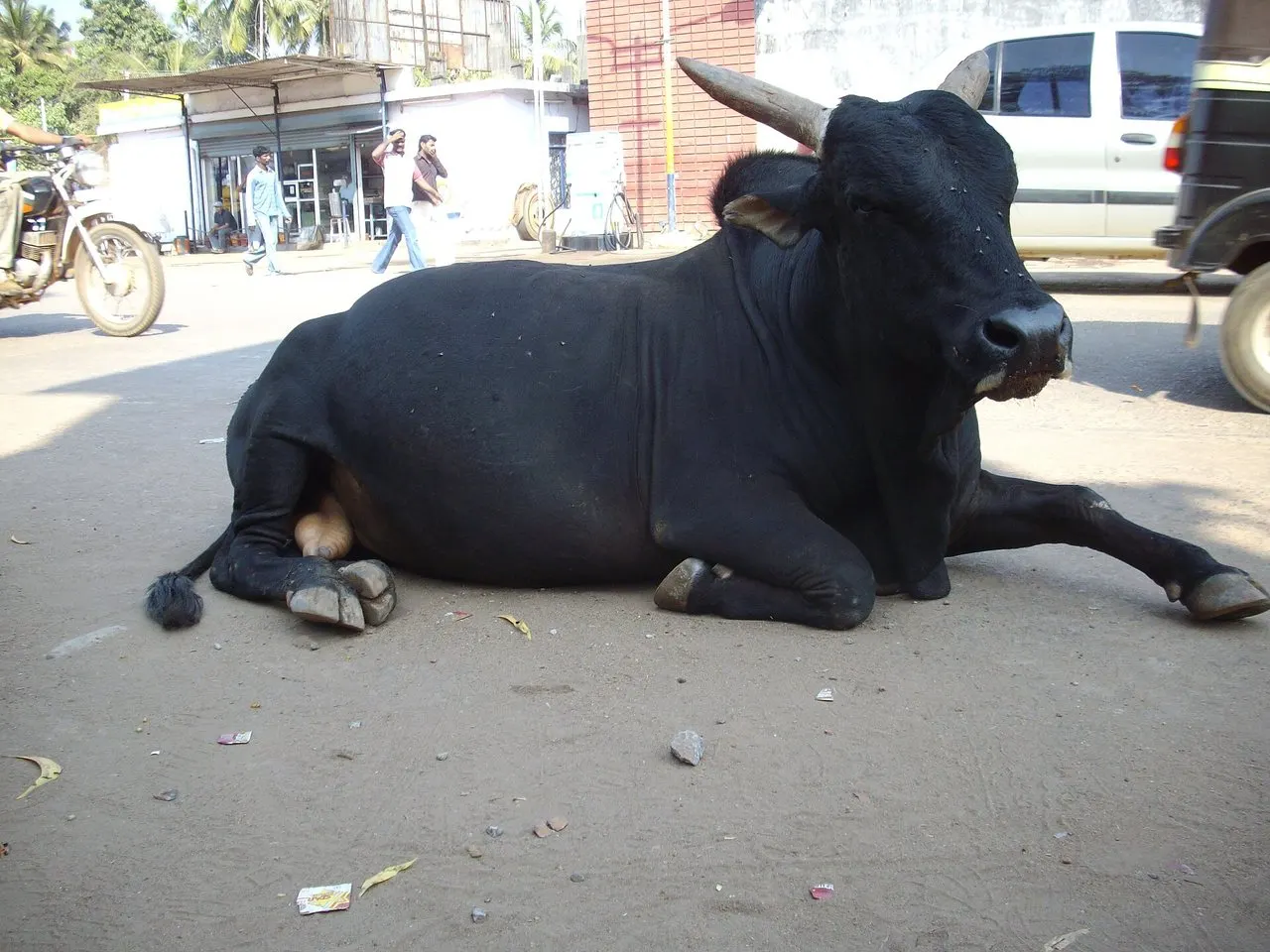
In India, many people worship the cow and treat it as a sacred mother, a belief that runs deep in Hindu life. Cows wander freely through towns and villages, and people often feed them and care for them as a holy duty. The animal stands for gentleness, patience and the gift of milk, and harming one is seen as a grave wrong. For the tourist, this faith was not a rule from a book, but a feeling he had carried since childhood. You can also read about 30 moments of hope.
Why the Cow Statue in China Left Him Heartbroken

The tourist said plainly that his heart was broken, and he repeated that he had never expected to see such a thing in China. In his own words, he said, My heart is broken. I never expected to see something like this in China. The words were simple, but they showed a real shock, the kind that comes when something sacred is treated as ordinary. He was not angry, he was sad at the gap between two ways of seeing the same animal. You can also read about cheaper fuel for motorists.
The Cow Statue in China Spreads Fast on Social Media

Once the video reached social media, it moved quickly from phone to phone and from one country to another. People shared it with captions of their own, and soon it was being talked about far beyond Chongqing. Short clips travel fast because they are easy to watch and easy to pass on, and this one had a striking image at its heart. A bright red cow covered in beef labels was not something most viewers had seen before. You can also read about two mothers and the bond guiding their sons.
Comments Pour In From Every Side

Under the video, comments piled up by the thousand, and they did not agree with each other at all. Some people wrote that they felt the same sadness, and they thanked the tourist for speaking honestly about his faith. Others wrote that he should respect the food and customs of the country he was visiting. A few tried to find a middle path, saying both feelings could be true at once. The thread became a small picture of how the world argues today. You can also read about an update on Bruce Willis.
Diners Walk Past the Cow Statue in China Every Day
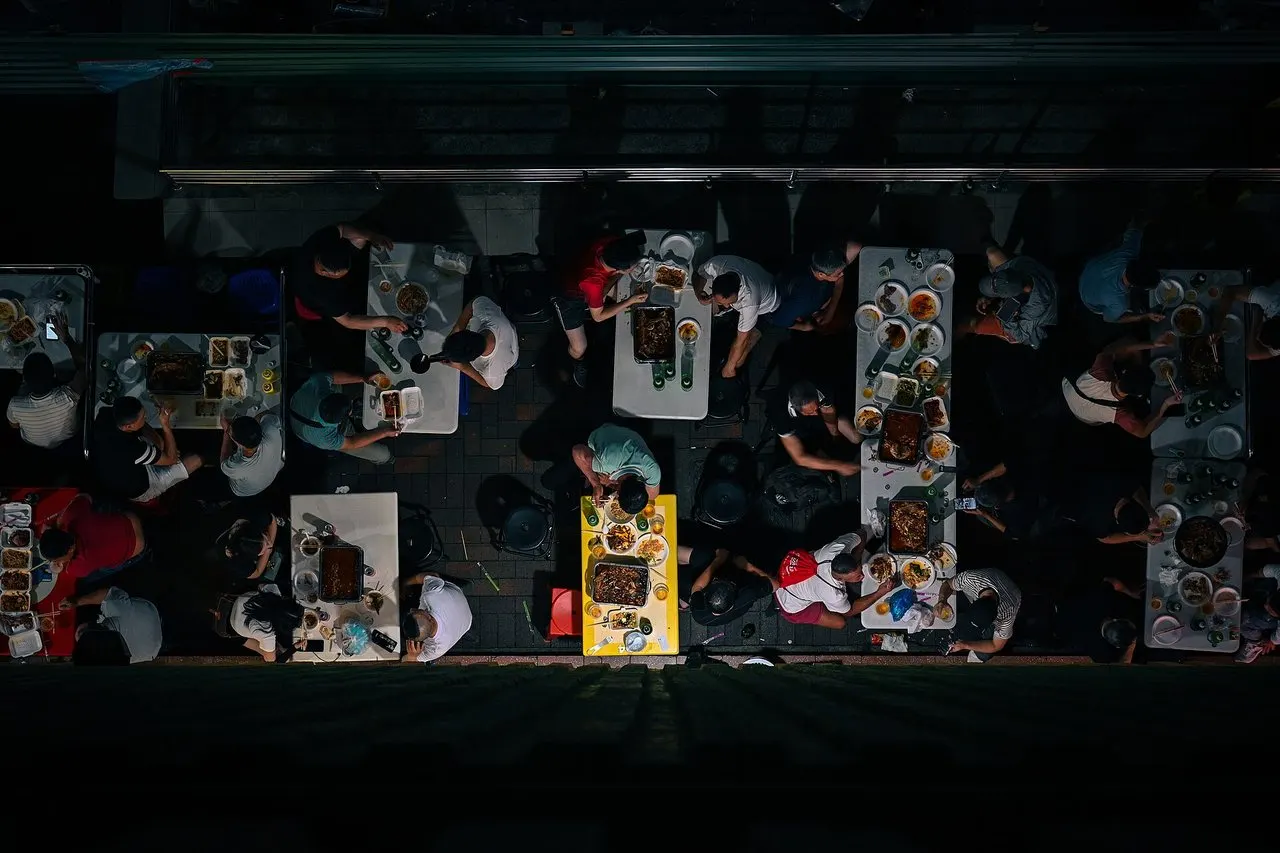
For Chongqing people, the statue is part of daily life, and diners walk past it on their way in to eat. The restaurant sits on a busy street, and its bright red cow works like a sign that can be seen from far away. Customers step inside and order beef dishes, and the statue has already told them what cuts are on offer. What shocked a visitor is simply normal to the people who live and eat there. You can also read about how much water a data center uses.
Chongqing, a City Built on Hills and Spice

Chongqing is a huge city in southwest China, built on steep hills where the Yangtze and Jialing rivers meet. Its streets climb and dip, its bridges cross wide water, and its food is famous across China for heat and spice. Hot pot restaurants fill the city, and beef is a common sight on menus and market stalls. A visitor who walks its streets will meet a food culture that is bold, busy and proud of its flavours. You can also read about a reunion nearly three years after a split.
Beef Has a Long History on Chinese Tables
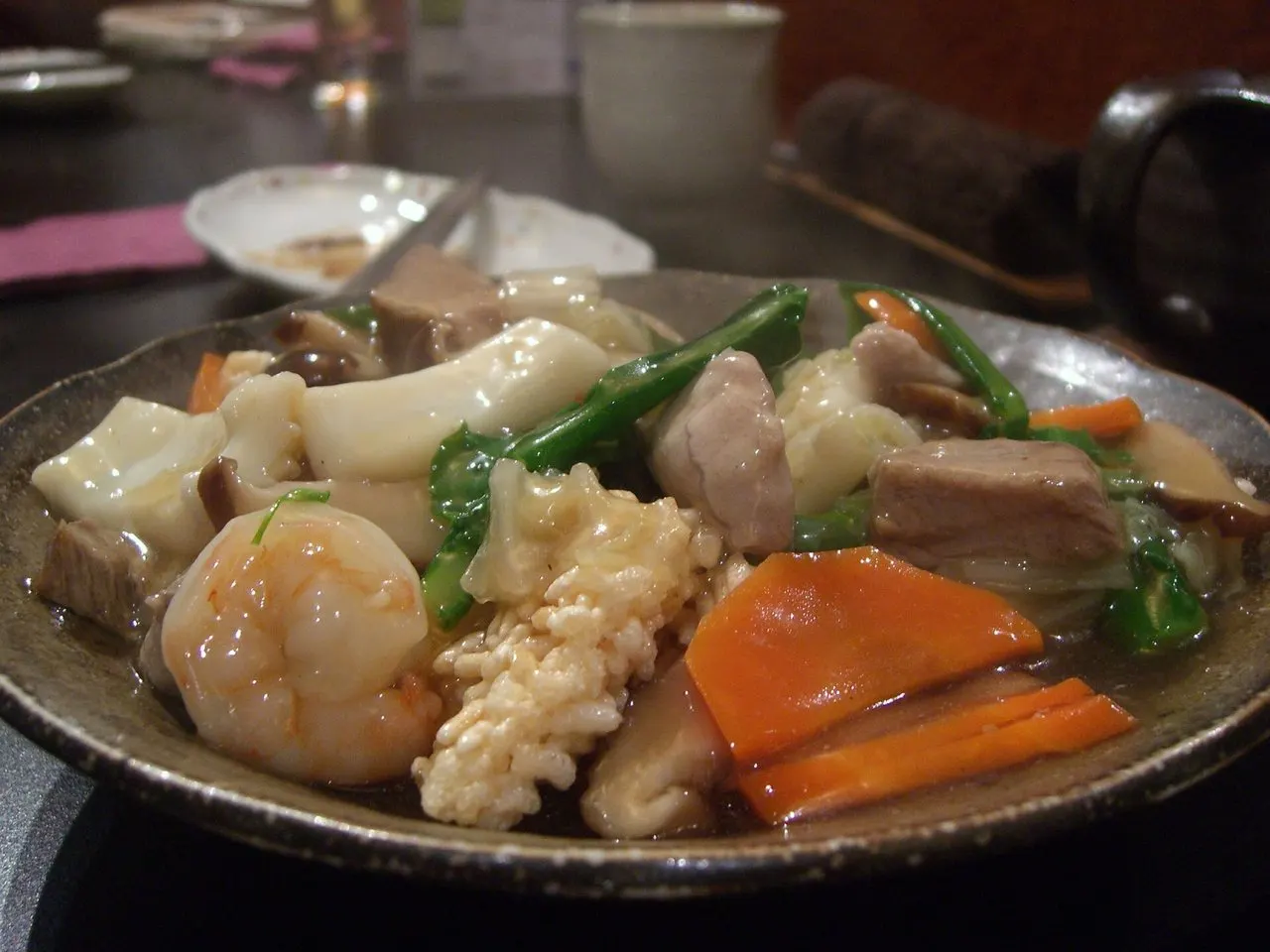
Beef has been eaten in China for a very long time, and it appears in many famous dishes across the country. Cooks stir fry it with peppers, simmer it in rich broths, and slice it thin for hot pot, where diners cook it at the table. Different cuts suit different dishes, so a cook will pick a tender cut for quick frying and a tougher cut for slow stewing. For many Chinese families, beef is simply good food, not a symbol. You can also read about new visa rules for Indian travellers.
The Cow Statue in China Works Like a Menu
Restaurants often use statues and signs to tell passers by what they serve, and the red cow does that job well. A picture can speak faster than words, and a cow shape tells everyone at once that beef is on the menu. The labels add detail for people who want to choose a cut, and the bright colour makes the whole display hard to miss. In a crowded street full of signs, a life size cow is a smart way to stand out. You can also read about a trip across Asia.
Protein Numbers on the Cow Statue in China
Each label on the statue gave the protein content of that cut, a detail that matters to many diners today. Protein helps the body build muscle and stay full, and people who train or watch their diet often check how much protein their food holds. A lean cut may carry more protein with less fat, while a richer cut may taste better but weigh heavier. The statue turned that dry nutrition detail into something a customer could read at a glance. You can also read about a hologram at airport security.
Choosing Dinner From a Cow Statue in China
A customer who stops at the statue can pick a cut before even stepping inside the restaurant. Someone who loves tender meat might point at the shoulder, while another might choose the belly for a richer stew. The labels turn a simple walk past the door into a small lesson about beef, and that lesson can shape the whole meal. It is a clever idea, and it works because the display is clear, colourful and easy to understand. You can also read about a drone that carried food to a stranded chimpanzee.
Travel Brings Surprises at Every Turn
Travel is full of surprises, and even a short walk in a new city can bring something no guidebook warned you about. A street, a market or a restaurant can show you a custom that feels strange, even when the people around you treat it as normal. That surprise can be a joy or a shock, and it often becomes the story a traveller tells for years. The tourist in Chongqing found his surprise standing on a pavement, painted bright red. You can also read about 30 moments of hope.
A Little Reading Goes a Long Way Before a Trip
A few hours of reading before a trip can save a traveller from an awkward moment abroad. Guidebooks and travel sites explain local food, faith and manners, and they warn visitors about sights that may surprise them. A traveller who knows that beef is common in China will still feel the shock of the red cow, but the shock will make more sense. Knowing the customs of a place does not remove feeling, but it helps a visitor meet it with respect. You can also read about cheaper fuel for motorists.
Sacred Animals Are Honoured Around the World
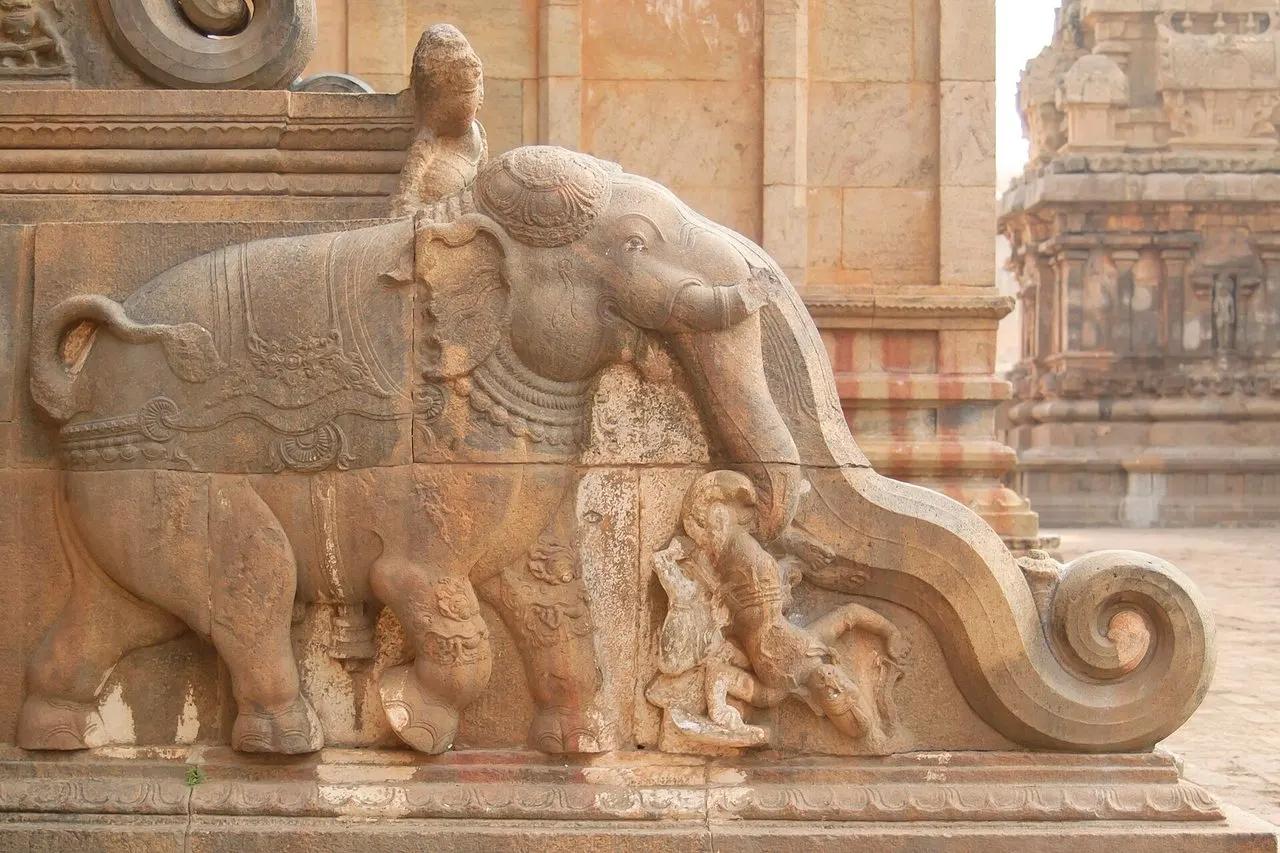
The cow is not the only animal that people hold sacred, and many cultures give special honour to the creatures around them. In India, elephants are linked to the god Ganesha, and in Thailand they stand for strength and good luck. In Egypt long ago, cats were treated as holy, and in parts of the world today, certain animals are never eaten out of respect. These beliefs remind us that food is never just food, it also carries meaning. You can also read about two mothers and the bond guiding their sons.
Prayer and Reverence at a Hindu Temple
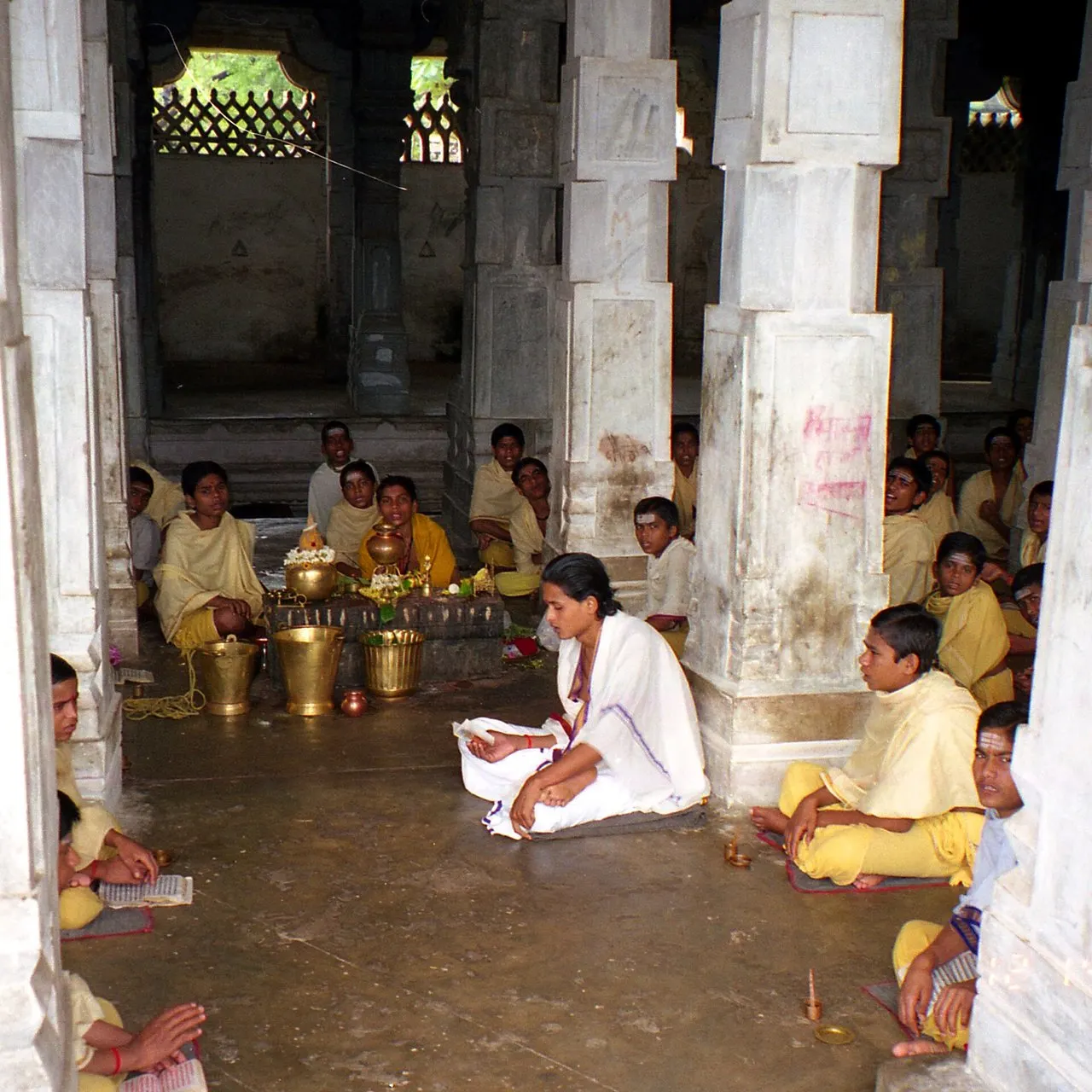
At a Hindu temple, worshippers gather with flowers, lamps and quiet prayers, and the cow is often part of that holy picture. Priests and families treat the animal with care, feeding it and thanking it for the milk it gives. Children grow up seeing cows near temples and in street processions, and the respect becomes part of daily life. That is why a statue that turns a cow into a meat chart can feel like a blow to the heart. You can also read about an update on Bruce Willis.
Street Food Tells the Story of a City
A street food market can teach a visitor more about a city than any museum, because the stalls show what people really eat each day. In Chongqing, vendors sell skewers, noodles and hot pot ingredients, and the air is thick with chilli and smoke. Shoppers point, taste and haggle, and the whole street hums with appetite. A food statue like the red cow fits right into that world, where eating well is a matter of pride. You can also read about how much water a data center uses.
Everyone Has an Opinion on the Cow Statue in China

The cow statue in China has become a talking point, and everyone seems to hold a view about it. Some people say the tourist was right to speak up for his faith. Others say he should have kept his feelings to himself and respected the country he was visiting. A third group says both sides have a point, and the lesson is to listen before judging. The debate shows how one statue can hold a world of views. You can also read about a reunion nearly three years after a split.
A Video Can Travel Further Than Its Maker
The tourist filmed his clip on a street in Chongqing, but within days people on other continents were watching it. A video does not need a passport, and it can cross oceans while its maker is still on holiday. That speed is why a small moment can grow into a global debate, and why the people in a clip may be surprised by how far their words travel. The red cow stayed in one place, but its story went everywhere. You can also read about new visa rules for Indian travellers.
The Cow Statue in China Stands on a Chongqing Street
Some viewers who know Chongqing have said the statue stands in the Yuzhong district, a busy part of the city full of shops and restaurants. The streets there are narrow and steep, and crowds move between malls, food stalls and old lanes. A bright red cow fits that lively scene, and it draws the eye of anyone passing by. Whether you love the display or dislike it, you cannot walk past without noticing it. You can also read about a trip across Asia.
Statues That Advertise Food Are Nothing New
Shops and restaurants have used big statues to catch the eye for a very long time, from giant burgers to smiling cows. A large figure outside a door tells people what is inside without a single word, and children often stop to look at it. In many towns, a cow statue outside a dairy or a burger joint is a familiar sight. The red cow in Chongqing follows that old habit, even if its labels make it unusual. You can also read about a hologram at airport security.
A Traveller Keeps Walking After the Shock
After the shock of the statue, the tourist kept on with his trip, because travel does not stop for one hard moment. He went on seeing Chongqing, tasting its food and meeting its people, and the city had much more to show him than one red cow. A single sight can shake a traveller, but it does not have to end the journey. Often the hard moments become the ones a traveller remembers most clearly. You can also read about a drone that carried food to a stranded chimpanzee.
Two Cultures Meet on One Sidewalk
The pavement outside the restaurant became a meeting place for two cultures, one that worships the cow and one that cooks it. Neither side is wrong in its own home, and that is what makes the meeting so hard to judge. A traveller brings his faith with him, and a host city keeps its customs, and both deserve respect. The best meetings happen when each side tries to understand the other before speaking. You can also read about 30 moments of hope.
Why the Cow Statue in China Stopped So Many People
People stopped scrolling when they saw the red cow because the image was strange, bright and full of meaning. A statue is not news on its own, but this one joined faith, food and travel in a single picture. Viewers could see the shock on the tourist’s face and feel something of it themselves, whether they agreed with him or not. That mix of a strong image and a real human feeling is what makes a story travel. You can also read about cheaper fuel for motorists.
The Cow Statue in China Still Stands Outside the Restaurant
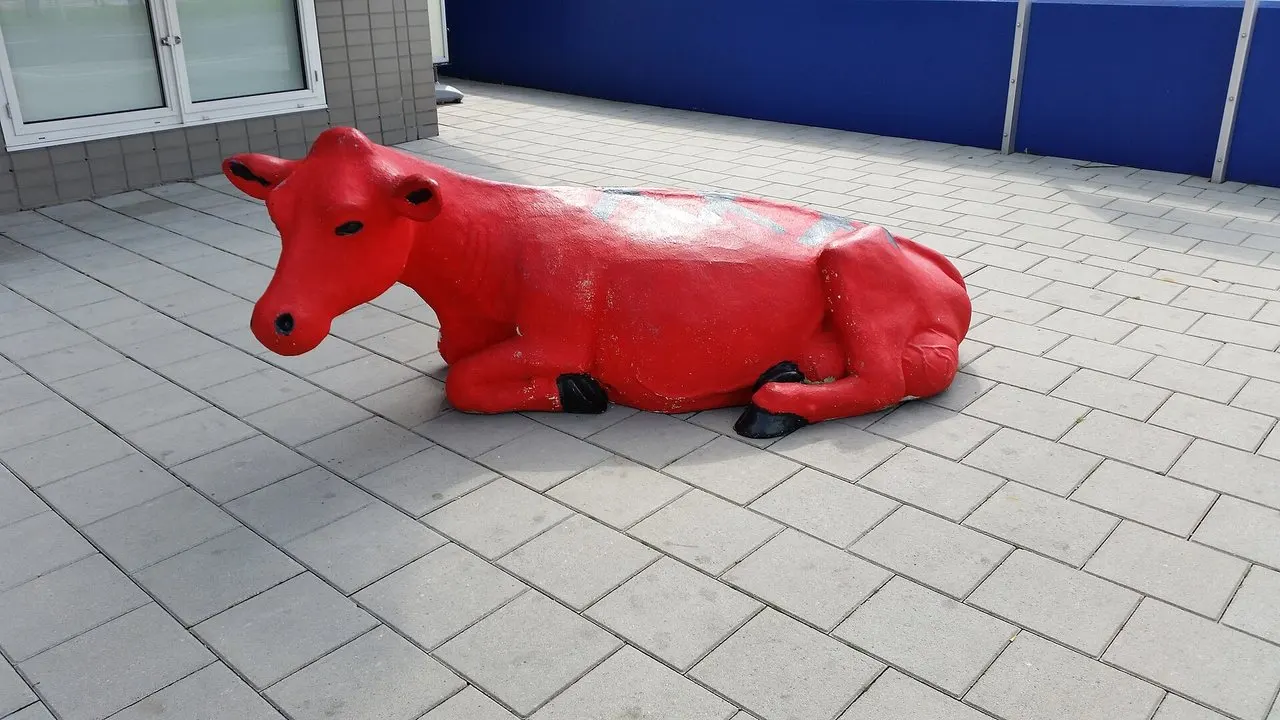
Long after the video faded from the top of people’s feeds, the red cow still stood outside the restaurant in Chongqing. New diners walk past it each day, and new visitors stop to take their own photos. The statue has not changed, but the story around it has grown, and it now carries the memory of a tourist who felt heartbroken. It remains a bright, strange landmark on a busy street. You can also read about two mothers and the bond guiding their sons.
Have You Ever Felt Culture Shock While Travelling?

The tourist’s story ends with a question that many travellers will know well, because almost everyone has met a custom that surprised them abroad. Perhaps you saw a dish you could not eat, or a habit that felt strange, or a belief that clashed with your own. How did you react, and what did you learn from the moment? Share your own story in the comments below, and tell us how you handled the surprise. You can also read about an update on Bruce Willis.