Class Action Lawsuit Against the U.S. Government Has Americans Talking
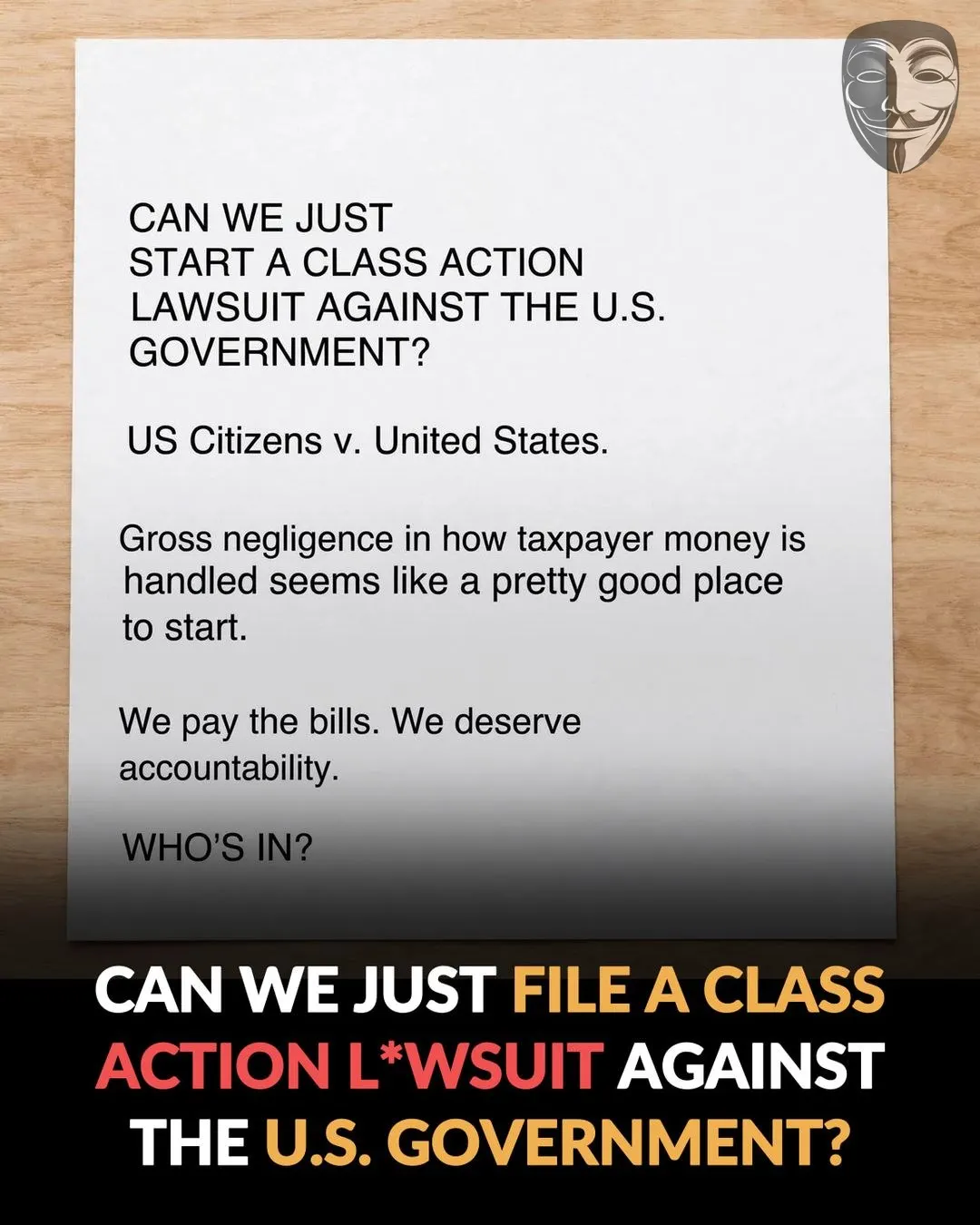
Class action lawsuit questions are now front and center for many Americans after a post asked whether citizens can sue the United States government over taxpayer money. The post, shared by The Other 98%, frames the idea as US Citizens v. United States and points to gross negligence in how public money is handled. It argues that ordinary people pay the bills, so they should be able to demand clear answers about where the money goes and how it is spent.
Class actions against the government are not a new idea, and taxpayers have tried similar cases before over refunds, tax data and spending decisions, according to court filings and news reports. Whether a case like this could move forward would depend on the courts, the claims and the evidence, but the post has clearly struck a chord with readers who want more accountability. In the slides ahead we look at what a group case means and why this question is spreading. For more on a fight over campaign spending and a demand for answers on billions spent, keep reading.
References:
Tax Notes: Class Action Plaintiffs Challenge Plan to Refund Excise Taxes
Tax Notes: We The People Files Class Action Complaint Against Government
Omaha Daily Record: The Trump DOJ Quietly Intervened to Ink a Huge Payout to a Trump Golf Pro
CounterPunch: California Taxpayers File Class Action L*wsuit Against Congressional Reps, Demand Stop to Forced removal Funding
What a Class Action Lawsuit Means for Ordinary People
A group lawsuit lets a large group of people with a similar complaint bring one case together instead of filing hundreds of separate cases. One person or a small group acts for everyone who shares the same problem, and the court decides if the group is similar enough to proceed as one. This can make a case cheaper for ordinary people who could not afford to sue alone, and it puts one clear question before a judge. Read about a court fight over tariffs and a deal that could give more time.
The Post That Started the Conversation

The post at the center of this story asks a simple question, and a group lawsuit against the United States government is the idea it raises. It was shared by The Other 98%, a page that often speaks about money, power and fairness for ordinary people. The question spread because it touches something many readers feel, that taxpayers fund the government and deserve to know how their money is used. A short post can travel far when it names a shared worry. See a warning about national security and a viral post with a surprising twist.
US Citizens v. United States in Plain Words

US Citizens v. United States is the name the post gives to the idea, with ordinary citizens on one side and the federal government on the other. The name is a frame, not a case that has already been filed in court. It sums up the feeling that the people who pay taxes should be able to ask a court to look at how public money is handled. A group case needs that kind of clear picture before anyone can judge it. Read a sharp warning before a big meeting and an idea for helping strangers pay their bills.
Why Taxpayer Money Is at the Center of a Class Action Lawsuit

Taxpayer money sits at the heart of this story because taxes pay for roads, schools, health care, defense and almost everything the government does. When people feel that money is wasted or spent without clear answers, the worry feels personal, because the money came from their work. That is why the post talks about gross negligence, which means a serious failure to take proper care. A group case built on that claim would need clear proof. See a debate about who should lead and questions about why so many data centers are needed.
Gross Negligence and What It Means in Court
Gross negligence is a strong claim in law, and it means much more than a simple mistake or a bad decision. It describes a serious lack of care that a reasonable person or body should have shown, and courts treat it as a high bar to clear. Anyone making this claim would need clear evidence, not just a feeling that money was badly spent. A group case is easy to suggest in a post and hard to prove in court. Read a wish for cash you can always carry and a joke about bills that never get hacked.
Class Action Lawsuit Cases Over Tax Refunds

One reference for this story comes from Tax Notes, with the headline Class Action Plaintiffs Challenge Plan to Refund Excise Taxes. Excise taxes are taxes on specific goods and services, and refunds can become a group issue when many people paid the same tax in the same way. A group lawsuit lets those people ask a court to settle the question once, for everyone at the same time. It is a good example of how tax cases often involve large groups. For more on a fight over campaign spending and a court ruling on tariffs, see our earlier coverage.
When Tax Data Becomes a Court Issue

Tax data is another area where group cases have appeared before, and the post notes that taxpayers have tried similar cases over refunds, tax data and spending decisions. Tax records hold details about income, work and family, so people care about how that data is kept and used. When a system fails or a rule is broken, the harm can touch thousands of people. That shared harm is what makes a group case possible, and courts must decide if the facts fit together. Read a deal that could give more time and a warning about national security.
Spending Decisions and Public Accountability

Spending decisions are at the center of many public arguments, because every choice about public money means less money for something else. The post argues that citizens should be able to demand clear answers about where money goes and how it is spent. Accountability does not always mean a court case, and it can also come from audits, public records, hearings and elections. Still, a group case appeals to people who feel those other routes have not worked. See a demand for answers on billions spent and a viral post with a surprising twist.
How a Class Action Lawsuit Moves Through Court
A group lawsuit starts when lawyers file a complaint that names the group, the problem and what the group wants the court to do. A judge then decides if the case can go ahead as a group case, looking at whether the people involved share the same facts and legal question. If the judge says yes, the case moves to evidence, talks about a settlement, or a trial. If the judge says no, each person would have to bring a case alone. Read a sharp warning before a big meeting and a debate about who should lead.
What Courts Look for Before a Case Can Proceed

Courts look for several things before they let a group case move forward, and the first is whether the group is large enough that separate cases would be impractical. They also ask if the members share common questions of fact and law, and if the people bringing the case can fairly speak for the whole group. These checks protect both sides from weak cases. The rules are strict on purpose, so not every popular idea becomes a court case. See an idea for helping strangers pay their bills and questions about why so many data centers are needed.
We the People and the Right to Ask Questions

Another reference for this story is a Tax Notes headline, We The People Files Class Action Complaint Against Government. The phrase We the People comes from the opening of the United States Constitution, and groups often use it to say that citizens have a voice in how the country is run. Filing a complaint is the first step in a group lawsuit, and it sets out the claims for a court to read. The headline shows that citizens have tried this path before. Read a wish for cash you can always carry and a fight over campaign spending.
Class Action Lawsuit Claims in California
A CounterPunch reference reports that California taxpayers filed a group lawsuit against congressional representatives, and asked for a stop to forced removal funding. The case shows how a group claim can focus on one clear request, in this case asking a court to halt funding for a specific policy. Whether the court agrees is a separate question, and the filing does not prove the claim. Still, it shows how taxpayers in one state have used the same tool the post describes. See a joke about bills that never get hacked and a deal that could give more time.
A Payout, a Golf Pro and Questions About Fairness

An Omaha Daily Record reference adds a different angle, with the headline The Trump DOJ Quietly Intervened to Ink a Huge Payout to a Trump Golf Pro. The headline raises questions about fairness when government action seems to benefit one person with close ties to power. Readers often compare stories like this with their own experience of paying taxes and following rules. The contrast is what makes the story stick. A group case grows from that same wish for fairness. Read a demand for answers on billions spent and a court ruling on tariffs.
Why Readers Say They Want Clear Answers

The post has struck a chord because it asks for something simple, which is clear answers about public money. Many readers expect to see where money went and why a choice was made. When answers are slow or unclear, trust falls, and simple questions start to feel like the only way to be heard. That feeling explains why a short post can gather so much attention in a single day, and why talk of a group case keeps spreading. See a warning about national security and a sharp warning before a big meeting.
Class Action Lawsuit Lessons From Earlier Cases
Earlier cases over refunds, tax data and spending decisions offer lessons for anyone thinking about a new group case. They show that courts want clear facts, a clear group and a clear legal claim before they let a case move forward. They also show that even a case that does not win can raise public attention and push officials to explain their choices. A group case is only one tool among many, and its value is not measured by headlines alone. Read a viral post with a surprising twist and an idea for helping strangers pay their bills.
What Happens Next for This Idea

What happens next for this idea will depend on lawyers, courts and citizens willing to act. A post alone does not start a case, and a court will need a formal complaint, evidence and a group that fits the legal rules. In the meantime, the question is likely to keep spreading, because it speaks to a wish for fairness that many people share. Readers will be watching to see if anyone takes the next step with a group case. See a debate about who should lead and a wish for cash you can always carry.
Should Citizens Be Able to Sue Over Taxpayer Money

So here is the question at the heart of this story, and it is one only readers can answer for themselves. Should citizens be able to sue the government over taxpayer money when they believe it was handled with gross negligence, or should accountability come through elections, audits and public records instead? What do you think is the fairest way to get clear answers about public spending? Share your thoughts in the comments below. Read questions about why so many data centers are needed and a joke about bills that never get hacked while you think it over.