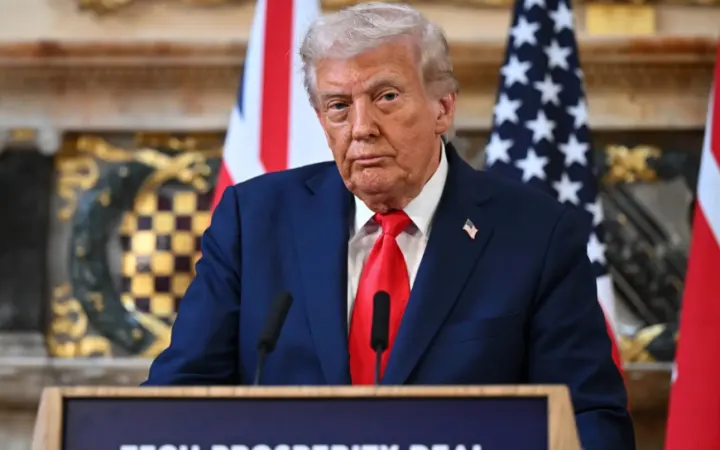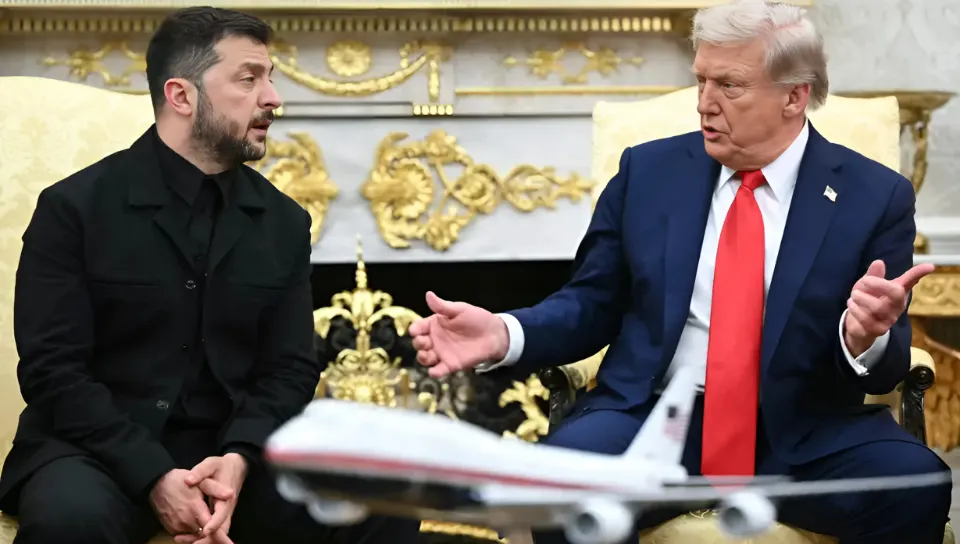
In a Fox and Friends interview, President Donald Trump laid out a Trump Ukraine stance that rules out sending American troops to fight in Ukraine. He suggested some form of air protection could be included in security guarantees, without saying what that would mean.
Trump Rules Out ‘American Boots on the Ground’ in Ukraine, Hints at Air Protection
Who, what, where, when, why, how: In a Tuesday morning interview on “Fox & Friends”, U.S. President Donald Trump said he will not send American troops to fight in Ukraine, even as his administration works on security guarantees for Kyiv during ongoing peace efforts in Washington. He offered what he called an assurance to the American public that “there won’t be American boots on the ground,” while suggesting some form of “air protection” could be part of the package, without specifying whether that means air-defense systems, surveillance, or other support deployed outside Ukrainian airspace. The comments arrived as Ukrainian President Volodymyr Zelenskyy held meetings in Washington on a framework to reduce attacks on cities like Kharkiv and safeguard humanitarian corridors.
Trump’s stance draws a bright line: no U.S. ground war, but potential for enhanced protection that could help blunt drone and missile strikes. For Ukraine, the question is how quickly “air protection” turns into deliveries and trained crews, practical steps that make apartment blocks safer this week, not just in theory.
As negotiators discuss timelines, the fine print, rules of engagement, verification, and automatic penalties for violations, will decide whether any pause is durable.
What Trump Said, and What “Air Protection” Could Mean
Pressed on whether the U.S. would defend Ukraine’s border directly, Trump said, “You have my assurance… there won’t be American boots on the ground.” He added that he is “trying to stop people from being killed,” hinting at an alternative: air protection. While he did not define it, the phrase points to options short of U.S. pilots over Ukraine, such as additional Patriot-class interceptors, NASAMS batteries, counter-drone systems, AWACS-style surveillance from outside Ukrainian airspace, and deeper intelligence sharing.
Each option has trade-offs. More interceptors and sensors can sharply reduce civilian casualties; airborne patrols by allies outside Ukraine can expand detection ranges; and shared targeting data can cut minutes off response time. The question for Kyiv is whether “air protection” arrives fast enough to change the nightly risk in cities under fire.
Whatever the label, Ukraine will judge success by fewer funerals and quieter nights, not by press language.
No US Ground War: The Trump Ukraine Stance Explained
Across administrations, Washington has tried to balance support for Ukraine with limits that reduce the risk of direct U.S.–Russia confrontation. The latest line is explicit: no American boots on the ground. That means no U.S. brigades, no patrols on Ukrainian soil, and no American-run buffer zones. It does not preclude expanded training, equipment, or financial support, which remain central to Kyiv’s defense.
For the White House, the calculus is domestic as well as strategic: avoid a ground deployment that could draw the U.S. into open war, while still delivering enough capability to protect civilians and sustain diplomatic leverage. For Kyiv, the calculus is survival: intercept more drones and missiles, protect power plants, and keep ports functioning under stress.
The red line shapes everything downstream, from procurement priorities to the language of any security guarantees.
Kyiv’s Ask: Protection Now, Not Just Promises Later
Ukraine’s leadership has been blunt: if a framework can’t protect families in apartment blocks, it will not hold. That is why Kyiv pushes for air defense capacity first, interceptors, radars, and electronic warfare, while talks continue. It also seeks predictable financing so civilian services, from hospitals to power grids, can survive repeated strikes.
Ukrainian officials argue that a pause without enforcement becomes a “reload period” for the Kremlin. They want automatic penalties for violations, clear no-strike lists for critical infrastructure, and joint hotlines to prevent escalation spirals. In that architecture, “air protection” is not a slogan; it’s the first building block.
For civilians in Kharkiv and beyond, better warning and interception rates are the most tangible form of “guarantee.”
Europe’s Role: Guardrails, Financing, and Staying Power
European partners are expected to anchor any deal with synchronized pledges: air-defense missiles, ammunition flows, and budget support that keeps Ukraine’s services running. Their goal is deterrence without escalation, bolster Ukraine’s defenses while maintaining unity at home and keeping the door open for direct talks.
For Europe, this is also about energy security and trade. A steadier security picture lowers the risk premium baked into gas and shipping insurance, stabilizes logistics, and reassures industries sensitive to supply shocks. In that sense, “air protection” is not just a military term, it’s an economic one.
As capitals line up pledges, the test will be delivery speed and the durability of support into winter.
Markets Watch: Energy Prices, Risk, and Your Wallet
Headlines like “no U.S. troops” and “air protection” move expectations. A clear path to protecting cities can trim the geopolitical risk premium in oil and LNG, calming energy prices and reducing volatility. A foggier outlook does the opposite, lifting hedging costs for airlines and shippers and filtering into airfares and freight.
For households, that shows up as pump prices, evolving inflation expectations, and decisions around mortgage rates, credit cards, and savings accounts. Investors watch defense names and energy ETFs, weigh portfolio diversification, and shift allocations to gold or Treasuries if uncertainty rises. A credible “air protection” plan can act like a pressure valve for both markets and family budgets.
Stability is cumulative: each concrete step that protects civilians helps cool prices and steady planning.
What “Security Guarantees” Might Include, Without U.S. Soldiers
Officials sketch a layered package rather than one grand treaty. Expect bilateral agreements with common clauses: fast-track air defense, sustained financing, and structured training. Add a verification layer, shared data, ground sensors, and satellite imagery, to confirm strikes and trigger responses. Crucially, penalties for violations should be automatic, not subject to fresh political votes each time.
This model keeps support high while honoring the no ground troops promise. It also fits Europe’s preference for predictable commitments that outlast any single news cycle or election.
If done right, this architecture can reduce harm quickly, even as bigger political questions remain open.
Kharkiv, Civilians, and the Human Stakes
As Washington debated language, Kharkiv mourned. Recent drone and missile strikes have hit homes, transport links, and utilities. Families now sleep near corridors, children carry ear protection, and volunteers deliver food and water to shelters. Hospitals rely on donated generators and trauma supplies to keep operating during blackouts.
Residents say the most valuable promise is the one they can feel: sirens less often, lights staying on, and schools that can reopen safely. In that world, “air protection” is not an abstract phrase; it’s the difference between a night of fear and a night of rest.
The humanitarian ledger should be the measure of success for any plan that emerges from Washington.
Domestic Politics: Why the Message Matters at Home
“No American boots on the ground” is a clear domestic signal aimed at voters wary of another open-ended war. It allows the White House to argue it is backing allies, protecting civilians, and managing riskwithout deploying U.S. brigades. It also frames the debate in Congress: approve resources for air defense and humanitarian needs while maintaining a hard limit on troop commitments.
Opponents will question costs; supporters will argue that predictable support now is cheaper than crisis response later. Either way, the phrase sets the terms of engagement for budget fights and oversight hearings in the months ahead.
Foreign policy is also domestic policy when prices, security, and confidence are on the line.
Cyber, Sanctions, and the Quiet Guardrails
Even without ground troops, Washington can tighten sanctions enforcement, push for export controls that slow military supply chains, and expand cybersecurity cooperation with partners. Quiet guardrails, deconfliction hotlines, incident response playbooks, and shared threat intelligencehelp prevent miscalculation during tense windows.
Insurers track this closely: a calmer cyber picture lowers premiums for cyber insurance, while escalatory signals push costs up for companies and small businesses. The “air protection” conversation therefore intersects with boardroom risk in ways that rarely make headlines.
Reducing the odds of a cyber spillover is as important as intercepting a missile, both protect civilians and economies.
What to Watch Next: Deliveries, Definitions, and Deadlines
Watch three things. First, deliveries: are new air-defense systems and interceptors moving quickly to Ukrainian cities? Second, definitions: does the administration clarify what “air protection” includes, sensors, interceptors, patrols outside Ukrainian airspace, or something else? Third, deadlines: do partners publish synchronized timelines so the public can track progress?
On the humanitarian side, track generator support, hospital supplies, and winterization kits. On the diplomatic side, watch for verification rules and automatic penalty triggers that kick in without fresh debates. These are the nuts and bolts that turn phrases into safety.
If those pieces lock in, families will feel the difference long before the politics catch up.
Final Take: A Clear Red Line, and a Test of Delivery
President Trump’s message is unambiguous: no American boots on the ground in Ukraine. The opening for Kyiv is the promise of air protectiona path that could shield civilians without plunging the U.S. into a ground war. Whether that promise becomes protection depends on the next few weeks: moving interceptors, wiring data links, and hardening grids so hospitals and homes can withstand attacks.
For families in Kharkiv and across Ukraine, the metric that matters is simple: fewer sirens, fewer funerals, more nights with power and heat. For markets, it is steadier energy prices and calmer logistics. For policymakers, it is the credibility that comes from doing what was pledged, on time. The phrase “no troops” sets the boundary; the phrase “air protection” sets the challenge. Now the world will measure both by results.