A National Guard HH-60M crew carried out a Black Hawk hiker rescue on Trinity Mountain in Idaho, airlifting a 55-year-old man with a broken leg and safely transporting his dog. Air St. Luke’s found him first near Fiddle Lake but needed a hoist-capable helicopter.
Guard Black Hawk Rescues Injured Hiker, and His Dog, on Idaho’s Trinity Mountain, Marking Eighth Save of 2025
A National Guard HH‑60M Black Hawk crew and a joint medical team executed a complex backcountry rescue on Trinity Mountain in Idaho, airlifting a 55‑year‑old hiker with a broken leg and safely transporting his dog from the ridge. The mission unfolded last week near Fiddle Lake east of Boise after Air St. Luke’s first located the injured man but requested a hoist‑capable helicopter. The Idaho Army National Guard’s team from Det. 1, Golf Co., 1‑168th Aviation responded in an HH‑60M, inserted a flight medic by hoist, coordinated a litter carry to a newly cleared landing zone, and improvised canine care so the dog could fly. Officials say it was the unit’s eighth successful search‑and‑rescue of 2025.
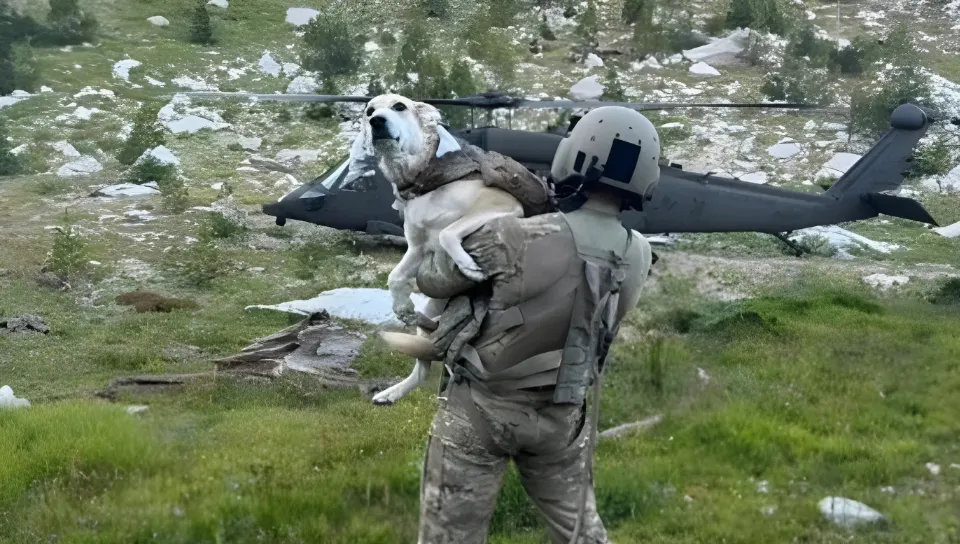
The dog, stressed by rotor wash but uninjured, rode out with the Guard crew after medics fashioned a soft muzzle and improvised ear protection. The hiker was transferred to the Air St. Luke’s aircraft for rapid transport to hospital care. Both extractions concluded without further injury.
Here’s how the rescue unfolded, why crews split the mission between two helicopters, and what the operation reveals about modern military‑civilian search and rescue in the Mountain West.
From Beacon to Hoist: The Black Hawk Hiker Rescue Timeline
Initial alert: A distress call routed to Air St. Luke’s placed the hiker on a narrow ridgeline above alpine water near Fiddle Lake. Turbulence, slope angle, and the lack of a safe pad ruled out a direct landing at first.
Call for hoist: The hospital flight crew requested a hoist‑equipped helicopter. The Idaho Army National Guard launched an HH‑60M with a crew trained for high‑altitude hoist operations and austere medicine.
On‑scene pivot: By the time the Black Hawk reached the mountain, the Air St. Luke’s crew had identified a marginal landing zone nearby and hiked to the patient to begin stabilization. The Guard inserted a senior flight medic by hoist to join the team at the ridge and assess whether a litter carry could beat a high‑hover hoist in gusty conditions.
Two‑aircraft choreography: The joint team opted to carry the patient by litter to the civilian aircraft’s pad for a direct hop to the hospital. The Black Hawk crew took responsibility for the dog and the hiker’s gear, keeping the patient ship within safe power limits for the takeoff altitude and temperature.
The dog and equipment were flown to a rendezvous with a Fairfield ambulance staged roughly a mile away.
Meet the Crews: Medics, Pilots, and the Unit Behind the Save
The Guard aircrew belongs to Detachment 1, Golf Company, 1‑168th Aviation Regiment, part of the Idaho Army National Guard’s aviation group headquartered at Gowen Field in Boise. On board: pilots seasoned in high‑density‑altitude operations, a hoist operator, and flight medics trained to stabilize trauma patients in austere conditions.
The senior flight medic led patient care on the ridge, coordinating with Air St. Luke’s clinicians who had already begun analgesia and splinting. A second medic helped manage the litter team and, crucially, the canine transport.
Back at the tactical desk, planners kept a close eye on weather windows, fuel, and airspace deconfliction with the civilian helicopter, quiet work that makes the dramatic moments possible.
Mountain Math: Why Crews Chose a Litter Carry Over a Full Hoist
At 9,000‑plus feet, Trinity Mountain’s thin air shrinks rotor performance. Add gusts and sloped terrain, and a high‑hover patient hoist becomes a riskier lift. The presence of a newly cleared pad changed the calculus: a short, controlled carry on foot, followed by a quick load into the already‑landed civilian helicopter, promised less time in the danger box.
The Black Hawk’s power margin and cabin space, meanwhile, made it the better platform to handle the dog and equipment without encroaching on the patient aircraft’s performance limits. Splitting tasks shaved minutes and lowered risk at a moment when daylight and wind could have closed the window entirely.
It’s a playbook increasingly common in the Rockies when terrain offers even a marginal pad nearby.
The Dog: Stress Management, Ear Protection, and a Soft Muzzle
Rotor wash is loud, confusing, and frightening for animals. Even friendly pets can nip when stressed or separated from their owners. The Guard medics made a soft muzzle from on‑hand material and slipped on improvised ear protection to blunt the noise. With calm handling and secure restraint, the dog boarded the Black Hawk without sedation and rode smoothly to the ambulance rendezvous.
Handlers say the basics matter most: quiet voices, firm holds, and preventing sudden visual cues during loading. The dog’s demeanor, anxious but cooperative, made the difference between minutes of chaos and a clean extraction.
Those simple items can convert a potential hazard into a controlled task under pressure.
What Makes the HH‑60M Different, and Why It Matters at Altitude
The HH‑60M is the medevac‑configured Black Hawk, equipped with a rescue hoist, advanced avionics, and a cabin set up for in‑flight care. Compared with smaller civilian ships, it brings higher power/payload marginscritical on hot, high days when density altitude erodes performance. The M‑model’s integrated hoist mount and medical systems give crews the flexibility to insert medics quickly and treat patients while repositioning.
Even so, aircraft choice is only half the story. Modern mountain SAR hinges on interoperabilityshared radio plans, practiced handoffs, and an understanding of who leads which phase. Those protocols, rehearsed in peacetime, prevent confusion when seconds count.
That combination is why Guard aircraft remain a backbone of Western SAR seasons.
Inside the Medicine: Stabilize, Package, Move
Mountain medicine is about sequencing. Crews first control pain and bleeding, then splint fractures and package the patient for uneven ground. On Trinity Mountain, the hospital crew and flight medics split roles: one team managed analgesia and splinting while the other scouted footing and rigging for the litter carry.
Hypothermia and re‑injury are the hidden threats as daylight fades. A short carry to a safe pad and a direct lift to definitive care reduced both risks, and conserved strength for the final load, when fatigue can cause slips on talus.
The result: a faster handoff and fewer complications en route.
Why Joint Rescues Are Rising in the Mountain West
Across Idaho and neighboring states, civilian air‑medical teams and National Guard aviation units train together more than ever. Hospitals bring clinical depth and strong dispatch networks; Guard crews bring hoists, night‑vision, and high‑altitude performance. The blend turns marginal weather windows into workable ones and extends reach into bowls and couloirs that defeat smaller ships.
This mission fits that pattern. It also shows how interoperabilityshared checklists, common radio language, and pre‑agreed rolesturns a complex scene into a repeatable play. When the Guard took the dog and gear, for example, it wasn’t improvisation alone; it was a planned option baked into joint doctrine for split loads.
As backcountry use surges, that model is likely to become the norm, not the exception.
Backcountry 101: A Quick Primer for Hikers with Dogs
Idaho’s high country invites over‑commitment when the weather turns or footing slides. Rescuers point to a handful of basics that keep mishaps from becoming crises: carry a satellite communicator; pack extra layers and a headlamp even on day hikes; know how to splint; and tell someone your precise route.
With dogs, add a long leash, paw protection, a collapsible bowl, and a simple wrap that can double as a muzzle if stress spikes. A quick canine info cardname, age, meds, helps responders in the chaos. None of that gear weighs much; all of it pays off when the margin for error disappears.
Most rescues begin with small decisions stacking the wrong way; most preventions start with small corrections.
Data Point: Eighth Rescue of 2025 and What That Signals
Officials say this was the aviation group’s eighth rescue of the year, a number that tracks with a busier‑than‑usual summer as snowpack receded and high‑elevation trails filled. The figure is more than a milestone; it’s a reminder of the year‑round readiness Guard crews maintain for wildfires, floods, and medical evacuations that stretch from desert canyonlands to alpine ridgelines.
Rescue counts aren’t the goal. They are the outcome when training, equipment, and partnerships line up. The metric that matters most inside the hangar is simpler: everybody home safepatient, partners, and crews.
That’s when hoist training and joint drills done in July pay dividends in October.
Voices from the Flight Line: Why Crews Do This Work
Ask medevac crews why they fly into thin air at dusk and you hear a common refrain: it’s technical, it’s teamwork, and it’s service. This mission had all three. The choreography between a hospital ship and a Guard Black Hawk, the decision to carry then fly, the choice to handle a canine passengereach reflected drilled skills and a bias for safe speed.
One flight medic put it simply after the handoff: when checklists, procedures, and partnerships align, a remote injury becomes a story with a clean ending. On Trinity Mountain, that ending included a wagging tail.
That ethos explains why Guard medics train in canine care alongside trauma protocols.
Final Take: A Split‑Load Plan, Two Aircraft, and One Safe Exit
Trinity Mountain threw the usual high‑country problems at rescuers: steep ground, thin air, and a clock that outruns boots. The answer was not a single dramatic hoist, but a disciplined plan that split tasks between a hospital helicopter and a Guard Black Hawk. One flew the patient; the other moved the dog and gear, keeping both ships inside safe performance margins and buying time against wind and daylight.
By nightfall, a hiker with a broken leg was en route to definitive care, a good dog was reunited with ground responders, and crews were headed home. It was the aviation group’s eighth save of the year, a testament to training that treats the spectacular, the rotors, the hoist, as the tip of a larger discipline: procedures, partnerships, and patient care. Out there on the ridge, that discipline is what makes all the difference.
Source: Idaho Military Division