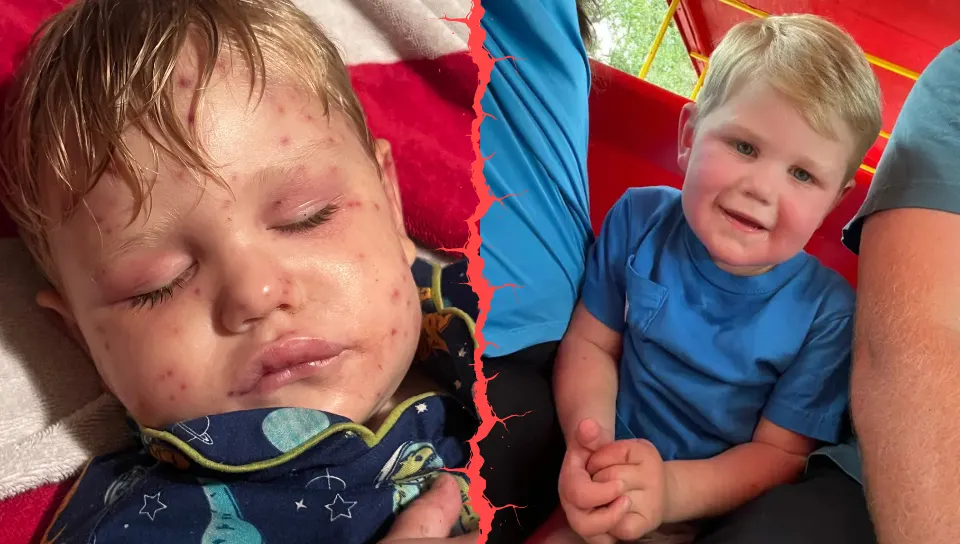
In a case of Georgia toddler wasp stings, two-year-old Beckham Reed was stung more than 150 times after his ride-on toy car knocked over a yellow jacket nest. Within 24 hours his skin turned yellow, and doctors at Memorial Savannah found his heart, liver and only kidney shutting down.
Over the weekend of June 27, 2025, two-year-old Beckham Reed from Georgia was playing outside with his cousins in a ride-on toy car. Without warning, the vehicle knocked over a yellow jacket nest… and Beckham was swarmed by the wasps. More than 150 stings covered his tiny body, sending him spiraling into a medical emergency.
What followed was nothing short of terrifying. Beckham, who was born with just one kidney, was initially taken to the local emergency room. There, he received morphine for pain and Benadryl to combat allergic reaction, then sent home. But within 24 hours, his skin turned yellow… a sign his liver and kidney were failing.
Fear intensifying, Beckham’s family rushed him into intensive care at Memorial Savannah. There, doctors confirmed that his heart, liver, and the one working kidney were shutting down… his body couldn’t handle the massive dose of venom. Since there is no antivenom for yellow jacket stings, the medical team focused entirely on supportive care. Beckham was placed on a ventilator, started on dialysis, and given IV medications to help his organs process toxins and recover.
- Shock from envenomation: 150 stings released a concentrated venom load that overwhelmed his tiny body.
- One-kidney risk: Pre-existing renal limitation worsened his odds.
- No antivenom available: Only organ support could save him.
Thankfully, family updates show signs of improvement: Dialysis, ventilator assistance, and vital support measures are slowly working. Beckham’s liver and kidney numbers are inching up, he’s more alert, and doctors are hopeful he may be taken off the ventilator soon.
Why this matters:
- Poison load matters: Most people survive a few stings… but hundreds can overwhelm a small child.
- Kidney health is crucial: Pre-existing conditions can dramatically raise risk.
- Speed of treatment counts: Where he got to hospital quickly, it gave him his best shot.
“Could Beckham’s Recovery Be Real After 150 Wasp Stings?”
Over the past few days, Beckham’s condition has shown steady signs of improvement, though doctors emphasize he’s still on a long road to recovery.
Key medical milestones so far:
- Kidney and liver markers improving… recent lab results show levels trending back toward normal
- Nutrition adjustments… doctors have increased tube feeding while decreasing fluid intake, easing stress on his compromised organs
- Ventilator weaning on the horizon… reports indicate medical staff are planning to begin removing him from the ventilator once he demonstrates adequate breathing strength .
Why this matters:
- Precision in critical care: Adjusting fluids and nutrition can significantly reduce strain on vital organs during toxin clearance.
- Respiratory independence: Coming off a ventilator is a major milestone… it marks progress toward full recovery.
- Family’s emotional strength: Updates shared by Beckham’s aunt, Tiffany Hewatt, herself a registered nurse, emphasize both cautious optimism and prayerful hope
What doctors are monitoring closely now:
- Respiratory function… they’ll assess if Beckham can maintain stable breathing without machine support.
- Toxin clearance… his organs must continue to process away the venom residues.
- Long-term kidney health… with only one kidney, every lab result will be scrutinized to prevent permanent damage.
Medical risks ahead:
- Secondary infections due to invasive treatments like intubation.
- Organ relapse if toxin clearance is slower than expected.
- Emotional and financial toll… his family is relying on community support to cover ongoing care.
“Beckham is waking up more and we know this is good news because he is STRONG and a great kicker… We know Beckham is a fighter and he is fighting to get better.”
“What Makes 150 Wasp Stings Turn Deadly?”
Understanding why multiple yellow jacket stings can cause such severe complications… especially in small children… helps explain Beckham’s critical condition.
What’s in yellow jacket venom?
Yellow jacket venom includes the toxin mastoparan and enzymes like phospholipase A1 and A2. These trigger inflammation and cellular damage on multiple fronts.
When a small child is stung repeatedly:
- Massive venom load overwhelms their system.
- Enzymes break down cell membranes, damaging red blood cells and muscle cells… leading to hemolysis and possible rhabdomyolysis.
- Toxin overload can precipitate acute kidney injury, liver dysfunction, heart arrhythmias, and brain swelling
Why doctors go beyond clearing venom:
- To prevent organ shutdown, they maintain blood pressure, use fluid/ion support, and monitor electrolyte balance
- They may also utilize haemoperfusion or haemofiltration to remove toxic proteins and cytokines… not just standard dialysis.
What about allergic reactions?
- Even non-allergic massive stings can lead to shock, multiorgan failure, seizures, and secondary infections.
- Allergic anaphylaxis is separate but dangerous, requiring epinephrine… though Beckham’s case was driven mostly by envenomation, not allergy .
Special risks for children
According to pediatric research:
- Multiple stings can cause organ dysfunction in children, sometimes delayed by over 24 hours… requiring ventilator support and renal replacement therapy for weeks
- There’s also a risk of sepsis due to invasive treatments… highlighting why early intervention is critical.
Summary: How venom hurt Beckham?
| Mechanism | Effect on Body |
|---|---|
| Mastoparan, phospholipase enzymes | Cellular membranes of RBCs & muscles attacked |
| Hemolysis & rhabdomyolysis | Toxin release, kidney strain |
| Inflammatory cascade | Tissue damage, organ stress |
| Multi-organ involvement | Kidney, liver, heart, brain all at risk |
| Treatment | Supportive care like dialysis, ventilation, toxin removal |
Beckham’s medical team has implemented best practices: maintaining perfusion, dialysis-based toxin removal, and infection control… yet the venom is a formidable opponent.
Small children need vigilant long-term follow-up: monitoring kidney/liver health and watching for late-onset complications like serum sickness .
Could Beckham Face Long-Term Effects From Georgia Toddler Wasp Stings
Recent updates from The Independent, News4JAX, and the New York Post confirm that Beckham Reed is slowly improving, but experts warn that the journey isn’t over.
What specialists are looking out for now:
- Kidney recovery: With only one kidney, early signs of function are promising… but long-term follow-up is crucial to check for chronic kidney disease.
- Neurological health: After such severe trauma and ICU stays, doctors monitor for developmental delays, memory issues, or seizures… even when the patient appears stable.
- Emotional impact: Hospitalization trauma in toddlers can manifest later as anxiety or sleep disturbances in daily life.
Risks that can emerge late:
- Serum sickness: Weeks after envenomation, children might develop fever, joint pain, rash, or swollen glands due to immune reactions.
- Kidney scarring: Acute injury can leave residue damage… requiring lifelong surveillance with blood tests and ultrasounds.
- Respiratory weakness: After ventilator use, rebuilding strong lungs is vital to ward off pneumonia or lung infections.
What ongoing care looks like:
- Regular bloodwork: Monitoring kidney markers (e.g. creatinine) and liver enzymes for several months.
- Neurodevelopment screening: Seeing a pediatric neurologist if there are any delays in speech, motor skills, or social cues.
- Psychological support: Many parents are guided to use counseling or therapy to help toddlers express fear or pain.
One coach from a pediatric recovery program explained:
“Even if a child looks ‘fine’ physically, the ICU experience can change how they react to doctors, new routines, or even strangers”… the emotional layer of recovery is key.
“Can Beckham Avoid Serious Long-Term Damage After This Trauma?”
Beckham Reed’s initial survival is remarkable, but can he escape lasting damage? Doctors are focusing on early warning signs and prevention strategies based on pediatric case studies and venom toxicology.
Early detection saves lives
A Turkish case report showed that children stung 20–200 times (especially around the face or torso) had a 25–50% mortality rate, with risks of kidney failure and multi-organ shutdown. Early admission to ICU and aggressive dialysis/haemoperfusion were pivotal to survival.
What signs should parents watch for?
A global study involving 48 children with multi-organ dysfunction highlighted cola-colored (tea-colored) urine as a strong early indicator of acute kidney injury (AKI). Alongside jaundice, high liver enzymes, and elevated toxin markers… these signs help doctors intervene early.
Delayed complications can emerge
Reports from Thailand and Bangladesh confirm that symptoms like oliguria (low urine output), anuria, rhabdomyolysis, and even respiratory distress can develop days after the initial stings. These require prolonged dialysis… up to 3–6 weeks in some cases… but many children do recover fully with early treatment.
Beyond the ICU: lifelong follow-up
- Kidneys: Risk of chronic kidney disease requires long-term monitoring.
- Liver: Enzyme elevations should resolve, but follow-up matters.
- Neurology: Serious cases of ICU exposure may trigger developmental or neurological delays.
- Immunology: Serum sickness or immune-mediated nephritis might appear weeks later.
- Eyes: Though rare, ocular stings can cause intraocular pressure changes and vision damage if untreated.
Timeline to watch
| Phase | Window | What to Watch For |
|---|---|---|
| 0–2 days | Immediate | Hemolysis, AKI signs… cola-colored urine, lab spikes |
| 2–10 days | Delayed onset | Rhabdomyolysis, oliguria, respiratory issues |
| 2–6 weeks | Recovery progress | Normalized kidney/liver function via dialysis |
| 6+ weeks | Long-term checkup | CKD risk, neurodevelopment, immune reactions |
Beckham’s prognosis so far is cautiously optimistic thanks to early ICU care, proactive dialysis, and vigilant monitoring. But his road may still include follow-ups, lab tests, and specialist visits for months to come.
Source: WSB-TV