The Meritocracy Debate Starts With Sean Duffy and Markwayne Mullin

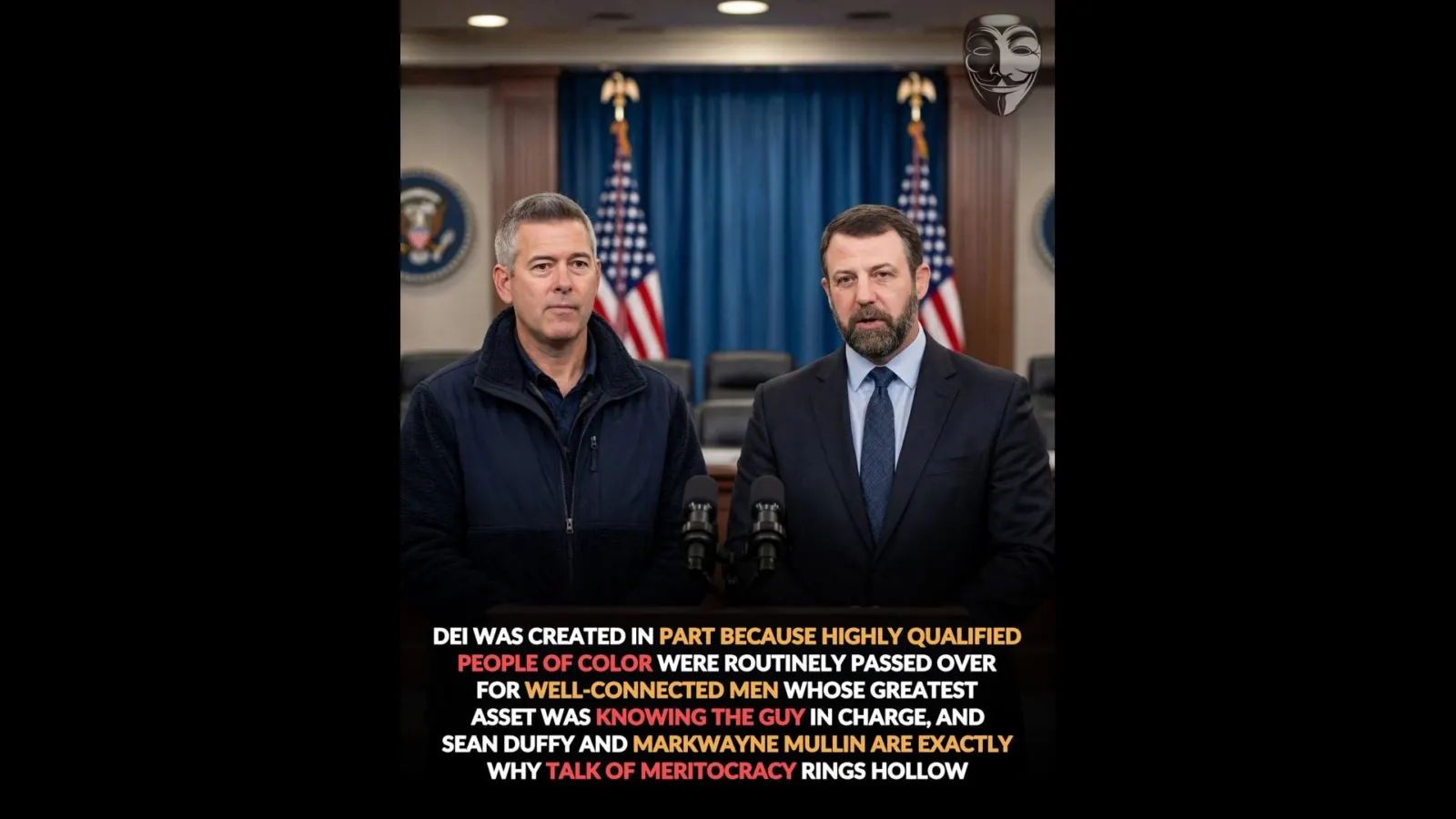
The meritocracy debate flared up when a post put Transportation Secretary Sean Duffy and Senator Markwayne Mullin at the center of a fight over fairness and hiring in America. The post argues that DEI programs were created because highly qualified people of color were routinely passed over for well connected men whose main qualification was knowing the person in charge. It says Duffy and Mullin are living examples of that point, and asks readers to look past the talk of merit. Read our report on the fight over the FAA meltdown for more.
Duffy was confirmed by the Senate in a 77 to 22 vote in January 2025, the same month President Trump signed executive orders ending DEI programs across the federal government in the name of merit based opportunity. The post has drawn thousands of reactions and hundreds of comments, with readers split over whether connections or qualifications decide who gets top jobs. In the slides ahead, we look at the two men, the orders, and the history behind the argument, starting with the report on Duffy and the race back to the Moon.
References:
Source: White House: Ending Illegal Discrimination And Restoring Merit-Based Opportunity
Source: GovInfo: Executive Order 14151 Ending Radical And Wasteful Government DEI Programs And Preferencing
Source: AASHTO Journal: Duffy Confirmed By The Senate As USDOT Secretary
Source: AVweb: Duffy Confirmed As Transportation Secretary
Sean Duffy: From Congress to the Transportation Department

Sean Duffy is the Transportation Secretary, and the post holds him up as one of the faces of the debate over merit and DEI. Before leading the Transportation Department, he served in the House of Representatives and built a public profile as a lawmaker and television host. He was confirmed by the Senate in a 77 to 22 vote in January 2025, a margin that showed support. His path from Congress to the cabinet is why the post singles him out, as covered in our story on the race back to the Moon and the fight over the FAA meltdown.
Markwayne Mullin: The Senator in the Spotlight

Markwayne Mullin serves in the United States Senate, and the post names him alongside Duffy as an example of its point about connections and top jobs. Mullin came to Washington after a career in business in Oklahoma, and he moved from the House of Representatives to the Senate, where he now votes on nominations and executive actions that shape federal hiring. His rise is central to the post, and it echoes Senate fights like the debate over sending the National Guard into cities and the vice president’s clash with Senate Democrats.
What the Meritocracy Debate Says DEI Was For

The post argues that DEI programs were created because highly qualified people of color were routinely passed over for well connected men. Federal hiring rules have a long history, going back to civil service reforms that tried to replace favoritism with open competition. Over time, programs aimed at diversity, equity, and inclusion were added to open doors that had stayed closed to many applicants. Supporters say these programs correct old patterns, while critics say they create new ones, a tension also seen in the English-only rule for federal housing services and the plan to require voter ID.
A 77 to 22 Vote in the Senate

Duffy was confirmed by the Senate in a 77 to 22 vote in January 2025, and that number tells its own story. A cabinet nominee needs a simple majority to win confirmation, so 77 votes meant support beyond one party. The vote came early in the new administration, when the Senate was moving quickly through the president’s picks. For supporters, the wide margin showed that Duffy was seen as qualified. For critics, the vote is only the start, beside other Senate battles like the debate over sending the National Guard into cities and the vice president’s clash with Senate Democrats.
Two Executive Orders in January 2025

In the same month Duffy was confirmed, President Trump signed executive orders ending DEI programs across the federal government in the name of merit based opportunity. One order was titled Ending Illegal Discrimination And Restoring Merit-Based Opportunity, and the other, Executive Order 14151, ended radical and wasteful government DEI programs and preferencing. Together, they told federal agencies to stop DEI offices, grants, and hiring preferences. The orders set the terms for the whole debate, much as other orders shaped the English-only rule for federal housing services and why a president cannot close a department with an executive order alone.
The Meritocracy Debate Over Merit-Based Opportunity

The phrase at the heart of the orders is merit based opportunity, the idea that jobs should go to the most qualified person. Supporters of the orders say that is the fairest rule, and that DEI programs got in the way of it. Critics reply that skill alone has never decided hiring, because who you know has always mattered too. The post sides with the critics, saying connections have long decided who gets top jobs. That clash runs through the administration’s early moves, from the federal layoffs in the president’s first weeks to the order on cashless bail in Washington.
When Connections Open Doors

The post claims that knowing the guy in charge can matter more than a resume. Hiring experts say the same thing in softer words, noting that many jobs are filled through referrals and personal introductions. A recommendation from someone trusted can move an application to the top of the pile, and a quiet word can open a shut door. That is why the post calls well connected men the winners. The same pattern shows up in politics, where relationships shape the bill that kept the government open through September and the bill to stop a president from pardoning himself.
How the Senate Decides Who Leads

A cabinet secretary does not get the job by applying online. The president nominates a person, the Senate holds hearings, and then the full Senate votes. Nominees answer questions about their record and their plans, and senators weigh whether they are fit to run a large department. Duffy went through that process in January 2025 and won 77 votes. The process is meant to test merit, but it is political, and it is shaped by the same forces seen in the Senate debate over sending the National Guard into cities and the clash between the vice president and Senate Democrats.
The Meritocracy Debate Reaches the Transportation Department

The Transportation Department oversees the roads, bridges, railways, and skies that move the country, and it employs tens of thousands of people. Its secretary sets policy on highways, air travel, and safety rules that touch daily life. Duffy took over the department in January 2025, just as the administration began reshaping federal hiring. His decisions now reach from highway funding to the control towers that guide planes. The scale of the job is why his confirmation mattered, and why it connects to the debate over free bus fares and the federal layoffs in the president’s first weeks.
Duffy and the Race Back to the Moon

Duffy serves as acting NASA chief, a second role that put him at the center of the race to return astronauts to the Moon before 2029. The United States is competing with China to land people on the Moon again, and the space program draws on the same federal workforce that the new hiring rules affect. His dual role links transportation and space, two areas where large teams and large budgets meet. It is one more reason his name stays in the news, alongside our report on the race back to the Moon and the fight over the FAA meltdown.
The FAA and the Fight Over Air Safety

The Federal Aviation Administration sits inside the Transportation Department, so air safety falls under Duffy. When the FAA faced a meltdown, former Transportation Secretary Pete Buttigieg fired back at Trump over the crisis and demanded answers on the billions spent. The clash showed how quickly a transport problem becomes a political fight, with each side blaming the other for the mess. For Duffy, the FAA is one of the hardest parts of the job, and it is tied to the same questions of competence raised in the debate over free bus fares and the order on cashless bail in Washington.
Why the Meritocracy Debate Has Readers Split

The post has drawn thousands of reactions and hundreds of comments, and the readers are split. Some agree with the post, saying they have seen connected people win jobs over stronger candidates. Others push back, saying Duffy and Mullin earned their places and that DEI programs were the real unfairness. The comment threads run long, with people sharing their own stories of hiring and promotion. That split is the point of the post, and it mirrors other heated arguments, like the plan to require voter ID and the debate over free bus fares.
What Merit Really Means at Work

Merit sounds simple, but hiring managers know it is not. A strong resume shows schooling and past jobs, yet it cannot show judgment, grit, or how a person handles pressure. Interviews help, but they reward confidence as much as skill, and references depend on who a candidate already knows. That is why the post says talk of merit rings hollow when connections decide the outcome. The gap between the ideal and the real hiring process is at the heart of why a president cannot close a department with an executive order alone and the order on cashless bail in Washington.
The Courts and the Rules of Fair Hiring

The rules of fair hiring in America were written into law more than sixty years ago. The Civil Rights Act of 1964 made it illegal for employers to refuse a job because of race, color, religion, sex, or national origin. Federal agencies must follow those rules, and courts have spent decades sorting out what counts as discrimination. The January 2025 orders say the old DEI programs crossed the line. The courts will likely have the last word in cases like the bill to stop a president from pardoning himself and the bill that kept the government open through September.
The Meritocracy Debate Has a Long History

The argument over merit and connections is far older than this post. In the 1800s, federal jobs went to political supporters, a system known as the spoils system. The Pendleton Act of 1883 began to change that, creating a civil service where hiring was based on exams and open competition. Later laws added equal opportunity rules to open federal jobs to everyone. Each reform tried to make hiring fairer, yet critics said the old patterns survived, as seen in the federal layoffs in the president’s first weeks and why a president cannot close a department with an executive order alone.
What Happens Next for Federal Hiring

The January 2025 orders are now being carried out across federal agencies, with DEI offices closed and hiring rules rewritten. Supporters say the new rules will reward skill and end preferences for good. Critics say the changes will quietly bring back the old system, where connections matter most. The truth will show in who gets hired in the years ahead, and in whether qualified people from every background get a fair shot. The outcome will shape the next chapter, much like the bill to stop a president from pardoning himself and the bill that kept the government open through September.
What Do You Think the Meritocracy Debate Proves?

The post leaves readers with a blunt question, the same one this article ends with. Does the rise of Sean Duffy and Markwayne Mullin show that connections beat qualifications, or does it show that voters and senators picked people they trusted? Have you ever lost a job to someone with better connections, or won one because someone spoke up for you? Share your story in the comments below, and keep the conversation respectful. For more on the people in this story, read our report on the English-only rule for federal housing services and the plan to require voter ID.