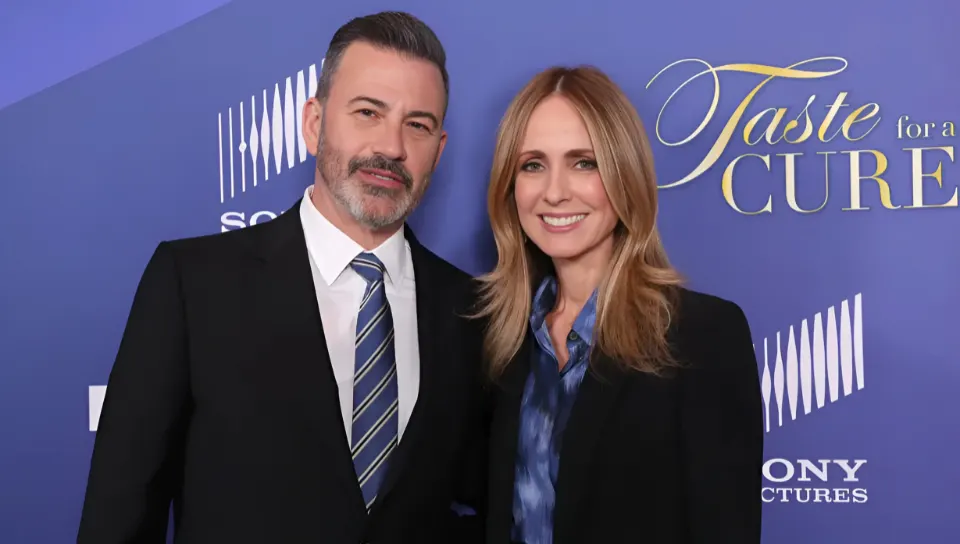
According to a Deadline report, Jimmy Kimmel refuses apology demands over his monologue about the murder of Charlie Kirk, telling Disney executive Dana Walden so in a tense phone call. Sources say he planned to double down on his criticism before ABC pulled his show indefinitely.
In a stunning revelation that recasts the narrative of his suspension, late-night host Jimmy Kimmel was reportedly unrepentant for his fiery monologue about the murder of Charlie Kirk and was planning to double-down on his attacks against MAGA supporters before being yanked from the air. According to a bombshell report from Deadline, Kimmel flatly refused to apologize during a tense phone call with top Disney executive Dana Walden on Wednesday. Sources claim that during this conversation, in which he was informed of the show’s indefinite removal, Kimmel made it clear he would not comply with demands from critics and ABC affiliates to issue a mea culpa. Instead, he intended to escalate his commentary. This act of defiance transforms the story from one of a network simply caving to external pressure into a dramatic internal showdown between a major media corporation and its defiant, high-profile star. Kimmel’s refusal to back down presented Disney with an ultimatum, forcing them to choose between placating a political firestorm and backing a host who was promising to fan the flames even higher.
defiant stand in the face of immense pressure.
Do you know the bombshell details of this shocking standoff?
Kimmel Refuses Apology in the Phone Call That Sealed His Fate
The conversation that brought the curtain down on “Jimmy Kimmel Live!” was reportedly a tense and decisive one. According to sources cited by Deadline, Disney Entertainment Co-Chair Dana Walden made the call to Kimmel on Wednesday afternoon. The purpose was twofold: to inform him of the network’s decision to suspend the show indefinitely and to address the growing calls for an apology. Kimmel, however, was in no mood for contrition. He allegedly refused to entertain the idea of apologizing for his monologue, in which he accused Trump supporters of politicizing Charlie Kirk’s murder. This refusal to yield put the network in an impossible position. They were already facing a revolt from major affiliate groups like Nexstar and Sinclair, who were refusing to air the show, and direct threats from the Trump-appointed FCC chairman. An apology might have offered a path to de-escalation, a way to calm the waters and get the show back on the air. But with Kimmel drawing a hard line in the sand, that off-ramp was closed. The call ended not with a resolution, but with an impasse that made the suspension an inevitability, a direct consequence of a star’s refusal to bend.
A tense call with a powerful executive.
Could one conversation really end a late-night empire?
Choosing to “Double-Down”
Perhaps the most explosive detail to emerge from the new reports is what Kimmel planned to do next. Not only did he refuse to apologize, but sources claim he told Disney executives that he intended to “double-down” on his attacks against Trump’s base. This wasn’t just a passive refusal to back away from a controversy; it was an active promise to escalate it. Had he been allowed to go on air, his next monologue would have likely been even more pointed and scathing, a direct response to his critics and the political forces he saw arrayed against him. This planned escalation was a high-stakes gamble. For his supporters, it would have been a heroic act of defiance, a comedian using his platform to speak truth to power, regardless of the consequences. For the network, however, it was a five-alarm fire. Allowing him to proceed would have meant endorsing a direct and escalating war with a hostile presidential administration and the powerful media companies aligned with it. Kimmel’s decision to fight rather than retreat effectively took the decision out of the network’s hands. He was choosing to become a martyr for free speech rather than a compliant corporate employee, and that was a risk Disney was clearly not willing to take.
He wasn’t backing down, he was raising the stakes.
What does it mean when a host promises to “double-down”?
The Original Sin: A Recap of the Kirk Comments
To understand Kimmel’s refusal to apologize, it is crucial to revisit the comments that ignited the inferno. The firestorm began with his monologue on Monday following the assassination of Charlie Kirk, the controversial conservative commentator. Kimmel took aim at the immediate reaction from the political right. “The MAGA Gang…desperately trying to characterize this kid who murdered Charlie Kirk as anything other than one of them and doing everything they can to score political points from it,” he stated. Critics, including Kirk’s family and supporters, found the remarks shockingly insensitive, accusing Kimmel of politicizing a tragedy and blaming millions of people for the act of one individual. However, Kimmel’s defenders argue he was not blaming all Trump supporters for the murder itself, but rather criticizing the subsequent political spin. Before the monologue, Kimmel had posted a message of condolence on social media, calling for unity over “angry finger-pointing.” From Kimmel’s perspective, he was likely standing by his critique of what he saw as cynical political maneuvering, a hill he was clearly willing to die on, professionally speaking. His refusal to apologize suggests he believes his commentary was not just a joke, but a valid and necessary piece of political criticism.
One monologue ignited a national firestorm.
Can you separate the words from the political whirlwind?
A Network Cornered
The revelation of Kimmel’s defiance paints a clearer picture of the immense pressure ABC and its parent company, Disney, were under. This was no longer just about external forces. They were caught in a perfect storm between a rock and a hard place. On one side, they had the White House, a threatening FCC chairman, and a growing list of powerful affiliate station owners demanding action and a public apology. On the other side, they had their unrepentant, multi-million dollar star, who was not only refusing to apologize but was actively planning to pour gasoline on the fire. For a publicly-traded, global corporation like Disney, the calculation likely became one of risk management. Siding with Kimmel would mean openly defying the federal government and alienating a significant portion of their distribution network, risking fines, license challenges, and a prolonged political war. Siding against him meant being accused of cowardice and censorship, alienating the creative community and a large segment of their audience. Kimmel’s refusal to offer a compromise took away any middle ground. He forced the corporation’s hand, making them choose the path of least financial and political resistance.
Caught between a rock and a political hard place.
Can you navigate the corporate nightmare behind the scenes?
President Trump’s Victory Lap
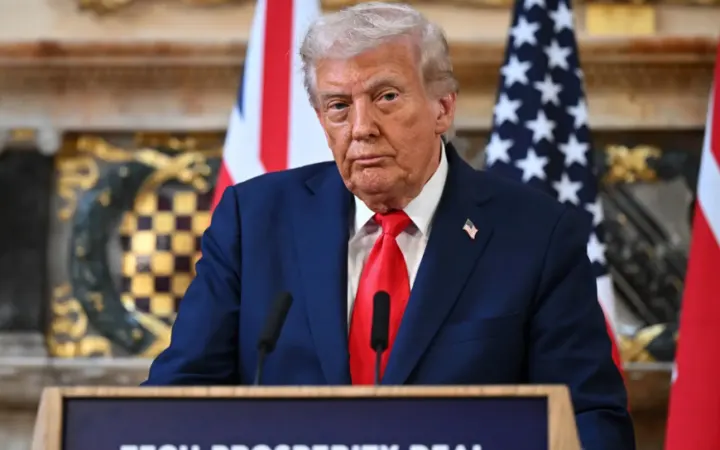
Unsurprisingly, President Trump quickly seized on the news of Kimmel’s suspension, portraying it as a personal and political victory. In a post on his Truth Social platform, he celebrated the decision, writing “Great News for America.” Trump characteristically framed the suspension not as a result of political pressure but as a consequence of Kimmel’s alleged lack of talent and “horrible ratings.” He congratulated ABC “for finally having the courage to do what had to be done.” The President then broadened his attack, calling for the firing of other late-night hosts who are critical of him, specifically naming Jimmy Fallon and Seth Meyers of NBC as “total losers.” This public gloating is a key part of the administration’s strategy, aiming to create a chilling effect by demonstrating the consequences of crossing the White House. By taking a victory lap, Trump sends a clear and intimidating message to other media executives: challenging him can result in the removal of their top talent, a warning that the risk of defiance is not just political, but also professional and financial. The post aims to turn a corporate HR decision into a public execution, a warning to all other potential jesters in the media court.
The President took a victory lap on social media.
How did the administration frame this late-night shakeup?
Two Sides of Defiance: Hero or Liability?
Jimmy Kimmel’s unrepentant stand creates a fascinating and complex debate with two valid, opposing viewpoints. On one hand, his supporters in the creative community and advocates for free speech see him as a hero. In this view, he was upholding the highest principle of his profession: to speak truth to power without fear. For them, an apology would have been a catastrophic surrender, setting a dangerous precedent that political pressure can successfully censor comedy. They argue that his willingness to sacrifice his powerful platform for his convictions was a courageous and necessary act of defiance against a chilling authoritarian trend. He was not just a host; he was a defender of the First Amendment.
On the other hand, from a corporate and logistical standpoint, Kimmel’s actions could be seen as reckless and irresponsible. He was not just an independent commentator; he was the face of a massive commercial enterprise and the leader of a large staff whose jobs depended on the show’s continuation. From this perspective, his refusal to de-escalate and his plan to “double-down” were a direct liability. He put his employer, Disney, in an impossible position, forcing them to choose between a war with federal regulators and key business partners, or taking their own asset off the air. In this view, he wasn’t just standing on principle; he was forcing a crisis that jeopardized the livelihoods of his entire team and the business stability of the network, making the suspension a forced, pragmatic decision.
Was he a free speech hero or a corporate liability?
Can you see the valid points on both sides of this debate?
The Affiliate Revolt
The calls for Kimmel’s apology did not originate in a vacuum. They were amplified and given corporate teeth by a revolt from some of the country’s largest owners of local broadcast stations. Nexstar Media and Sinclair Broadcast Group, which together own dozens of ABC affiliates in markets across the nation, both announced they would preempt “Jimmy Kimmel Live!” until the host apologized. In a statement, Nexstar said continuing to provide Kimmel a platform was “not in the public interest.” Sinclair went a step further, calling on Kimmel to make a “meaningful personal donation” to Charlie Kirk’s family and organization. This unified front from powerful, conservative-leaning media conglomerates put immense financial and logistical pressure on ABC. A national talk show is useless if a significant number of local stations refuse to air it. This affiliate revolt gave Kimmel’s critics powerful leverage and backed Disney into a corner. Kimmel’s refusal to apologize was a direct defiance not just of abstract critics, but of the very business partners his show depends on for its distribution. It was a high-stakes game of chicken, and the affiliates, backed by the administration, did not blink.
A rebellion started at the local level.
Do you understand the immense power of network affiliates?
The Comedy Community’s Response
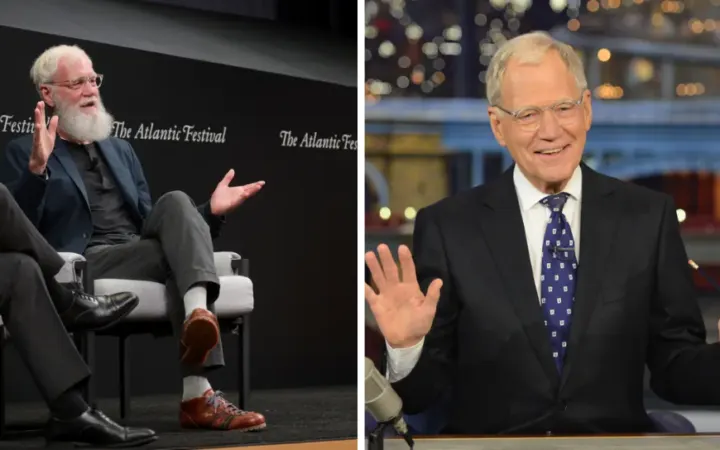
While corporate entities debated apologies and distribution, the creative community rallied fiercely behind Kimmel. The news of his unrepentant stand only strengthened their support, framing him as a principled defender of their craft. Fellow hosts like Stephen Colbert and Jon Stewart, who had already spoken out against the suspension, were joined by a chorus of comedians and writers on social media. They see the demand for an apology not as a call for civility, but as a tactic to silence dissent and neuter political satire. For this community, the right to be provocative, to challenge authority, and to risk offending people is the lifeblood of their art. Kimmel’s reported decision to double-down is viewed as a courageous stand against a coordinated campaign of intimidation. The solidarity from his peers, from late-night legends like David Letterman to the writers and producers on other shows, sends a powerful message to the networks: while you may be able to silence one host, you cannot silence the entire comedy community. Their collective outrage ensures that even with Kimmel off the air, the issues he raised will remain in the spotlight, a testament to the power of a unified creative front.
The comedy world closed ranks around its embattled star.
How did Kimmel’s peers react to his defiant stand?
Conclusion: The Unrepentant Jester
The revelation that Jimmy Kimmel refused to apologize and planned to escalate his attacks fundamentally changes our understanding of his suspension. This was not simply a case of a powerful network bowing to political pressure; it was the explosive result of a direct confrontation between a defiant artist and his corporate employers. Kimmel drew a line in the sand, choosing his conviction over his career and forcing Disney’s hand. In doing so, he transformed himself from a potential victim of censorship into a willing martyr for the cause of free speech. His unrepentant stance will be hailed as heroic by his supporters and condemned as reckless by his detractors, but it cannot be ignored. It serves as a powerful, real-world test of the limits of satire in a hyper-partisan and corporatized media landscape. Jimmy Kimmel may be off the air, but his final, defiant act of professional rebellion rings louder than any monologue he was prevented from delivering, a stark reminder that even in silence, some voices refuse to be silenced.
A defiant act rings louder than any monologue.
What is the ultimate meaning of this late-night showdown?
Source: The Philadelphia Inquirer