Researchers at Tufts University have developed an experimental dental implant designed to encourage nerve regrowth so it might one day feel more like a natural tooth. In a study in rats published in Scientific Reports, the implants stayed in place for six weeks without signs of inflammation or rejection. Larger animal studies are needed before any human trials.
Researchers at Tufts University have developed an experimental dental implant designed to help nerves grow back around it, with the goal of giving implants some of the sensation that natural teeth have. The early results, from a study in rats, were published in the journal Scientific Reports.
The problem with today’s implants
A conventional dental implant uses a titanium post that fuses with the jawbone and supports a crown. The surgery can cut or damage nearby nerves, and the implant does not connect to the nerve-rich tissue that surrounds a natural tooth.
“Implants lack that sensory feedback,” said Jake Jinkun Chen, a professor of periodontology at the Tufts University School of Dental Medicine and the study’s senior author. Natural teeth sit in tissue that senses pressure and texture, which helps people chew and speak.
How the new implant works
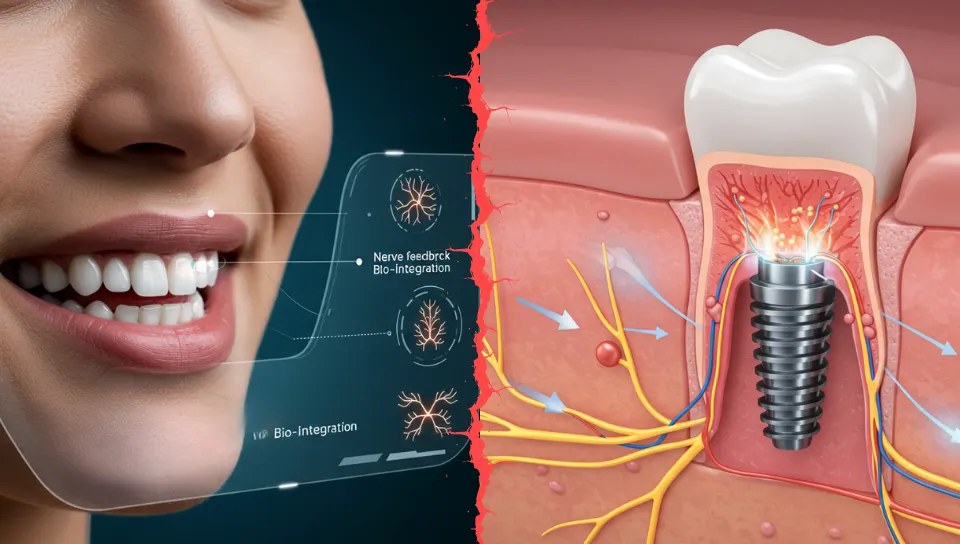
The experimental implant has a biodegradable coating that contains stem cells and a protein that encourages those cells to develop into nerve tissue. As the coating dissolves, it releases these materials to support new nerve growth around the implant.
The coating also contains small rubbery particles. This allows the implant to be compressed so it fits through a smaller opening and then expand to fit snugly in the tooth socket. The researchers say this could make the procedure less invasive and help preserve nearby nerve endings.
What the rat study found
Six weeks after surgery, the implants in the rats remained firmly in place, with no signs of inflammation or rejection. Imaging showed a distinct space between the implant and the bone, which the researchers said suggests the implant integrated through soft tissue rather than fusing directly with bone, an approach that may help restore nearby nerves.
The study did not show that the implants restored sensation. The researchers’ next step is a preclinical study to test whether brain activity confirms that the new nerves relay sensory information.
What comes next
Larger animal studies are needed to assess safety and effectiveness before trials in human volunteers can begin. The researchers have not given a timeline for when the technology might be available to patients.
The study’s lead author is postdoctoral scholar Siddhartha Das. Co-authors include Qisheng Tu and Zoe Zhu of the School of Dental Medicine and Subhashis Ghosh of the Tufts University School of Medicine.
Source: Tufts Now