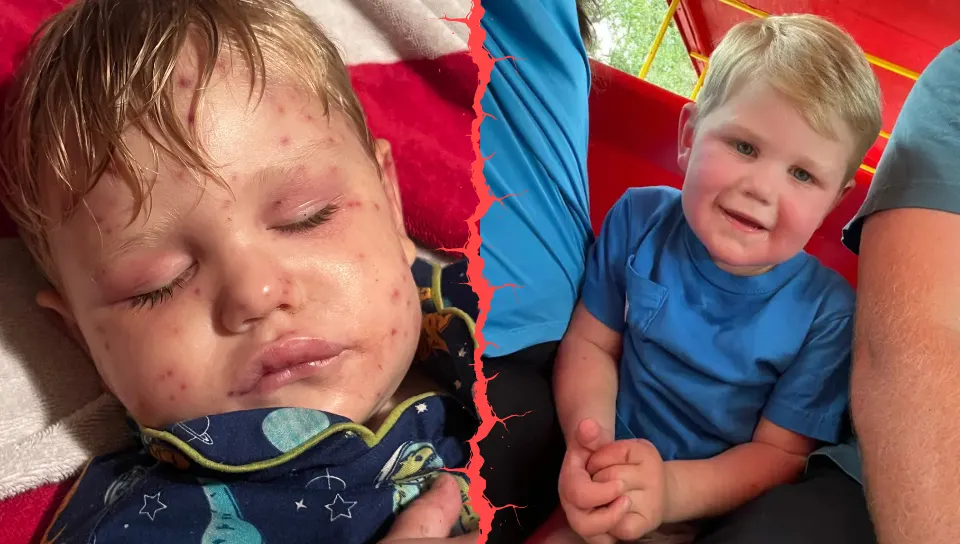
Two-year-old Beckham Reed of Georgia, who was born with one kidney, was stung more than 150 times after his ride-on toy drove into a yellow jacket nest. He was later moved to the intensive care unit at Memorial Savannah, where he was treated with dialysis, ventilator support and IV medications.
In late June 2025, two-year-old Beckham Reed of Georgia was riding his electric toy side-by-side when it slid into a yellow jacket nest. He was swarmed and suffered more than 150 stings, his family said.
Beckham, who was born with one kidney, was rushed to a local emergency room by his father, Peyton Reed. He was given medication and sent home, according to WSB-TV. His condition then worsened, and family members said in fundraising updates that his skin began turning yellow, a sign of liver problems.
Beckham was transferred to the intensive care unit at Memorial Savannah. “They started him on dialysis, ventilator support and life-saving IV medications,” Tiffany Hewatt, who organized a GoFundMe for the family, wrote, adding that “his little body was unable to handle the amount of toxins in his body.”
There is no antivenom for yellow jacket stings, so treatment for a large number of stings focuses on supportive care: keeping the organs working while the body clears the venom.
Signs of improvement
In later updates, the family said Beckham was becoming more alert and that his lab results were improving, while cautioning that he still faced a long recovery. As of July 1, his kidney was not yet fully functioning and he was back on dialysis. “We are uncertain as to what this means for his kidney,” Hewatt wrote.
The family’s GoFundMe, set up to help with medical costs, had a $75,000 goal and had raised more than $64,000 at the time of WSB-TV’s report.
Why many stings can be dangerous
Most people who are stung a few times by yellow jackets have only local pain and swelling, and the main danger for most is an allergic reaction. A very large number of stings is different: the amount of venom itself can harm the body, especially in a small child.
Medical literature describes how a large venom load can damage red blood cells and muscle tissue, which can strain the kidneys and lead to acute kidney injury. In severe cases, the liver and other organs can also be affected, and problems can appear a day or more after the stings. Treatment can include fluids, dialysis and breathing support until the organs recover.
What parents should know
- Seek care quickly for a child with many stings, even if there are no immediate signs of an allergic reaction.
- Watch for delayed symptoms such as dark or reduced urine, yellowing of the skin or eyes, vomiting, or unusual sleepiness, and return to a doctor if they appear.
- Check yards and play areas for ground nests, which yellow jackets often build in late summer, and have them removed safely.
Beckham’s family has continued to ask for prayers and support as he recovers.
Source: WSB-TV