Unfounded rumors about President Donald Trump’s health and death spread online over the Labor Day weekend after a few days without public events. Trump was seen heading to his Virginia golf club on Saturday and later addressed the speculation in the Oval Office, saying he had not seen it.
False rumors that President Donald Trump had died or was seriously ill spread across social media over the long Labor Day weekend in 2025, after the president went several days without a scheduled public event. The speculation faded after reporters who travel with the president saw him leave the White House on Saturday, Aug. 30, and arrive at his golf club in Virginia, and again on the following days. On Tuesday, Sept. 2, Trump spoke at length to reporters in the Oval Office.
How the rumors started
Key points:
- Rumors about Trump’s health spread online after he held no public events for several days.
- Reporters saw him leave the White House on Saturday and go to his golf club in Sterling, Virginia.
- He was seen at the club again on Sunday and Monday.
- On Tuesday, Trump told reporters in the Oval Office that he had not been aware of the speculation.
A gap in the public schedule
The week before the holiday, Trump held several lengthy public events, including a long Cabinet meeting. His public schedule was then largely empty for several days. Posts on X and other platforms began asking where the president was, and some users openly speculated, without evidence, that he had died or become gravely ill. Hashtags questioning his whereabouts trended over the weekend.
Some posts pointed to the president’s age, 79, and to earlier health news. In July 2025, the White House said Trump had been diagnosed with chronic venous insufficiency, a common vein condition in older adults, after he was seen with swelling in his lower legs. Photographs of bruising on the back of his hand had also drawn attention; the White House attributed the bruising to frequent handshaking and aspirin use. None of this supported claims that the president had died.
Trump seen leaving the White House
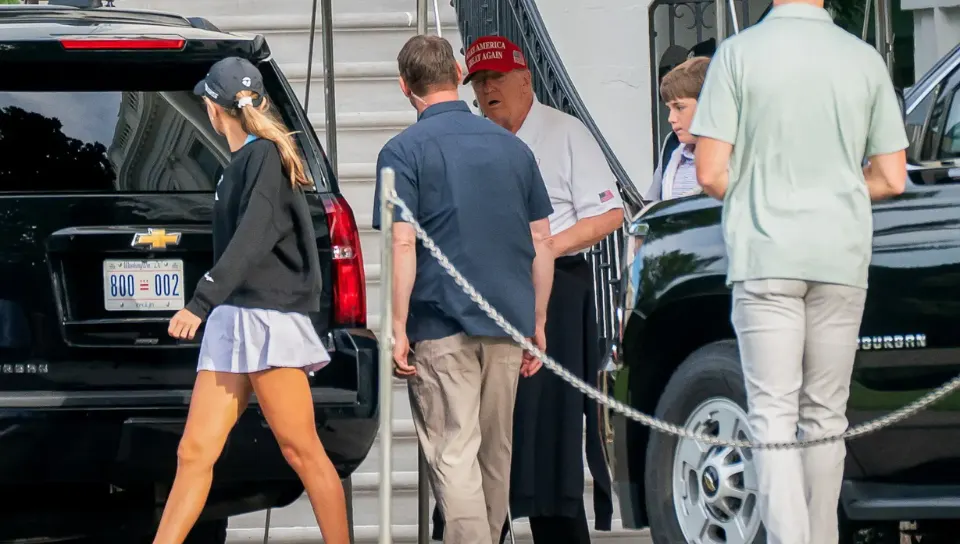
On Saturday morning, the president left the White House dressed in golf clothes and a red “Make America Great Again” hat. Images of the departure spread widely online and undercut the rumors. According to news reports, he was accompanied by his granddaughter Kai Trump and traveled to Trump National Golf Club in Sterling, Virginia.
Key points:
- The president was photographed leaving the White House on Saturday.
- He was dressed for golf and wore a red campaign-style hat.
- The press pool saw him arrive at his Virginia golf club on Saturday, Sunday and Monday.
No formal statement needed
The White House did not issue a formal statement about the rumors over the weekend. Trump also posted several times on his Truth Social platform during that period. Once photographs and pool reports showed the president at his golf club, the online speculation quickly died down.
Trump addresses the speculation
On Tuesday, Sept. 2, Trump appeared in the Oval Office to announce that U.S. Space Command headquarters would move from Colorado to Alabama. When a Fox News reporter asked him about the online speculation, Trump said he had not been aware of it. “Really, I didn’t see that,” he said, according to States Newsroom.
Trump noted that he had held several news conferences the week before and then went two days without public events, after which people suggested, in his words, “there must be something wrong with him.” He compared the situation to criticism of his predecessor, former President Joe Biden. He also said he had been active over the weekend, including a long interview with a news network and posts on Truth Social.
A familiar online pattern
False reports of the death of famous people have circulated online for many years, affecting actors, musicians and politicians. Such rumors often spread when a public figure is out of view, and they tend to fade once the person reappears or an official source responds.
Key points:
- Celebrity and political death hoaxes have circulated online for years.
- They often spread during gaps in a public figure’s schedule.
- Verified photos or official statements usually end them.
How the rumors spread
Researchers who study misinformation have noted that emotional, high-engagement posts tend to spread quickly on social media. In this case, the absence of public events gave room for speculation, and many posts framed claims as questions rather than statements of fact.
Platform policies
Major social media platforms have policies on misleading content, but enforcement varies, particularly for posts phrased as speculation. The episode added to an ongoing debate about how platforms should handle unverified claims about public figures.
In this case, the rumors were contradicted within days by public sightings of the president and his own remarks.
Reaction to the rumors
Supporters of the president criticized people who had spread or celebrated the false rumors, and the episode became another point of friction in a polarized online environment. Some commentators on both sides of the political divide called for more caution before sharing unverified claims.
Key points:
- Trump allies criticized those who spread the rumors.
- The episode drew attention to how quickly unverified claims about public officials can spread.
- The president resumed public events the following week.
Questions about health transparency
The episode also renewed broader discussion about how much information the White House shares about a president’s health. Trump, who is the oldest person to be inaugurated as president, has said he is in excellent health, and the White House has released memos from his physician describing him as fit to serve.
Similar questions were raised about Biden during his term, a comparison Trump himself made on Tuesday.
A broader trend
Disinformation researchers have warned for years that false claims about public figures can spread quickly and can be difficult to correct once they go viral. The Trump rumors were short-lived but drew wide attention because they involved a sitting president.
The rumors ended once the president was seen in public and spoke to reporters.
How to check a claim before sharing
Experts on media literacy generally advise readers to check whether a claim is being reported by established news organizations, to look for official statements, and to be cautious about posts that rely only on speculation.
Key points:
- Check whether reliable news outlets are reporting the claim.
- Look for official statements or on-the-record sources.
- Be wary of claims based only on someone’s absence from public view.
Platforms and news outlets
Critics of social media companies argue that platform design can reward sensational content. News organizations, for their part, face the challenge of covering viral rumors without amplifying them.
Pausing before sharing
For individual users, the simplest step is to pause before sharing a shocking claim, especially one that has not been confirmed by any reliable source. In this case, the claims about the president turned out to be false, and he appeared in public within a day of the rumors peaking.
Trump continued his normal schedule the following week.
Source: Alaska Beacon